
On this page
Perhaps you learnt about puberty from a cousin or a whispered school talk. A free NCERT chapter gives you and your child the same words to start from. Here is when to begin, what to say at each age from 9 to 13, and short answers to the questions children actually ask.
When should you start talking to your child about puberty?
Earlier than feels comfortable. The physical changes of puberty typically begin in girls between ages 8 and 13 and in boys between ages 9 and 14, according to the US National Institute of Child Health and Human Development. NCERT's own chapter says that in girls the reproductive phase begins at puberty, at 10 to 12 years of age, and that the first period comes at puberty (NCERT Class 8 Science, Chapter 7).
UNESCO's International technical guidance on sexuality education (2018) suggests children aged 5 to 8 learn what puberty is and that it is a normal and healthy part of adolescence. For ages 9 to 12, it adds the menstrual cycle, hygiene, erections and wet dreams. In other words, explain each change before it arrives.
Which NCERT chapter covers puberty?
The chapter is "Reaching the Age of Adolescence", Chapter 7 of the Class 8 science textbook in the 2024-25 edition, and you can read it for free on NCERT's website. It defines adolescence as the period when the body changes towards reproductive maturity, roughly from age 11 to 18 or 19. It notes that in girls it may begin a year or two earlier than in boys.
Check what your child's school is using this year. The contents page of NCERT's newer Class 8 book, Curiosity (reprint 2026-27), lists 13 chapters, and none of the chapter titles mentions adolescence or puberty. So you can't assume your child will meet this chapter in class. Print the old chapter or open it on a phone and read it together.
What should you say at ages 9 to 13?
Think of it as several short talks, not one big one. Every section named below is in the NCERT chapter.
Age 9 to 10, before changes start. Read section 7.2, "Changes at Puberty", together. Say: "Over the next few years your body will start changing. It happens to everyone, at different times. You can ask me anything, and I won't laugh."
Age 10 to 11, as the first signs appear. Cover periods with girls *and* boys. For girls, put pads in the school bag before the first period, not after. The chapter's hygiene section advises changing pads every 4 to 5 hours as needed. For boys, explain voice changes and wet dreams in plain words.
Age 12 to 13, feelings and myths. NCERT notes that adolescents can feel insecure while adjusting to changes in body and mind. Read its "Myths, Taboos, Do's and Don'ts" box together, which includes the myth that a girl should not work in the kitchen during menstruation. Ask: "Have you heard any others?"
What questions do children ask about puberty, and how do you answer?
Keep each answer short and true, then stop. They will ask a follow-up if they want one.
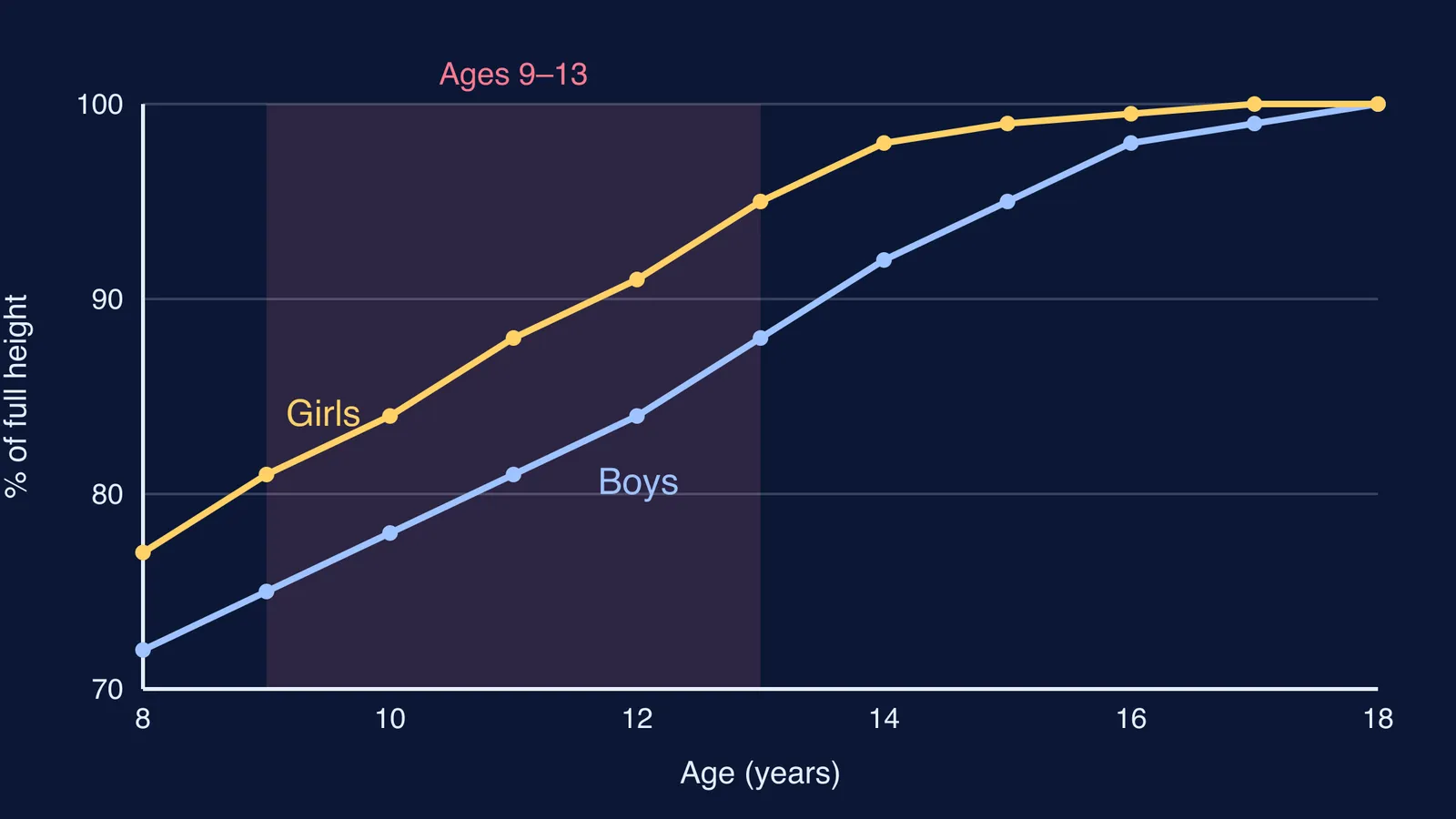
"Why is my friend so much taller than me?" Use the NCERT height table. By age 11, an average girl has reached 88% of her full height and an average boy 81%, so girls often shoot up first (NCERT, Activity 7.1). "Your growth spurt is on its own timetable."
"Why does my voice crack?" "Your voice box is growing. It can go hoarse for a few days or weeks, then it settles."
"Why am I getting pimples and smelling of sweat?" "Your sweat and oil glands are more active now. A daily bath and a clean face help."
"What is a period? Does it hurt?" "About once a month, the lining of the uterus comes out as blood. Some people get cramps. Tell me, and we'll work out what helps."
"What's a wet dream?" "Sometimes fluid comes out during sleep. It's normal and nothing to be ashamed of."
A question you can't answer. "Good question. Let's look it up together."
If your child asks about hormones or glands for homework, the Fermi Concept Library covers every concept in biology, each with its own lesson, so you can look up a topic such as endocrine glands side by side.
When should you ask a doctor or counsellor?
See a paediatrician if changes seem very early or very late compared with the ages above, or if periods bring pain that stops your child from going to school. If your child seems persistently worried, withdrawn or upset about their body, talk to the school counsellor. You can also call Tele MANAS on 14416, a free, 24x7 government mental health helpline (Tele MANAS listing).
For younger children, start with our guide on how to talk about safe and unsafe touch. With a preteen who goes quiet, try the approach in why car rides make talking easier. Older students can explore the menstrual cycle hormone graph, day by day.
This week, print the chapter and read the first two pages together.