On this page
Most parents know the feeling: you pick up your teenager from school or a coaching class, ask how their day was, and get a one-word answer. The rest of the drive passes in silence.
It is easy to view this silence as a wall, but developmental psychology suggests the opposite. The car is actually one of the most effective environments for opening a line of communication, precisely because of how it is built.
Why are car rides so good for talking to teens?
To an adult, a sit-down conversation across a dining table feels respectful and focused. To an adolescent, it can feel like an interrogation.
The architecture of a car removes this dynamic. Both the driver and the passenger face forward, eliminating the expectation of constant eye contact. This side-by-side positioning lowers the stakes significantly.
Furthermore, a car ride has a built-in escape hatch. The conversation has a natural, predictable endpoint—the moment you park the car at home. Knowing they will not be trapped in a lengthy lecture gives teenagers a sense of control. This predictable time limit often makes them more willing to start talking, because they know they will not be stuck defending themselves indefinitely if the conversation gets difficult.
How does eye contact affect the adolescent brain?
The preference for side-by-side communication is not just teenage moodiness; it is wired into their cognitive development.
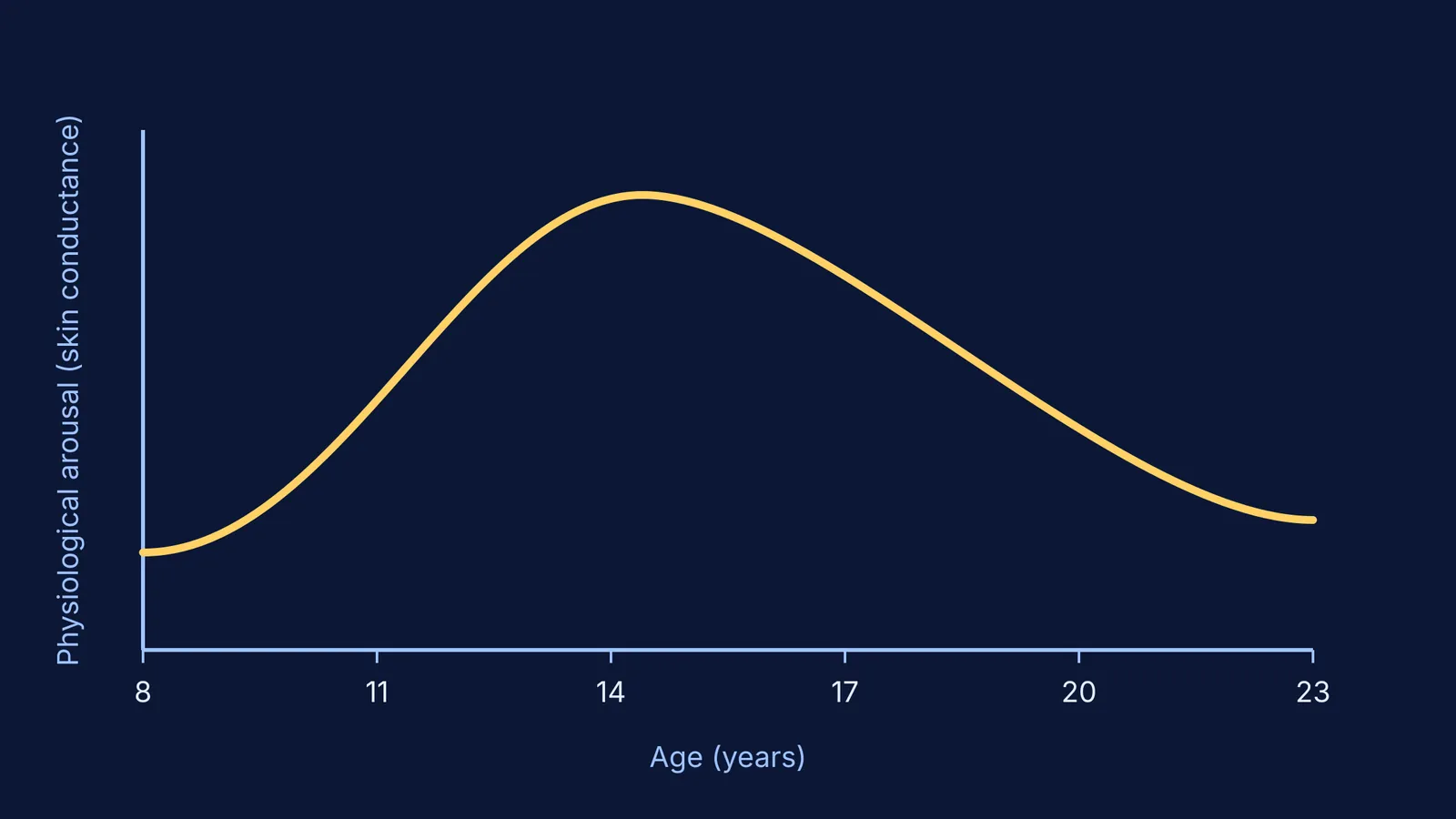
During adolescence, the brain becomes hyper-sensitive to social evaluation. A 2013 study led by Leah Somerville at Harvard University, published in *Psychological Science*, measured the skin conductance of participants aged 8 to 23 to track their physiological arousal. The researchers found that adolescents experience a sharp peak in physiological stress (around age 14) simply by believing a peer is watching them. Direct observation triggers a literal sweat response. By keeping your eyes on the road, you remove that physical stressor entirely, allowing them to relax.
Additionally, looking someone in the eye takes mental effort. A 2016 study from Kyoto University, published in *Cognition*, demonstrated that maintaining eye contact and searching for words draw from the same limited pool of cognitive bandwidth. The researchers found that viewing faces with direct eye contact delayed verbal generation more than averted eyes, especially when the word-retrieval task was difficult.
When a teenager looks out the window instead of at you, they are not necessarily being rude. They are instinctively breaking eye contact to free up the mental resources needed to process their emotions and formulate a thought. The heavier the topic, the more cognitive resources they need, and the harder it is to maintain eye contact.
What are some conversation starters that are not about marks?
If a car ride becomes the designated time for discussing bad test scores, teenagers will quickly learn to put their headphones on before they even close the door. It is vital to separate your relationship from their academic performance. (For more on this, see our guide on How to talk to your teenager about marks without a fight.)
Instead of asking about a specific physics test, try using the commute to ask open-ended, low-pressure questions that invite them to share their world without feeling judged. Keep the questions focused on their opinions and interests rather than their achievements:
"What is a song you have had on repeat lately? Can we play it?"
"If you could skip one class every day for a week without getting in trouble, which one would it be?"
"What is one thing you wish adults understood about being your age right now?"
"If you didn't have any homework this weekend, what would you do with the extra time?"
When you give them the space to talk about their interests, you build a foundation of trust. This practice is a core part of Choice and autonomy: parenting that builds real motivation. Once they know the car is a safe space where they will not be lectured, they are far more likely to volunteer the harder topics on their own.
If they do eventually bring up a struggle with their studies, resist the urge to immediately jump in and play the teacher. Sometimes they just need to vent about a heavy workload. If they are genuinely stuck on a difficult concept and need help, a neutral third party can prevent an argument. When a student is struggling with their homework, Fermi's AI tutor can work out what they already know and build a plan for the session, teaching through the material step by step instead of just printing an answer. This lets them sit down to a clear next step without the friction of a parent-led tutoring session.
By respecting their need for forward-facing space and keeping the conversation low-stakes, you can turn a quiet commute into the most valuable ten minutes of your day.