On this page
A science museum day can be the best day of a holiday or a tiring walk past glass cases. The difference is rarely the museum. It is whether you picked galleries that fit your child's age and gave them something to look for. This guide covers what India's public science centres and planetariums offer, and how to plan a visit for each age.
Which science centres does NCSM run, and where are they?
The National Council of Science Museums (NCSM) is an autonomous society under the Ministry of Culture, Government of India, formed on 4 April 1978 (NCSM, who we are).
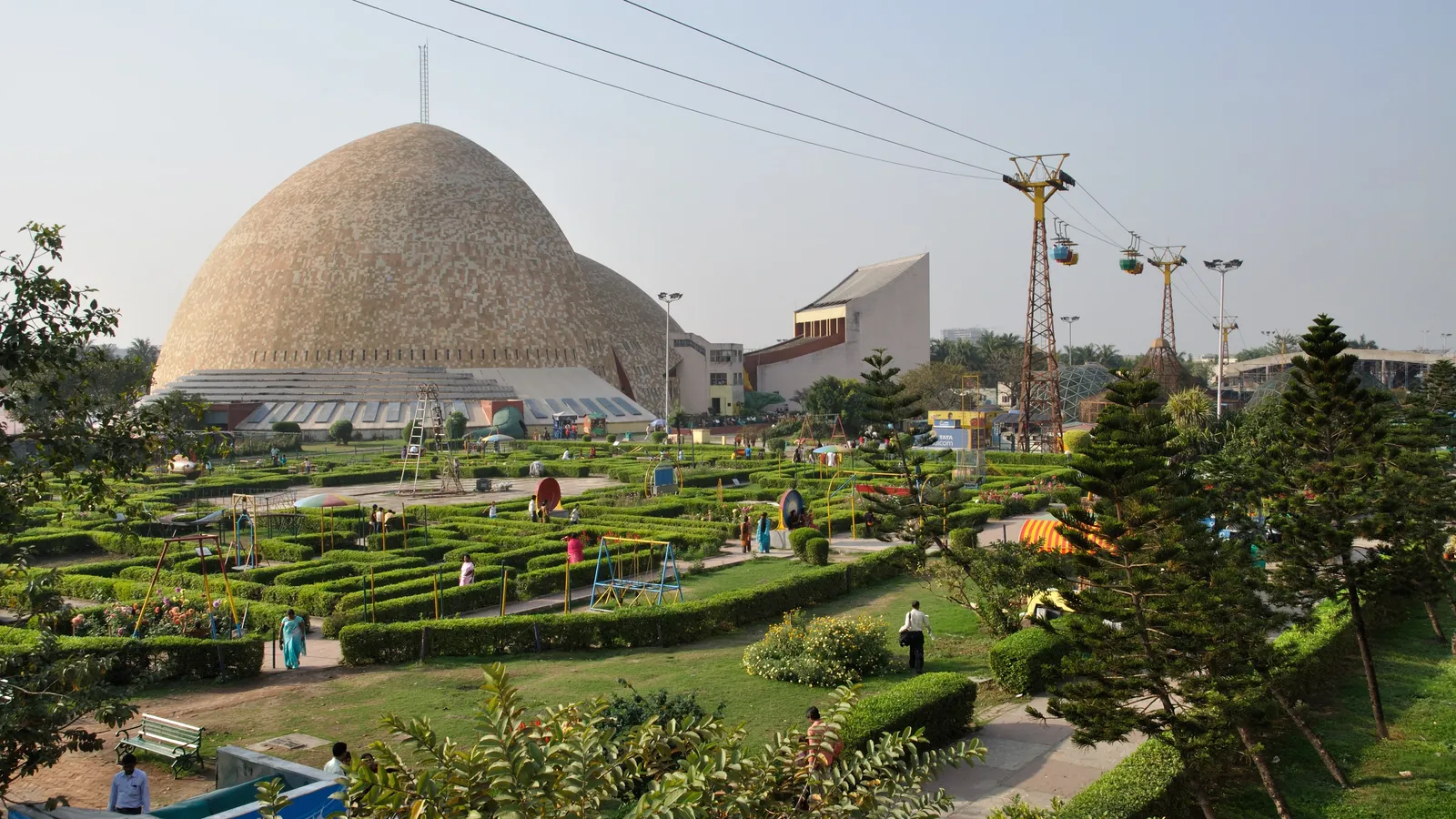
NCSM's network page lists 26 science museums and centres of its own (NCSM network). Its national-level centres include Science City in Kolkata, the Birla Industrial and Technological Museum (BITM) in Kolkata, Nehru Science Centre in Mumbai, the Visvesvaraya Industrial and Technological Museum (VITM) in Bengaluru, and the National Science Centres in Delhi and Guwahati. Smaller satellite units sit in cities such as Patna, Bhubaneswar, Bhopal, Nagpur, Panjim, Lucknow, Tirupati and Calicut, and the Nagpur and Calicut centres include a planetarium.
Some states run their own. Gujarat Science City in Ahmedabad is run by the Gujarat Council of Science City, a society set up by the Government of Gujarat (Gujarat Science City). Its galleries include Robotics, Aquatic, and Astronomy and Space Science, plus an IMAX 3D theatre.
Which galleries suit which age?
The gallery names below come from each museum's own website; the age fit is our suggestion. Use them to pick two or three halls, not to see everything.
Under 6: Science for Children Gallery and Science Park at Nehru Science Centre, Mumbai (Nehru Science Centre); Science for Kids and the Dinosaur Enclave at VITM, Bengaluru (VITM); the Children's Gallery at BITM, Kolkata (BITM).
Ages 6 to 11: hands-on halls where pressing, pulling and spinning things is the point: Fun Science (Mumbai and Bengaluru), Sound and Hearing, and Light and Sight (Mumbai), and BITM's mock-up Coal Mine.
Ages 12 to 15: VITM's Engine Hall, Space Technology Gallery and Science on a Sphere; Mumbai's Hall of Aviation and Space and Hall of Nuclear Power; BITM's Mathematics and Fascinating Physics galleries.
Ages 16 and up: treat it as revision you can touch. Light and Sight ties to ray optics, BITM's Electricity gallery to current electricity, and Mumbai's Hall of Evolution to a chapter of school biology.
Those closing days are from each official page: Nehru Science Centre hours, VITM timings, BITM plan a visit, Gujarat Science City fees and timing, Nehru Planetarium shows and the Bengaluru planetarium show schedule.
What should you know before booking a planetarium show?
Planetarium rules differ more than museum rules, so read the page for the one you plan to visit.
At the Nehru Planetarium in Mumbai, shows run in Hindi, Marathi and English, a ticket costs ₹150 for those above 5 years, same-day online booking is not allowed, and nobody is let in after a show starts (Nehru Planetarium, Mumbai).
At the Jawaharlal Nehru Planetarium in Bengaluru, shows are in Kannada and English (show schedule), children under 3 are not allowed into the sky theatre, and tickets are ₹100 for adults and ₹60 for children under 16 (admission rules, entry fee). On the first Sunday of each month it runs an evening session called Know Your Stars (Know Your Stars).
A dome show is seated, so it works well as an early stop, before legs get tired. If the stars catch on, our four-week plan for family stargazing continues it at home.
How do you plan a science museum visit that sticks?
Use three short steps.
Before: pick two galleries from the age list and one question to answer, such as "Why does a plane wing lift?" Check the closed day and book the dome show ahead.
During: at each exhibit, ask your child to predict first, then press the button. Stay with a few exhibits rather than walking past all of them.
After: at dinner, ask them to explain one exhibit to someone who was not there. Then try one thing at home: a torch and a steel spoon for reflection, or a stretched rubber band for sound.
Teenagers can carry one exhibit back to their syllabus. If an exhibit leaves an idea half-understood, the Fermi Simulation Lab has interactive simulations for ideas that are easier to see than to read, and the Fermi Concept Library gives each physics, chemistry and biology concept its own lesson.
A museum day fits well into a holiday week; our simple summer vacation routine shows where. And if your teenager would happily spend every Sunday there, read about jobs in science museums and planetariums.