On this page
Getting a call or a note saying the school has taken your child's phone can feel like a small crisis, for you and for your teen. It usually isn't one. Most schools have a written rule for this, and the phone comes back. What matters more is how the next conversation goes, at the school and at home.
What is a school allowed to do with a phone in India?
There is no single national rule. Each board, state and school sets its own policy, so the first thing to read is your school's handbook or circular.
National guidance has long been strict. A CBSE circular from 29 July 2009 said phone use should be restricted in schools and recommended that students be "convinced about not carrying mobile phones to the school". It also suggested a school landline that students can use in an emergency.
The most detailed recent ruling comes from Delhi. In February 2025, the Delhi High Court set out guiding principles for smartphones in schools in the case YV v. Kendriya Vidyalaya. Its main points:
Students should not be barred from carrying a phone to school, but use in school should be regulated.
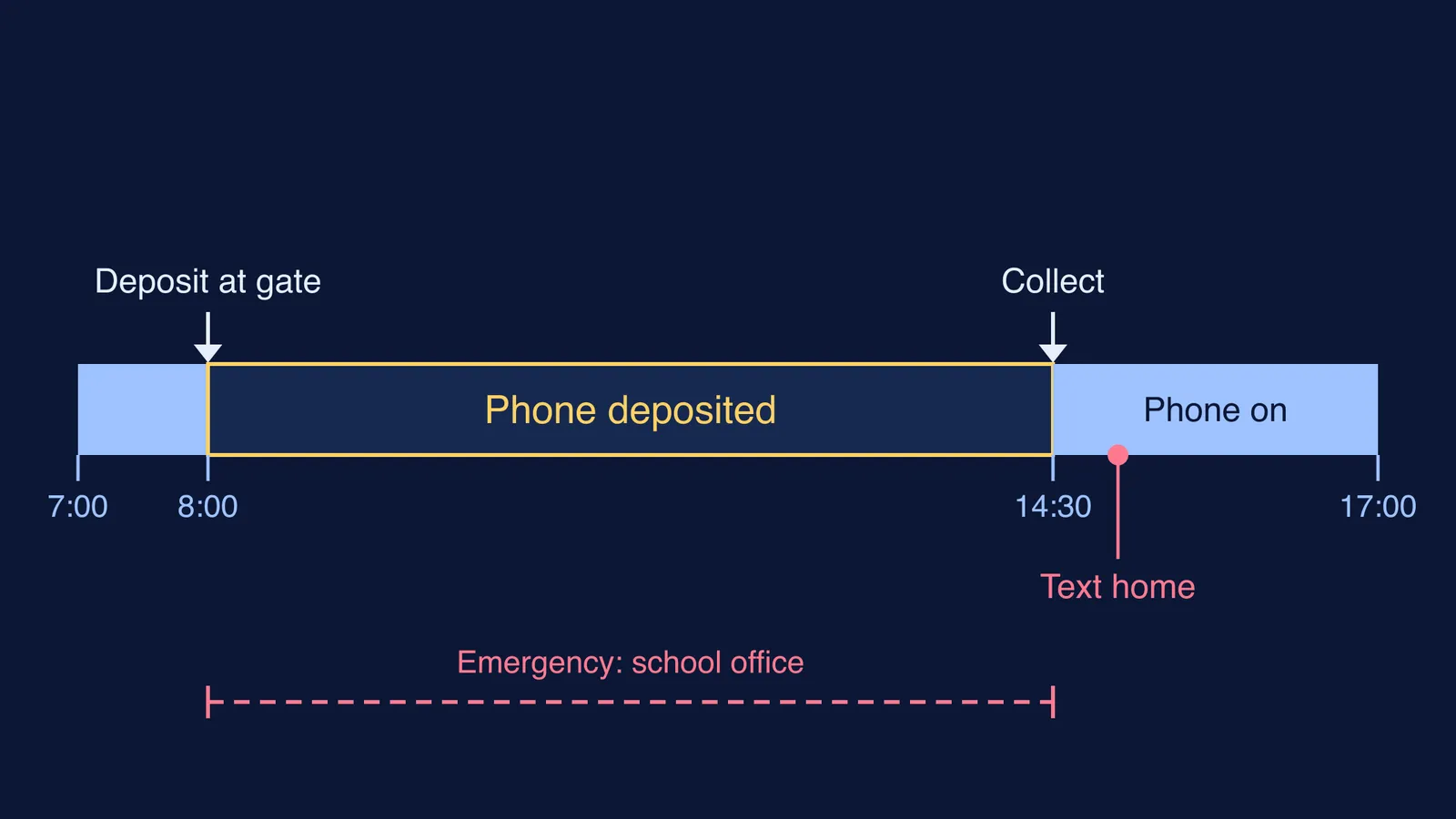
Where possible, phones should be deposited on arrival and collected when students go home.
Phones should not be used in class, and cameras should not be used in common areas or school vehicles.
Phones may be used for safety and coordination, but not for entertainment.
Consequences should be "transparent, fair, and enforceable", and the court listed confiscation for a set period as one possibility.
Other states and boards may set different rules, so your school's own published policy is what to check.
UNESCO's education monitoring team reports that 114 education systems now have a national ban on phones in schools, covering 58% of countries, up from 24% in June 2023. Our guide to what studies found about school phone bans asks whether bans help learning.
What should I do when the school confiscates my child's phone?
Wait before you react. Hear your teen's account first, then the school's.
Ask for the written rule. Which policy was broken, and what does it say happens next?
Ask when and how the phone comes back. Find out who keeps it, whether it is switched off and whether a parent has to collect it.
Check for safety needs. If your child travels alone or has a medical condition, tell the school and ask how they can reach you during the day.
Keep it polite and in writing. A short message or email gives everyone the same record.
Here is a message you could adapt:
"Good afternoon. I understand Aarav's phone was taken today during class. Could you share the policy this falls under and tell us when and how it will be returned? He takes the school bus home, so please let us know how to reach him if needed. We will talk to him at home. Thank you."
How do I talk to my teen after their phone is taken?
Start with curiosity, not a verdict. Try: "Tell me what happened. I want to hear it from you first." Then go through the facts together: what the rule says, what they did and what it cost them.
Avoid adding a second punishment at home for the same thing unless something serious happened, such as filming someone without permission. The school has already set a consequence. Your job is to help your teen avoid a repeat.
If your teen seems very upset, withdrawn or anxious for days afterwards, talk to the school counsellor or call Tele MANAS, the government's free, round-the-clock mental health helpline, on 14416.
How do we agree a school-day phone plan so it doesn't happen again?
Sit down together and agree five things. Write them on one page.
Morning: the phone goes on silent before the school gate and is deposited or kept in the bag, whichever the school rule requires.
School hours: no phone. In an emergency, your teen goes to the school office, and you call the office.
Pickup: the phone comes out only after it is collected, or outside the gate.
Check-in: one message home ("Out, on the bus") instead of calls through the day.
Homework: study apps are used at home, at the desk, at set times.
Say your daughter took her phone out in class to check a group chat about a test. The plan might say group chats are checked at 4 pm. If the phone has become her homework helper, Fermi's AI tutor can work out what she already knows and build a plan for the session, so that work happens at home.
For more, read what to ask when your school bans phones and you worry about emergencies, and whether your child needs to take a phone to school at all.