On this page
Your child has been asked to be head girl, school captain or a house prefect, and the offer has come in Class 12, the year of boards and, for many, JEE Main or NEET-UG. It is an honour, and also a job with no fixed hours. Before anyone says yes, turn it into hours and see where they will come from.
What does a school captain actually do in Class 12?
The visible part is the morning assembly and the badge. Most of the work is less visible: duty during breaks, meetings with teachers, carrying messages between staff and students, and organising the annual day, sports day and inter-house events. Schools differ, so ask for the actual list.
The time cost is hard to judge because it is lumpy: a quiet week may need a couple of hours, while the week before an event can swallow every free period and evening. Some of it also comes out of class time. If rehearsals already pull your child out of lessons, read our guide on annual day practice that eats into class time before adding a role that makes it worse.
Is being school captain worth it in a board year?
It can be. Leading peers can give practice in running a meeting, splitting up work, handling a disagreement and speaking to adults as an equal. Using three large US datasets, economists Peter Kuhn and Catherine Weinberger found that men who held leadership positions in high school earned more as adults, even with cognitive skills held constant (Journal of Labor Economics, 2005). That is an association in older US data, not proof that a badge raises pay.
The catch is the dose. Jennifer Fredricks and Jacquelynne Eccles found that taking part in a wider range of activities in 11th grade went with better academic outcomes, but at high levels of involvement the gains levelled off or declined slightly. Casey Knifsend and Sandra Graham followed 864 students from 11th into 12th grade and found that students active in two activity domains reported more belonging at school, higher grades and more engagement than those doing more or less. Our post on whether extracurriculars hurt marks goes further. The real question is whether this role, on top of everything else, keeps your child in that moderate zone.
How many hours a week can a Class 12 student give to a captain role?
Start with what cannot move. Teenagers aged 13 to 18 should sleep 8 to 10 hours per 24 hours on a regular basis, according to the American Academy of Sleep Medicine's consensus statement (Paruthi and colleagues, 2016). That is at least 56 hours of a 168-hour week. Our guide to teen sleep for parents covers how to protect it.
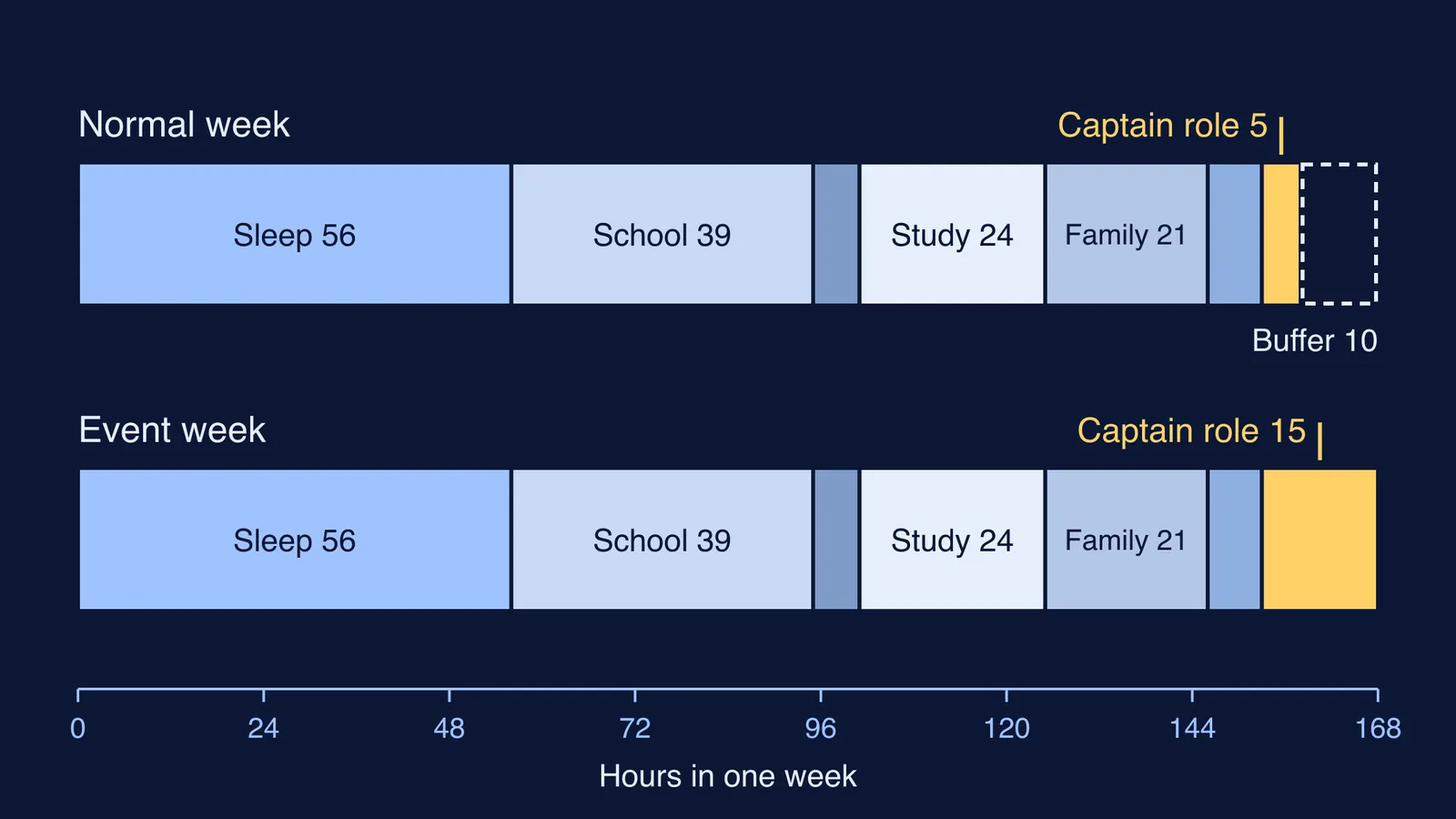
Here is a worked example for a student with a six-day school week. Replace our numbers with your child's real ones.
Sleep: 8 hours x 7 = 56
School: 6.5 hours x 6 = 39
Travel: 1 hour x 6 = 6
Self-study or coaching: 3 hours x 6, plus 6 on Sunday = 24
Meals, getting ready, family: 3 hours x 7 = 21
Exercise, friends, rest: 1 hour x 7 = 7
That adds up to 153 hours and leaves 15. Our rule of thumb: in a normal week the role takes up to a third of what is left (here, 5 hours), and the rest stays as a buffer for illness, a bad mock test or a family function. In an event week the role may use the whole buffer, but never sleep or study time.
When duties eat into an evening, a short session needs a clear target. Fermi's AI tutor can work out what you already know and build a plan for the session, so 90 minutes still goes somewhere useful.
What should you agree on before your child says yes?
Let your child hold the pen; the plan only works if they believe in it.
Questions to ask the school:
Which events fall this term, and which weeks will be heaviest?
Do captain duties ease during pre-boards, practicals and board exams?
Is there a vice-captain or a team to share the load?
Three tripwires to agree on at home. Each means you sit down and renegotiate, not that your child must quit:
Sleep under 8 hours on most nights of a week.
A planned study block missed twice in two weeks.
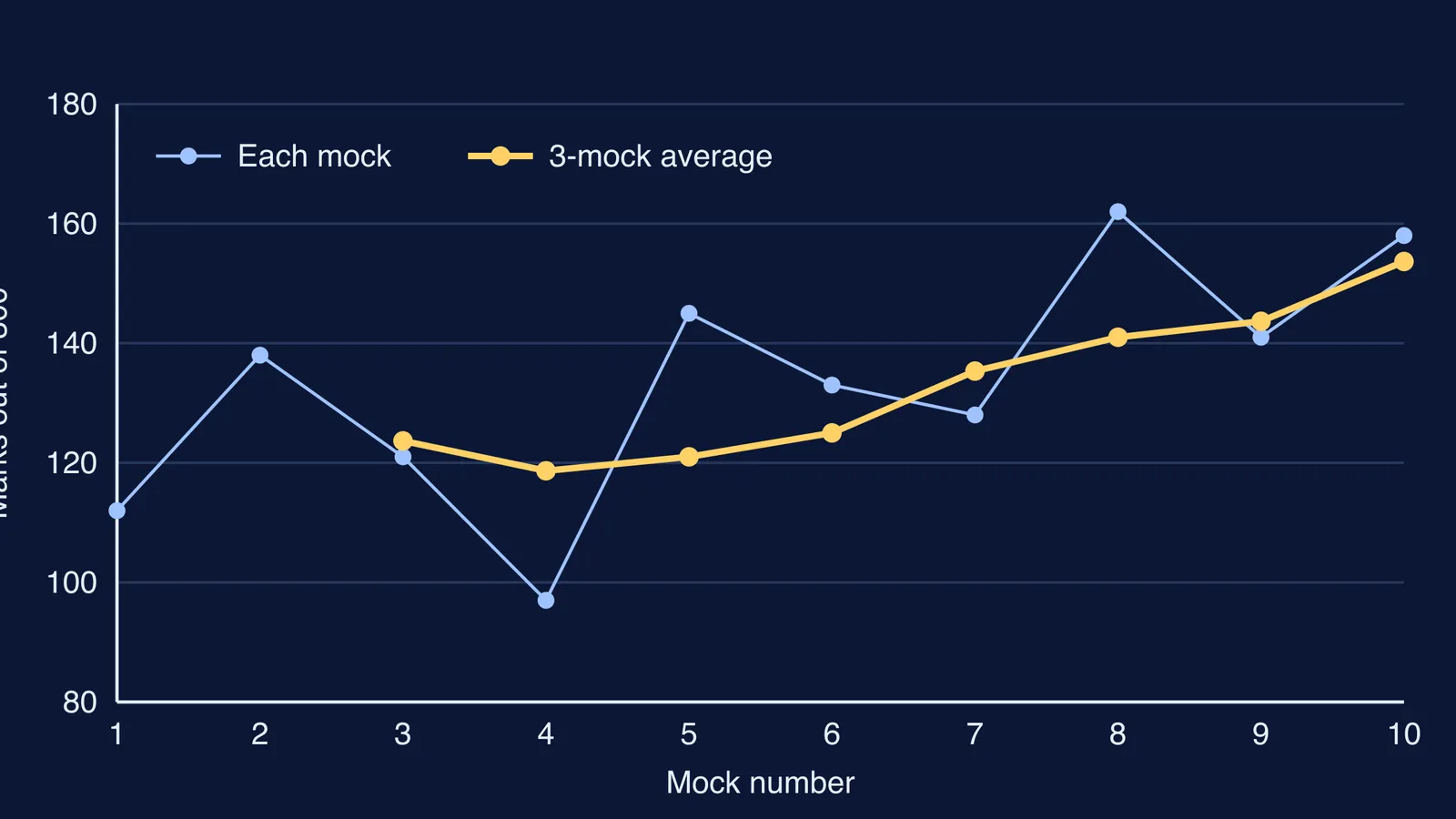
A clear drop in unit test or mock scores.
A script for the teacher in charge: "I want to do this well, and I also have boards. Can we agree now which weeks I can give extra time, and who covers for me during pre-boards and the board exams?"
If pressure shows up as worry or low mood that does not lift, talk to the school counsellor or a doctor. Tele MANAS, the government's free mental health helpline, is on 14416, 24x7.
Write the budget together this week, before the badge ceremony.