On this page
Dogs cause about 95% of human rabies in India, according to the Ministry of Health's National Guidelines for Rabies Prophylaxis, 2019. Worldwide, rabies kills tens of thousands of people a year, and 40% of them are children under 15, says the WHO rabies fact sheet. What you do in the next hour, and the next four weeks, prevents it.
What should you do right after a dog bite?
These steps come from the India guidelines and match WHO's advice:
Wash every bite and scratch under running tap water with soap for 15 minutes. The guidelines say washing removes the virus mechanically.
After washing and drying, apply an antiseptic such as povidone iodine if you have one.
Do not touch the wound with bare hands.
Do not put chilli, oil, turmeric, lime, salt, soil, herbs or betel leaves on it. The guidelines call such irritants "unnecessary and damaging".
Go to a doctor or an anti-rabies clinic the same day. Under India's National Rabies Control Programme, anti-rabies vaccine and immunoglobulin are provided free in public health facilities.
Does a small scratch from a pet dog need the rabies vaccine?
Often, yes. The India guidelines treat every animal bite as possibly rabid, because rabies passes from dog to dog here. A vaccinated dog or a provoked bite is no reason to skip treatment, they add. Doctors use three categories, as in WHO's 2018 position paper on rabies vaccines:
Category I: touching or feeding an animal, or a lick on unbroken skin. Wash the skin; no vaccine is needed if the history is reliable.
Category II: a nibble on bare skin, or a minor scratch or graze without bleeding. Wash, then vaccine.
Category III: a bite or scratch that breaks the skin, a lick on broken skin, or saliva on the eyes, mouth or other mucous membranes. Wash, vaccine, and rabies immunoglobulin.
A doctor decides the category. If unsure, go.
Why does the rabies vaccine work after the bite?
The rabies virus is slow. The WHO position paper explains that it multiplies in muscle near the bite, enters the nerves, and travels up the spinal cord to the brain.
The rabies incubation period is typically 2 to 3 months, but can be as short as one week or as long as a year, according to the WHO fact sheet.
The India guidelines call this delay a window of opportunity: the vaccine trains your immune system to make antibodies before the virus reaches the nervous system. Once symptoms appear, WHO says rabies is virtually 100% fatal, so the race must be won early.
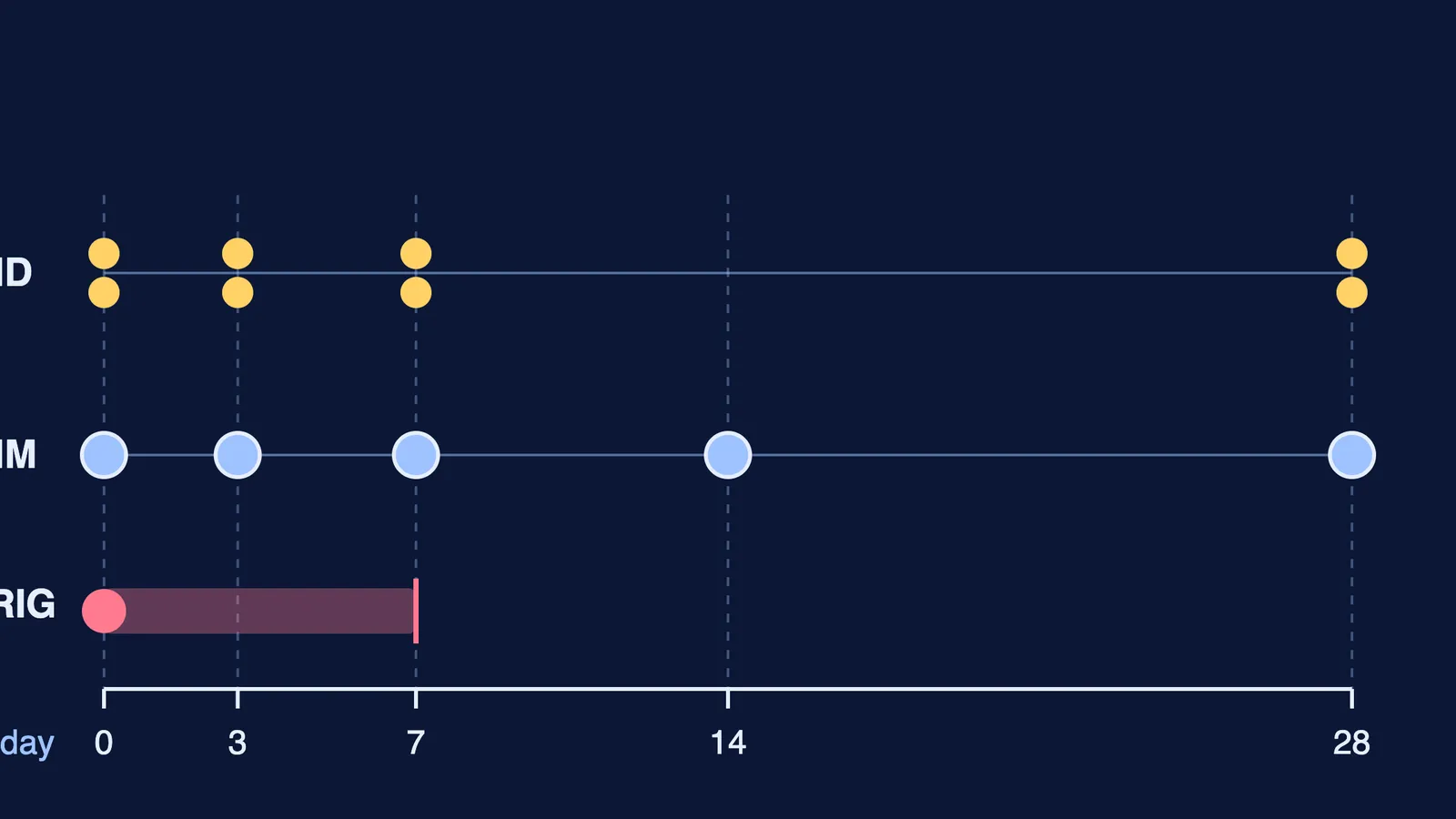
Your own antibodies take days to appear. For bites that break the skin, doctors fill the gap with rabies immunoglobulin (RIG): ready-made antibodies injected into and around the wound. The WHO position paper says RIG should not be given after day 7 of the vaccine course, because by then your own antibodies have begun to appear.
Our explainer on how the primary and secondary immune responses differ covers the immunology, and Louis Pasteur's first rabies vaccine in 1885 tells how this race was first won. If you want to look up antibodies or memory cells, the Fermi Concept Library covers every concept in biology, each with its own lesson.
What is India's rabies vaccine schedule?
The 2019 national guidelines list two routes for vaccination after a bite. Day 0 is the day of the first dose.
Intradermal (into the skin): 0.1 ml at two sites on days 0, 3, 7 and 28 (four visits).
Intramuscular (into the upper-arm muscle, or the thigh in young children): one vial on days 0, 3, 7, 14 and 28 (five visits).
If the dog stays healthy for 10 days, the doctor may drop the day-14 dose of the intramuscular course; the intradermal course is always completed.
Here is how the dates work. Say the first dose is on Wednesday 11 November. On the intradermal schedule, the next visits are Saturday 14 November, Wednesday 18 November and Wednesday 9 December. On the intramuscular schedule, add Wednesday 25 November. Do not skip the last dose because the wound has healed.
What should you tell the doctor?
Take this list, drawn from the India guidelines:
When the bite happened, and where on the body.
Whether the skin broke or bled.
Whether the dog is a pet, one you know, or a stray, and whether someone can check on it for 10 days.
Any earlier rabies vaccine, with the card if you have it.
Medicines you take, especially chloroquine, which the guidelines say can weaken the response to the intradermal route.
Keep the card afterwards. Under the same guidelines, someone who can show they completed a full course and is bitten again usually needs only two doses, on days 0 and 3, and no immunoglobulin.
If a child stays frightened for days, talk to your doctor, or call Tele MANAS, the government's mental health helpline, on 14416.