

On this page
Your teenager says the house is too noisy and they want to study at the library until late. That is often a good sign: they want focus. The answer can be "yes, with a plan", built from four things you can check this week: the library's real hours, what it is like inside, how they get home, and when they check in.
Is it safe for a teen to study at a public library alone?
A staffed library during opening hours is usually a quiet, public place. The risk tends to sit around the edges: the walk to the bus stop after dark, a reading room that empties out in the last hour, a phone that dies at 9 p.m. So the useful question is not "is the library safe?" but "is this library, at this hour, with this route home, safe for my child?"
Answer that question with your teen, not for them. A plan they helped write is one they are more likely to follow.
What should you check about the library first?
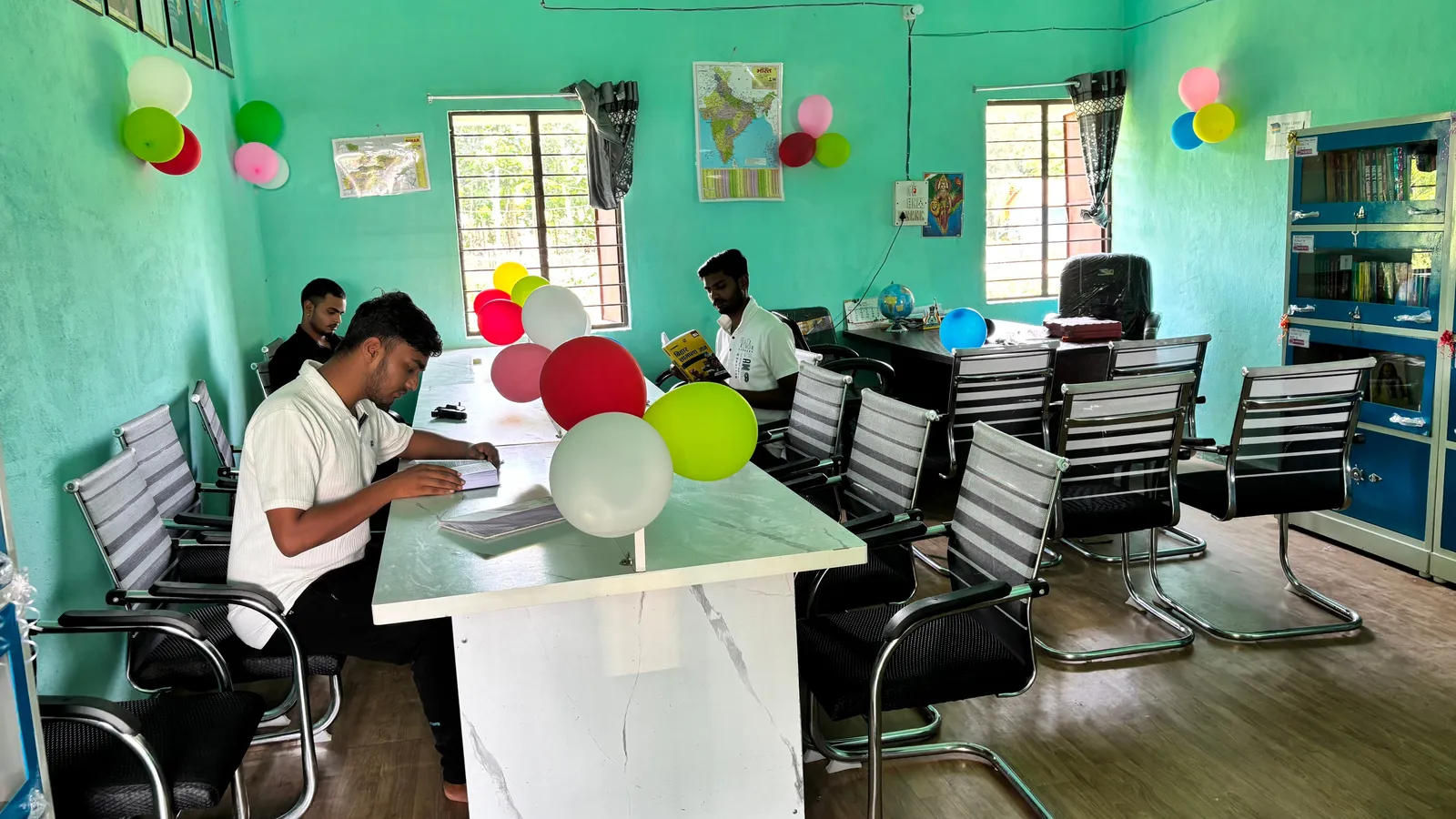
Start with the official timings, because "late" may not be possible. The Uttar Pradesh Public Library lists its reading room as open 10 a.m. to 5 p.m., Monday to Saturday, closed on Sundays and official holidays. The same page asks readers to show a government or school photo ID and to keep phones and laptops switched off inside. Timings differ from branch to branch, so check the page or the notice board of the library your teen actually means.
If the public library closes early, the late-evening option is often a private paid study library. These run on different rules, and we have a guide on how to judge whether a paid study library is worth it.
Visit once together, ideally at the hour your teen plans to leave. Check:
Who is on duty in the last hour, and whether there is a guard or caretaker at the entrance
Whether the reading room stays busy until closing or empties out
Where the washroom is and whether it is inside the supervised area
Whether phones are allowed, and where your teen can step out to take a call
Whether there is a charging point, or whether a power bank is needed
How lit the path is from the door to the road, the bus stop or the auto stand
How will they get home after dark?
Fix the route before the first evening. Agree on one way home, one backup, and the time after which a parent, older sibling or trusted neighbour picks them up instead. For walking routes, we cover the details in safety habits for teens walking to evening coaching.
Make sure your teen knows the emergency basics. India's single emergency number is 112, and a panic call can be sent by pressing a smartphone's power button three times quickly, or by long-pressing 5 or 9 on a basic phone, according to Gulf News's 2019 report on the 112 launch. Go over these at home, but do not test them: they reach real emergency services.
What check-in times should you agree on?
Keep it to three messages, so it feels like routine rather than surveillance:
"Reached" when they sit down.
"Leaving" when they pack up, with the time.
"Home" or "in the auto" a few minutes later.
If you use live location, agree on it openly. With Google location sharing, the people you share with can see your real-time location and battery status. Let your teen switch it on for the trip home and off once they are back.
Set a latest leaving time with sleep in mind, not just safety. The American Academy of Sleep Medicine recommends that teenagers aged 13 to 18 sleep 8 to 10 hours per 24 hours on a regular basis.
A worked example: your teen wakes at 6 a.m. for school. Eight hours of sleep means lights out by 10 p.m. Allow 30 minutes for the trip and 45 for dinner and winding down, and the latest leaving time is about 8.45 p.m. If the library shuts at 8, the question settles itself.
What if the plan stops working?
Review it after two weeks. One missed check-in is normal; a pattern is worth a calm conversation. Also ask what the late hours are for. If your teen is staying late because they keep getting stuck, a clearer plan for each session can help as much as more time. Fermi's AI tutor can work out what they already know and build a plan for the session, so they sit down to a clear next step.
If the push to study late comes with poor sleep, constant worry or panic before tests, talk to a doctor or counsellor. Tele MANAS, the government's free, 24x7 mental-health helpline, is on 14416 or 1800-891-4416.
If the late study happens at a coaching centre instead, read is it safe to study in a coaching library late at night?


