On this page
In many Indian towns and cities, rooms full of desks and few or no books are now called "libraries". You pay a monthly fee, get a seat and study your own material in silence. Whether that is worth it depends less on the library and more on what your home is missing.
What does a paid study library actually give you?
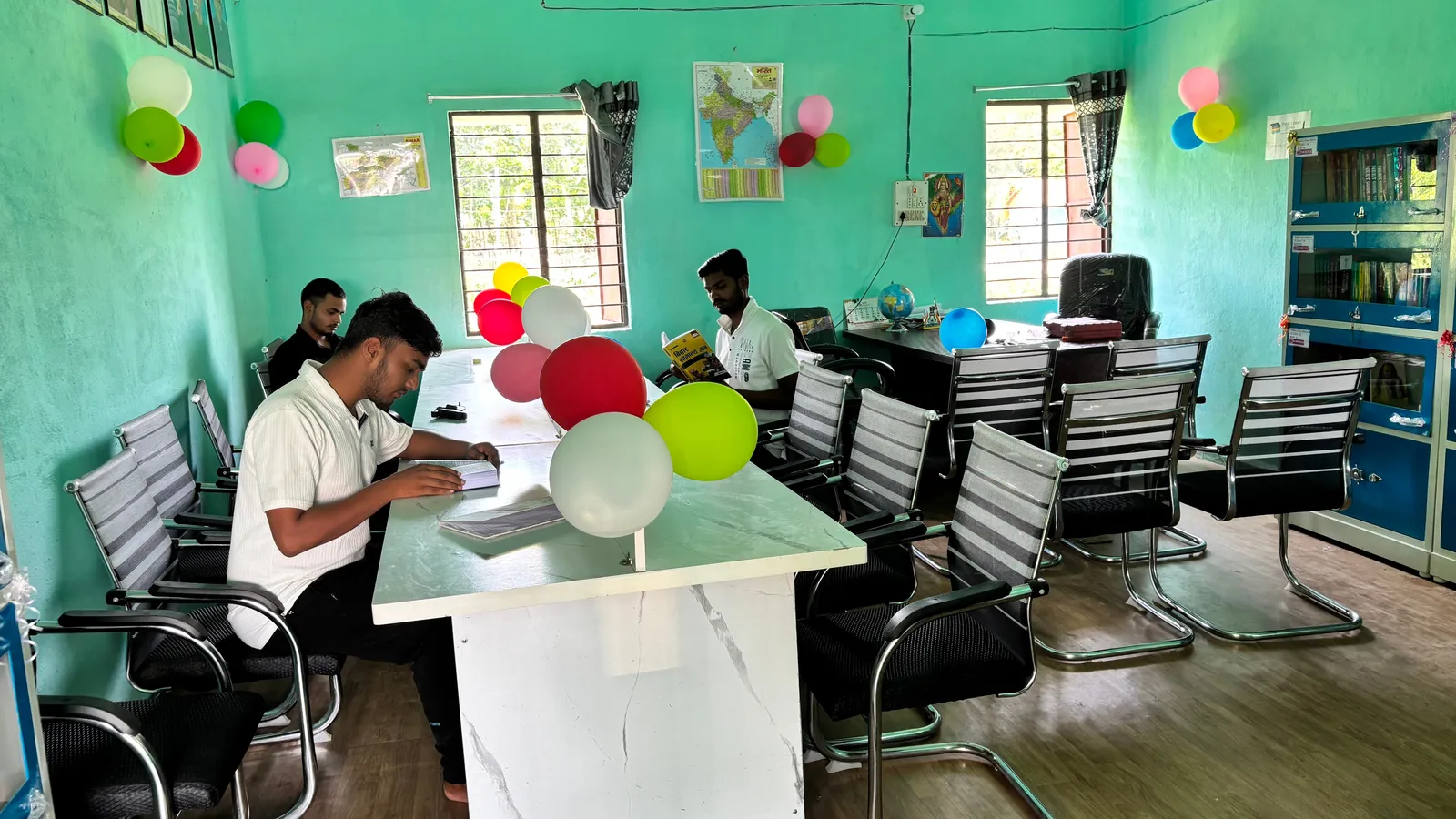
A paid study library usually sells four things: a seat, fixed hours, quiet, and the company of other people who are also working. In Kashmir, private study spaces offer cubicles, Wi-Fi, power backup, lockers and heating for Rs 500 to Rs 2,000 a month, and some stay open round the clock, Greater Kashmir reported in February 2026. Nargis Mushtaq, a postgraduate student from Kupwara, told the paper: "At home there are too many distractions and power cuts."
Prices climb in big coaching hubs. After three civil services aspirants died when a basement coaching centre in Delhi's Old Rajinder Nagar flooded in July 2024, basement libraries in Gautam Nagar that charged Rs 1,500 to 2,000 a month closed, and upper-floor seats cost Rs 4,000 to 5,000, The Tribune reported. Public options exist too: in Delhi, the Delhi Development Authority's Aarambh Pustakalaya charges Rs 1,000 a month and runs three 8-hour shifts, according to The Tribune.
Does studying away from home help you focus?
It can, because it changes what is within reach. A 2023 meta-analysis of 22 studies found a small but significant negative effect of smartphone use and presence on cognitive performance, with memory the most affected (Böttger, Poschik and Zierer, Behavioral Sciences). A library where your phone stays in a locker does some of the work your willpower would otherwise have to do.
Noise matters too, but not in one simple way. A meta-analysis of 242 studies found that its effect on performance depends on whether it is continuous or intermittent, what kind of noise it is, and the task (Szalma and Hancock, Psychological Bulletin, 2011). A steady fan differs from a television next door.
The catch: a seat does not study for you. An opinion piece by Adnan Aqib in the Daily Excelsior warned that students can spend long days in these rooms browsing and chatting, and still feel productive.
How do you judge a study library before paying?
Visit at the hour you would actually use it, then check:
Seat: Fixed or first-come? Room for a textbook and notebook, a charging point and good light?
Hours: Do the shifts fit your school or coaching timings?
Rules: Are phones kept in lockers? Is talking banned, and who enforces it?
Safety: Is it above ground, with two clear exits, a fire extinguisher and CCTV? How will you get home after a late shift?
Cost: What are the fee, the deposit and the refund rule?
If you plan to study late, read our guide on staying safe in a coaching library late at night first.
How much does a study library cost per hour?
Say Riya, in Class 12, is choosing between a Rs 2,000 seat near home and a public reading room 40 minutes away by bus that charges Rs 1,000, the Aarambh Pustakalaya fee. The other numbers below are illustrative.
Near home: 26 days a month for 5 hours is 130 hours, about Rs 15 an hour.
Far away: the commute eats time, so she manages 20 days for 4 hours, 80 hours, about Rs 12.50 an hour on the fee alone. Add a Rs 20 bus fare each way and the month costs Rs 1,800, about Rs 22.50 an hour, plus roughly 27 hours on the road.
Count the bus and the cheaper seat costs more per hour. Do the same sum with your own numbers.
Who gains the most from a paid study library?
You are likely to gain the most if:
your home has no quiet corner;
you study on your own, as a dropper or college student, and need a fixed start time;
your phone keeps winning, and a no-phone room ends that fight.
You may gain little if you already have a quiet room, the commute is long, or your real problem is not knowing how to work through a topic. A silent room will not tell you why your answer is wrong. For that, the Fermi Problem Library has a step-by-step solver that explains the reasoning rather than printing an answer, and Fermi's AI tutor can work out what you already know and build a plan for the session, so you sit down with a clear next step.
What should parents check before paying?
Go on the first visit and ask the checklist questions yourself. Try free fixes first: our guides to finding a quiet study space in a joint family home and setting up Focus mode on a teen's phone may solve much of the problem at home.
If long library days start to come with poor sleep, low mood or constant worry, talk with your child and reach out to a doctor or counsellor, or call Tele MANAS on 14416.
Pay for one month, note the hours actually studied, then decide.