On this page
The class WhatsApp group is buzzing about Saturday's party, and your child has just worked out that they are not on the list. Whether they are seven or fifteen, the next hour of talk matters more than the party does.
Why does being left out of a party hurt so much?
Being left out is not a small thing to a child, and the research backs them up. In a 2003 study in Science, volunteers in a brain scanner played a virtual ball-tossing game and were then quietly excluded from it (Eisenberger, Lieberman and Williams, 2003). Being excluded raised activity in the anterior cingulate cortex, a region also active in physical pain, and the more active it was, the more distress people reported.
So when your child says "it hurts", they are describing something real. Your job is not to argue them out of the feeling. It is to help them carry it.
What should you say when your child wasn't invited?
Start by naming the feeling, before any advice. In a brain-imaging study, putting feelings into words ("affect labelling") reduced the response of the amygdala and other emotion regions to upsetting pictures (Lieberman and colleagues, 2007).
Parents can learn this. In a community trial of the Tuning in to Kids programme, 216 parents of four- and five-year-olds were randomly assigned to a six-session group course (plus two booster sessions) or a waitlist (Havighurst and colleagues, 2010). Parents who took the course used more emotion coaching and less dismissing. Their children knew more about emotions, and parents and teachers reported fewer behaviour problems.
A four-step script you can use tonight:
Name it: "You found out about Riya's party and you weren't invited. That feels really bad."
Listen: "Tell me what happened." Then stop talking for a while.
Add perspective, gently: "Lots of families can only invite a few children. It doesn't mean nobody likes you."
Look ahead: "What would make Saturday a good day for you?"
Should you call the other parent and ask for an invite?
Usually, no. Invitation lists are shaped by things that have nothing to do with your child: a small flat, a fixed budget per head, a venue limit, cousins who take up half the places, or a rule like "invite only the girls" or "only your bus group". Asking for an invite puts the other family in an awkward spot, and your child may feel more exposed, not less.
If you host a party later, invite children based on your own child's friendships, not to settle a score.
How do you keep perspective without brushing it off?
Perspective works best after your child feels heard, not instead of it. Try these questions once the tears have dried:
"Who did you have fun with this week?" This reminds them of friendships that are going fine.
"Have you ever been to a party where not everyone was invited?" Many children have, and remembering it can help them see that a short guest list isn't meant as unkind.
"Is there someone you'd like to spend more time with?" This turns a hurt into a small plan.
With teenagers, keep it short, talk side by side on a walk, and accept "I'm fine" for now.
What fun can you plan for the party day?
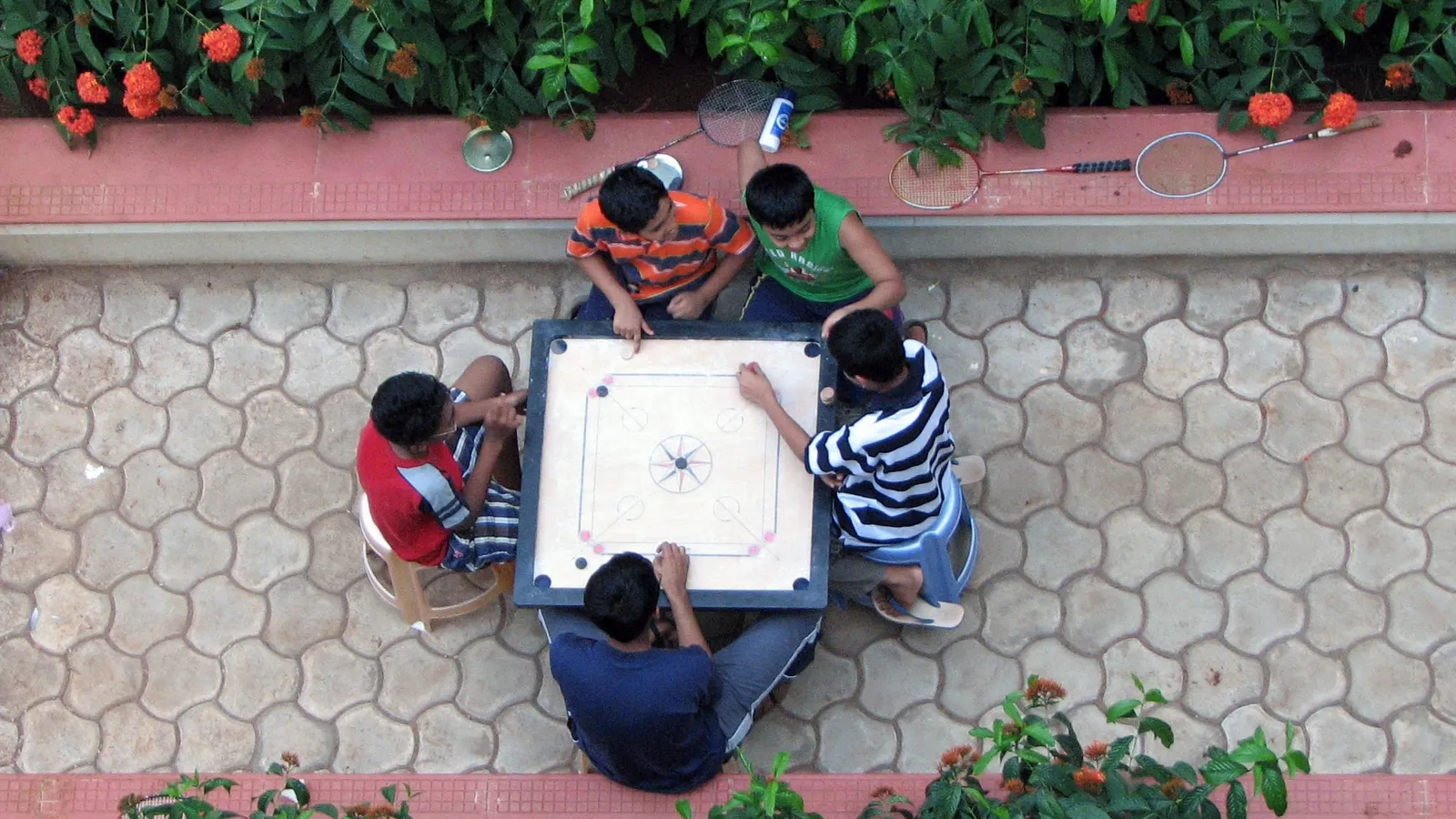
The goal is not to compete with the party. It is to make sure the day isn't spent watching the group chat. A simple plan:
Let your child choose one activity from three you can afford: a park and chaat, a film, a cycling trip, or a game afternoon.
Invite one friend they already enjoy, if they want company.
Put phones away during the activity, so party photos don't arrive mid-fun.
End with something small to look forward to next week.
If your child likes making things, our ideas for a science-themed birthday party at home work for an ordinary Saturday too, and you can grow salt or sugar crystals together over a few days. For a curious older child, the Fermi Simulation Lab has interactive simulations for the ideas that are easier to see than to read, which can make a quiet afternoon at home feel like an outing.
When is it more than one missed party?
One party is a disappointment. A pattern is different: being left out again and again, eating lunch alone, being mocked online, or not wanting to go to school. Then talk calmly with the class teacher or school counsellor, and note down what has happened and when. If friendship trouble is mixed with exam stress, our guide on when your child fights with a best friend before exams may help.
If your child seems persistently low, stops eating or sleeping well, or talks about hurting themselves, speak to a doctor or a child mental health professional. In India you can call Tele MANAS on 14416, the national mental health helpline, which offers 24x7 toll-free tele-counselling in multiple languages (Union Territory of Ladakh).
For this weekend, your child doesn't need to be on the list. They need to know they are on yours.