

On this page
A friendship fall-out is always painful, but when it happens right before crucial exams like JEE Main, NEET-UG, or school finals, the stress compounds. For teenagers, social bonds are neurologically prioritised. A conflict can feel completely overwhelming, draining the mental energy needed for active recall and problem-solving.
Why does a friendship fall-out derail studying?
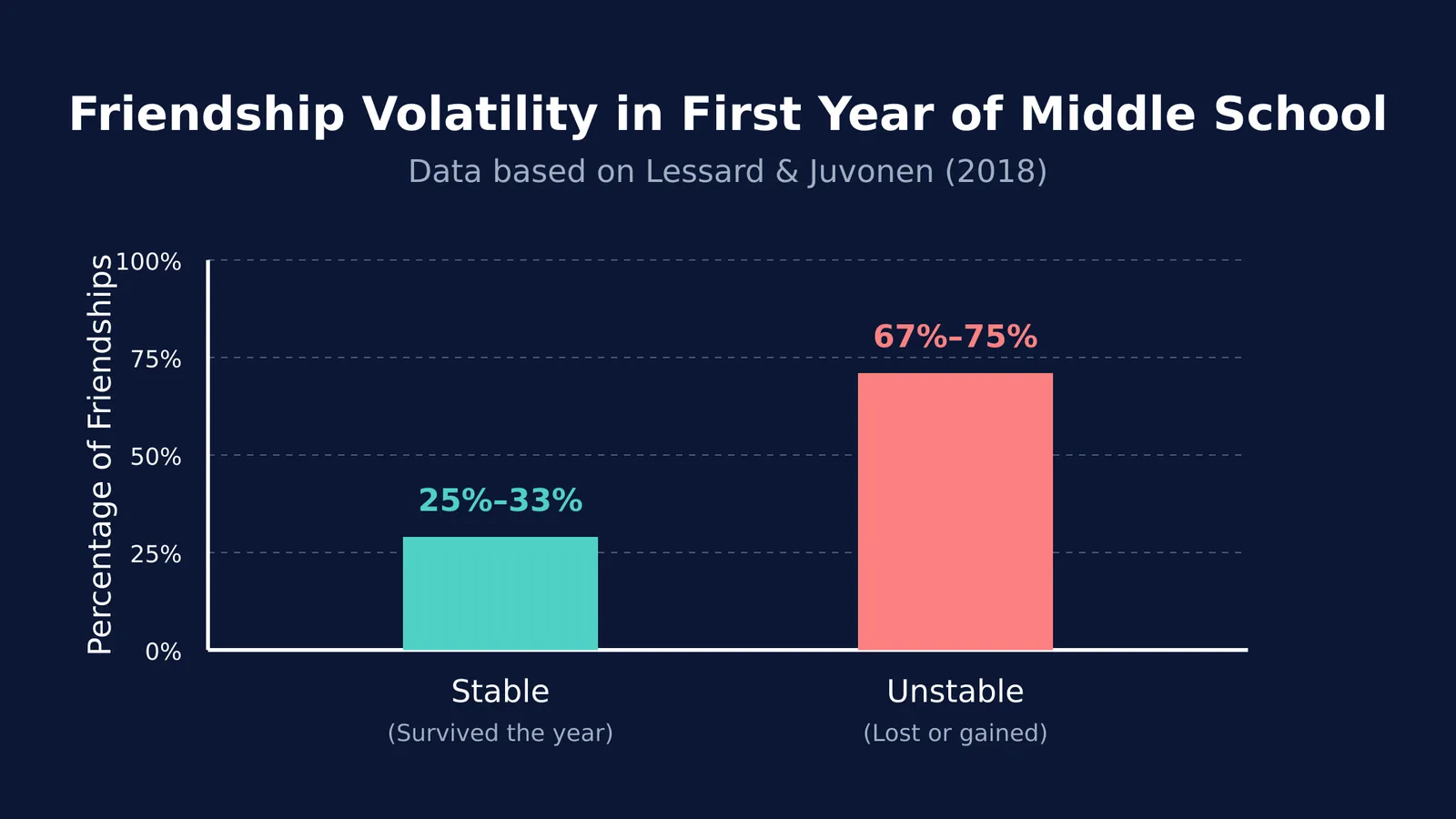
The disruption is not just in your teenager's head; it is a documented social phenomenon. A 2018 study by Leah M. Lessard and Jaana Juvonen tracked 5,991 students and found that friendship networks are highly volatile. Between 67% and 75% of friends were either lost or gained during the first year of middle school (Source: Journal of School Psychology).
This "friendship instability"—whether losing an old friend or navigating the dynamics of a new one—was found to directly lower academic engagement. The researchers noted that this drop in engagement subsequently predicted a lower cumulative Grade Point Average (GPA). When a student's working memory is crowded with rumination over what was said in a group chat, they simply cannot process complex physics or maths problems.
How to handle a friendship fall-out during exams?
When exam dates are looming, there often is not enough time or emotional bandwidth to fully resolve a major conflict. The immediate goal is damage control through compartmentalisation. Here is a framework to share with your teenager:
Set a drama boundary: Encourage them to mentally pause the conflict. A useful script to internalise is, "I am hurt about what happened, but my grades are for my future. I will deal with this friendship once the last exam is over."
Limit digital triggers: Social media makes fall-outs inescapable. Muting group chats and keeping the phone away during study hours is critical. Does a phone on your desk hurt focus? The brain drain study shows that even the mere presence of a smartphone reduces cognitive capacity.
Change the environment: If they usually study with that friend or in a place where they might run into them, shift to a new, neutral zone like a different room or a local library.
Use active study methods: Passive reading allows the mind to wander back to the argument. Switch to active recall, like doing practice papers or blurting out facts on a blank sheet.
What is a clear plan for getting back on track?
When a student is distracted by social stress, sitting down to a towering stack of textbooks can be paralysing. Breaking the work down into immediate, small tasks removes the friction of deciding what to do next.
If your child is struggling to structure their revision, Fermi's AI tutor can work out what they already know and build a plan for the session. By holding the line of reasoning and offering a clear next step instead of a blank page, it helps an overwhelmed student get moving again.
What can parents do to help with exam stress?
Parents play a vital role as an emotional anchor during these turbulent weeks. Let your teenager vent for a set time—perhaps 10 minutes over a cup of tea—and then gently guide the conversation back to their revision goals. Avoid getting involved in the drama yourself or calling the other child's parents, as this usually amplifies the conflict.
If the distress is causing them to skip meals, lose sleep, or display signs of anxiety that go beyond typical exam nerves, do not hesitate to seek professional support. Read more about Exam stress in teenagers: everyday support, and when to get help. In India, you can also reach out to the Tele MANAS helpline at 14416 (toll-free) for free, 24/7 mental health counselling.


