On this page
Most students know a buzzing phone breaks concentration. The more surprising claim is that a phone can cost you focus even when it is silent, face down and untouched. That claim comes from a 2017 study nicknamed "brain drain". Here is what it found, what happened when others tried to repeat it, and a simple plan that works either way.
What did the 2017 "brain drain" study find?
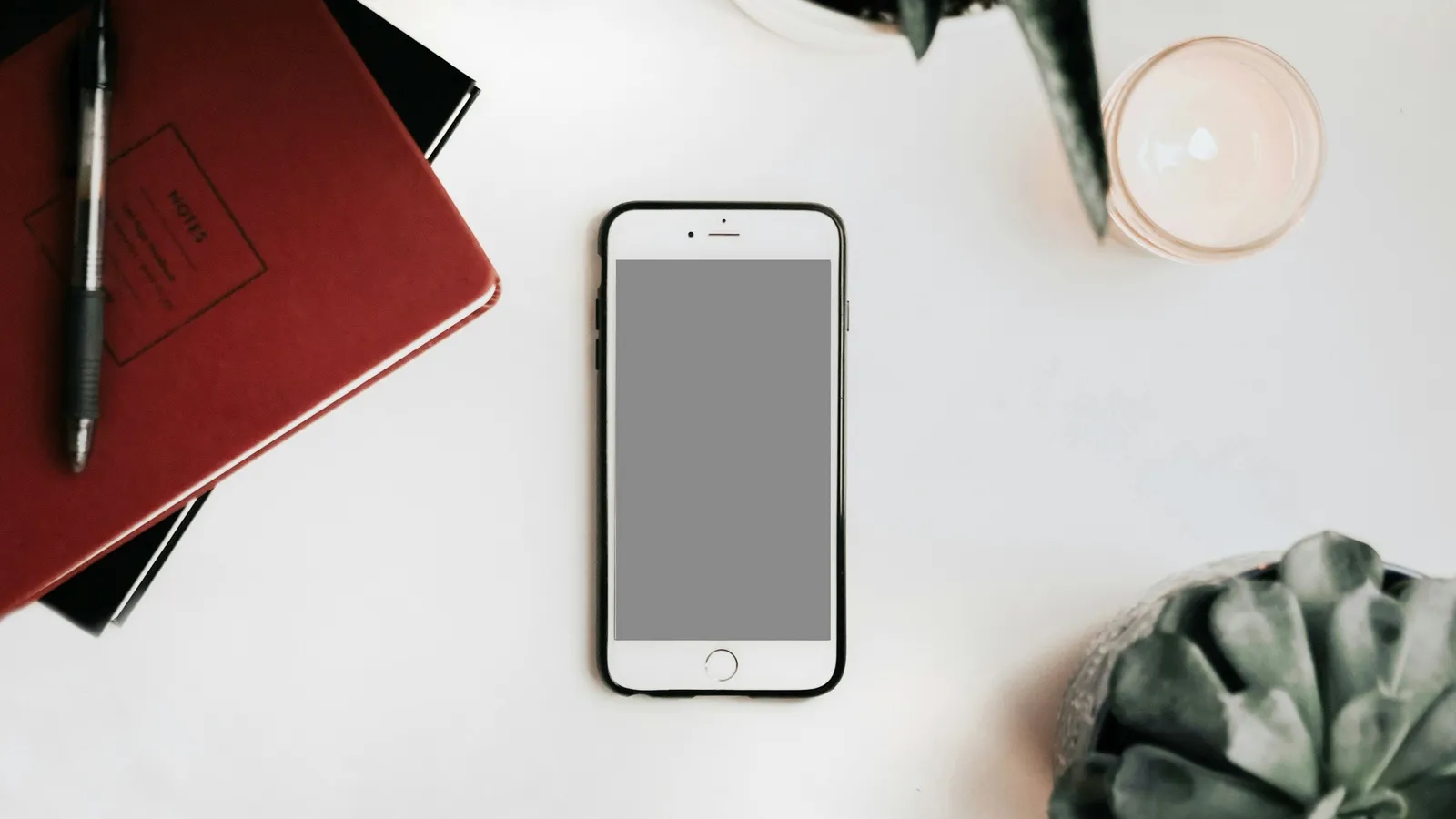
Adrian Ward, Kristen Duke, Ayelet Gneezy and Maarten Bos published "Brain Drain: The Mere Presence of One's Own Smartphone Reduces Available Cognitive Capacity" in the Journal of the Association for Consumer Research. According to the University of Texas at Austin's summary, the experiments involved nearly 800 smartphone users. Participants did tests that needed full concentration while their silenced phone sat face down on the desk, in a pocket or bag, or in another room.
People whose phones were in another room did significantly better than those with phones on the desk, and slightly better than those with phones in a pocket or bag. Whether the phone was turned on or off made no difference. The paper's abstract reports that the presence of the phone reduced available cognitive capacity even when people successfully resisted checking it, and that the cost was highest for people most dependent on their phones.
Ward summed up the dependence finding in the university's release: "People who depend more on their phones will benefit the most from leaving them in another room when they have something important to focus on, but they are probably the least willing to do that."
Did the brain drain effect replicate?
Not cleanly. In 2022, Ana Ruiz Pardo and John Paul Minda ran a pre-registered direct replication of Ward's second experiment in Acta Psychologica, with the same phone locations and on/off conditions. They found no difference between phone locations on either the memory task or the attention task.
A 2023 meta-analysis in Behavioral Sciences by Tobias Böttger, Michael Poschik and Klaus Zierer pooled 22 studies. It found a small but significant negative effect of phone presence overall (g = −0.14). The effect was clearest for memory (g = −0.23), while effects on attention and general cognitive performance were not significant. When studies were grouped by region, only those from Asia showed a significant pooled effect.
The honest summary: a phone on the desk probably does cost something, but the cost is smaller and less consistent than the 2017 headlines suggested.
Should I still move my phone?
Yes, because the cost of moving it is close to zero, and the bigger, well-known problem of checking the phone during study is removed at the same time. A small expected benefit for no effort is a good trade.
A practical phone plan for study time
Pick a phone spot outside your study room. A charging point in the hall or kitchen works. Put the phone there at the start of every focused block.
Handle the real reasons you keep it close. Coaching apps, class groups and OTPs are genuine needs. Decide set check times, for example at each long break, and tell friends you reply then.
Use a paper list for things you want to look up. When you think "I should check that", write it down and handle the list at the break.
If you study on a laptop or tablet, keep it single-purpose. Close messaging and video tabs, and sign out of social apps on that device.
Run a one-week test. Do your usual problem sets with the phone in another room and note how many questions you finish and how often you lose your place. Your own data is the best guide.
If you use a device to look things up while you study, keep it to one task. The Fermi Concept Library covers every concept in physics, chemistry, biology, mathematics and computing, each with its own lesson, so you can check an idea without opening a feed.
Parents can help by making this a family rule rather than a punishment; our guide to family rules for phones during homework and our piece on setting up a good study space at home have more. If you study in timed blocks, what the research says about Pomodoro breaks shows how to use breaks without the phone.
Tonight, put your phone in another room before you open your books, and see how the first hour feels.