On this page
Many students know the feeling: you studied, you knew the material, and then in the exam hall your mind filled with worry and the answers would not come. In 2011, two University of Chicago researchers tested a very simple idea for this. Write your worries down just before the test.
This post explains what that study did, what later studies found, and how you can try the exercise. It is a study technique, not a treatment. If worry about exams is affecting your sleep, eating or daily life, please talk to a parent, a school counsellor or a doctor.
What did Ramirez and Beilock actually do?
Gerardo Ramirez and Sian Beilock published their study in Science in January 2011. They ran two laboratory experiments and two randomized experiments in a real school. Their idea was that a high-stakes exam triggers worries that use up the working memory you need for the questions, and that putting those worries on paper might free some of it.
The University of Chicago's release on the study describes both parts. In the lab, college students took a maths test, then a second one under pressure: money was at stake, they were videotaped, and they were told maths teachers would review their work. Students who wrote about their feelings before the pressure test improved their accuracy by 5%, while the accuracy of a control group, who sat quietly instead, dropped by 12%.
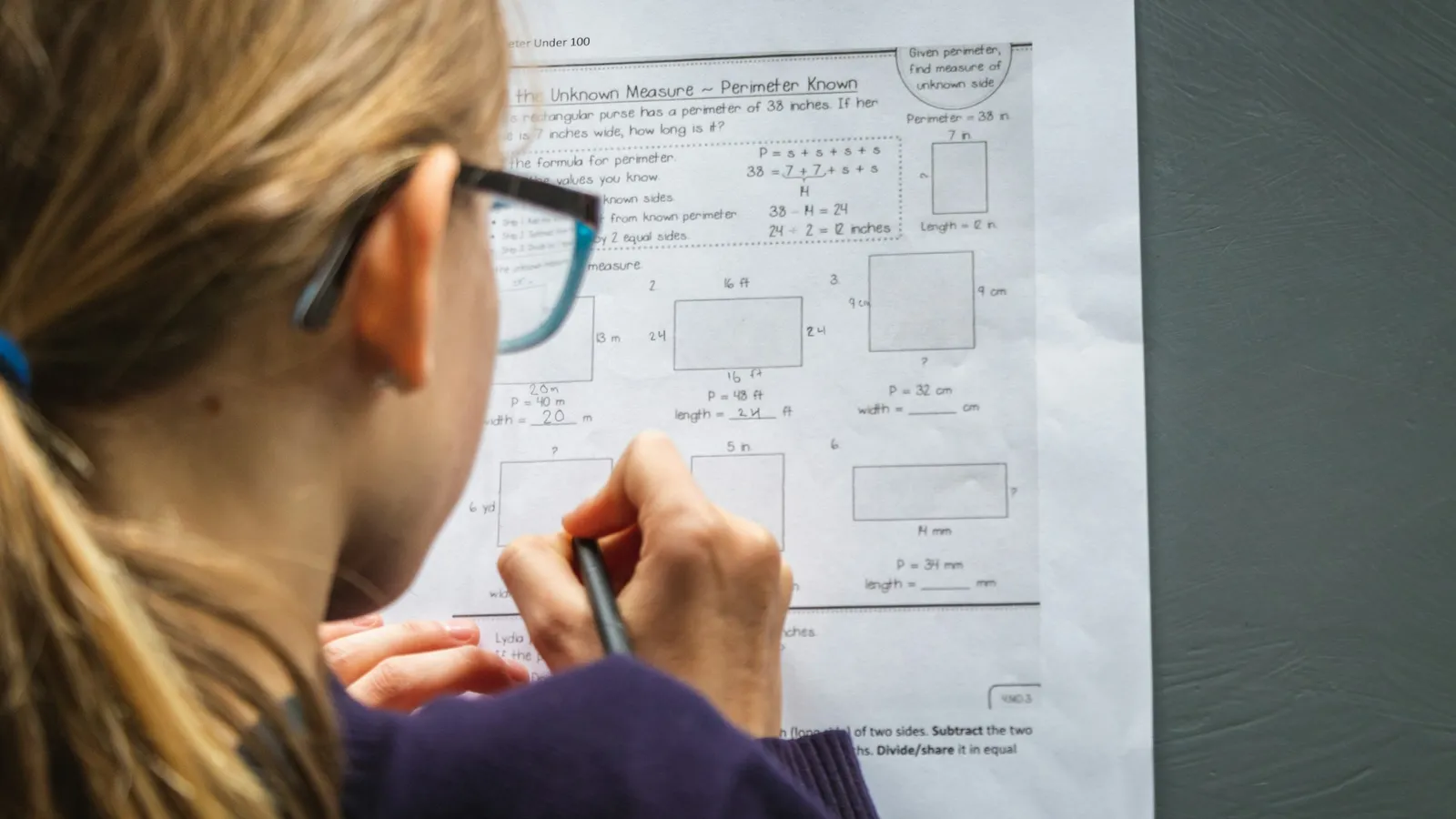
In the classroom, ninth-grade students sitting their first high school biology final spent 10 minutes before the exam either writing about their feelings about the test or thinking about a topic that would not be on it. Among highly anxious students, those who wrote averaged a B+, while those who did not averaged a B-. The paper's abstract says the benefit was largest for students who are habitually anxious about tests.
Did it hold up?
This is where honesty matters. In 2018, a large project published in Nature Human Behaviour by Colin Camerer and colleagues re-ran 21 social science experiments from Nature and Science with larger samples. Ramirez and Beilock's study was one of them, and according to the FORRT replication atlas, the replication did not reach significance in the same direction as the original.
A 2021 classroom study in Cognitive Research: Principles and Implications by Sarah Myers, Sara Davis and Jason Chan had psychology students alternate between expressive writing and a control task before four real exams. Writing did not reduce test anxiety or improve scores.
So the fair summary is: one well-known study found a benefit, especially for anxious students, and later attempts have not reliably reproduced it. It costs ten minutes to try, but it is not an established fix, and it does not replace preparation.
How to try it before your next test
Use a low-stakes test first, like a weekly coaching test or a school unit test, not your board exam or JEE.
Find 10 minutes just before the test, ideally at your desk or in a quiet corner, not while scrolling through notes.
Write continuously about how you feel about this test. Be specific: "I am worried I will blank on organic, like last time." "I am scared my parents will be disappointed." Do not worry about spelling or neatness.
Name the worry, then stop. You do not need to solve anything. The point of the original study was simply to get the thoughts onto paper.
Fold or tear up the page if you prefer. Nobody needs to read it.
Start the test.
Afterwards, write one line in a notebook: did you feel more settled, the same, or worse? How did the test go compared with similar ones? After three or four tries you will have your own answer.
What else helps on test day?
Preparation does more than any pre-exam trick. Self-testing in the weeks before means the answers have already been retrieved many times; see why rereading feels like learning. Sleep matters too; see why sleep before an exam beats an all-nighter. Parents can find suggestions in our guide to exam season at home.
If a worry is about a specific topic, turn it into a task the evening before. Pick two problems on the chapter that scares you and work through them in the Fermi Problem Library, which explains the reasoning step by step rather than printing an answer.