On this page
You don't need a separate study room to give your child a good place to work. In most Indian homes, a good study space is a corner, a table and a few family agreements. Research on attention points to what matters most: fewer interruptions, less noise and less clutter. Here is a checklist you can work through in an evening.
Why does the space matter at all?
Attention is limited, and the environment competes for it. In one experiment, kindergarten children had science lessons in a lab classroom with walls that were either heavily decorated or bare. With decorated walls, children spent more time off task and learned less. That study was with kindergarten children, so treat it as a hint for teenagers rather than proof. The principle is simple: everything in view is something the brain has to ignore.
A five-part checklist for the study space
Work through these in order, one evening at a time if needed.
1. The phone: out of the room, alerts off
The phone is the most obvious competitor. When researchers watched 263 students study at home for 15 minutes, students averaged less than six minutes on task before switching, mostly to texting and social media. Phone notifications alone, even unanswered, disrupted performance on an attention task.
Give the phone a fixed parking spot outside the study area, such as a charger in the hall.
Turn notifications off at the start of each study block.
Use a cheap kitchen timer for breaks instead of the phone's clock.
Our guide on why a phone on the desk hurts focus explains the "brain drain" study and the debate around it.
2. Noise: lower it, and agree quiet hours
A review of research on children found that noise harms listening comprehension and also non-auditory tasks such as remembering lists and reading, and that long-term exposure to loud aircraft noise is linked to weaker reading. The authors note the effects are usually small, but a quieter space is one of the easier things a family can change.
Put the desk as far as possible from the TV, the kitchen and the main door.
Agree on family quiet hours during the main study block, for example 7 to 9 pm on weekdays, with the TV low or off.
If the room is shared, a sibling doing their own homework at the same time is easier to manage than one watching videos.
If your child likes music while studying, look at the evidence together in does music help or hurt studying?
3. The desk: clear surface, tools within reach
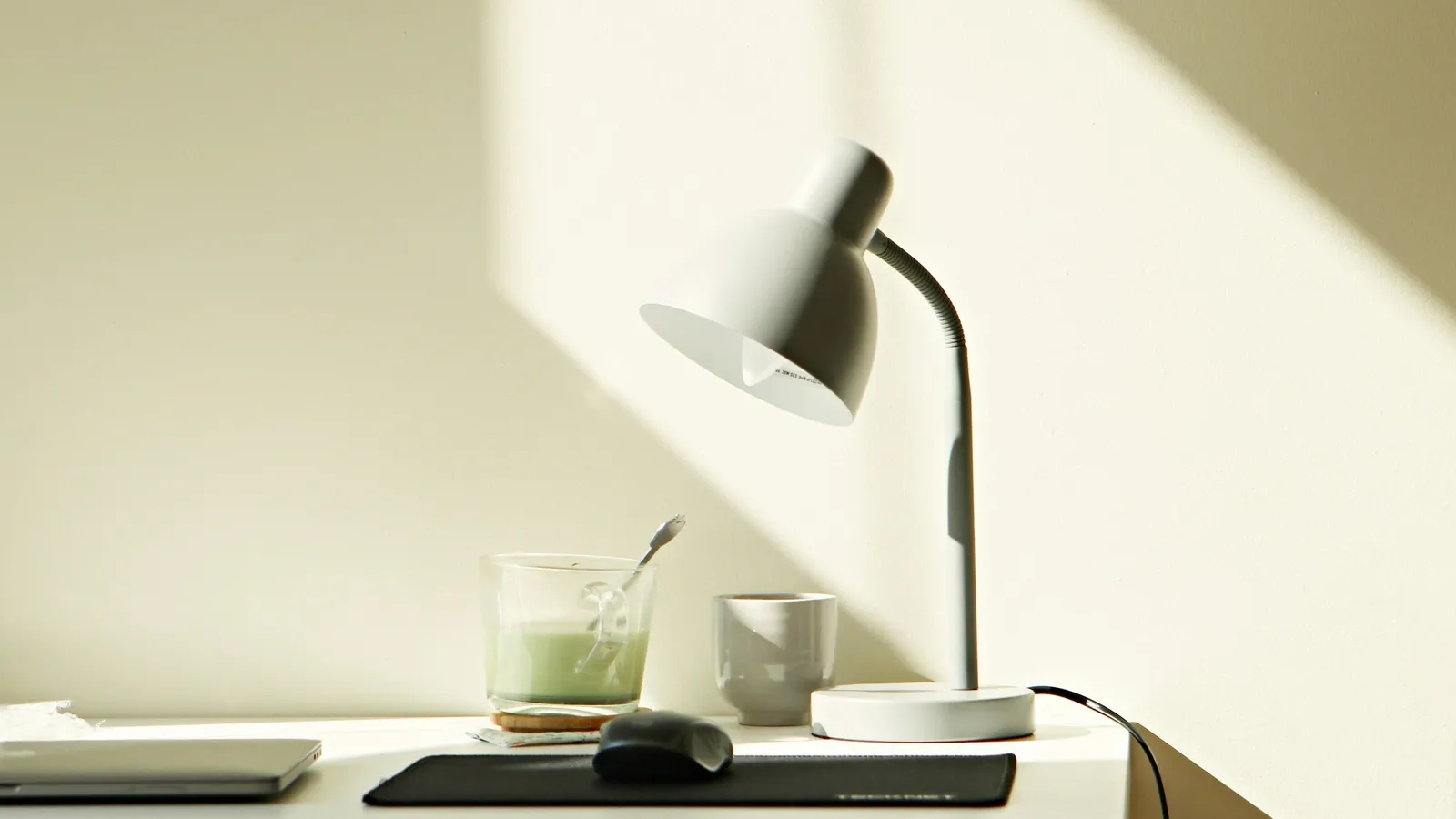
Keep only what tonight's work needs on the table: the book, a notebook, a pen, a pencil, an eraser, a calculator if allowed.
Store everything else in a box or drawer, out of sight.
Keep the wall in front of the desk plain. A timetable and a formula sheet are fine; a collage of posters is not.
If the desk is also the dining table, a "study box" that comes out at 7 pm and goes away at 9 pm creates the same effect.
4. Light and comfort: practical basics
There is no single magic setting, but a few basics prevent common problems.
Use good, even light on the page, with a desk lamp in the evening so your child isn't working in their own shadow.
Use a chair and table height that let feet rest flat and the book sit comfortably without hunching.
Try to keep the bed for sleep. Many students find it hard to stay alert there, and a separate spot keeps work and rest apart.
Keep a water bottle on the desk so "getting a drink" isn't a reason to wander.
5. Routine: same place, same time
A place becomes a study place when it is used for study again and again. Start at the same time most days, in the same spot, with the same short ritual: phone parked, desk cleared, timer set. Our piece on building a study routine that lasts explains how habits form.
Keep screens to one purpose
If your child studies on a laptop, the same rule applies to the screen as to the desk: only what tonight's work needs. One tab for the task, for example the Fermi Simulation Lab for ideas that are easier to see than read, and messaging closed.
Review the set-up together after two weeks. Ask what is working and what is still getting in the way, and change one thing at a time.