On this page
Your electricity meter can now report your units without anyone coming to read it. A smart city applies that idea to a whole town: signals, pipes, garbage trucks and streetlights report what they are doing, and people in a control room act on it.
What is a smart city, in plain words?
According to a Press Information Bureau research note from September 2024, the Smart Cities Mission was launched on 25 June 2015 and aims to improve the quality of life in 100 selected cities through efficient services, robust infrastructure and a sustainable environment.
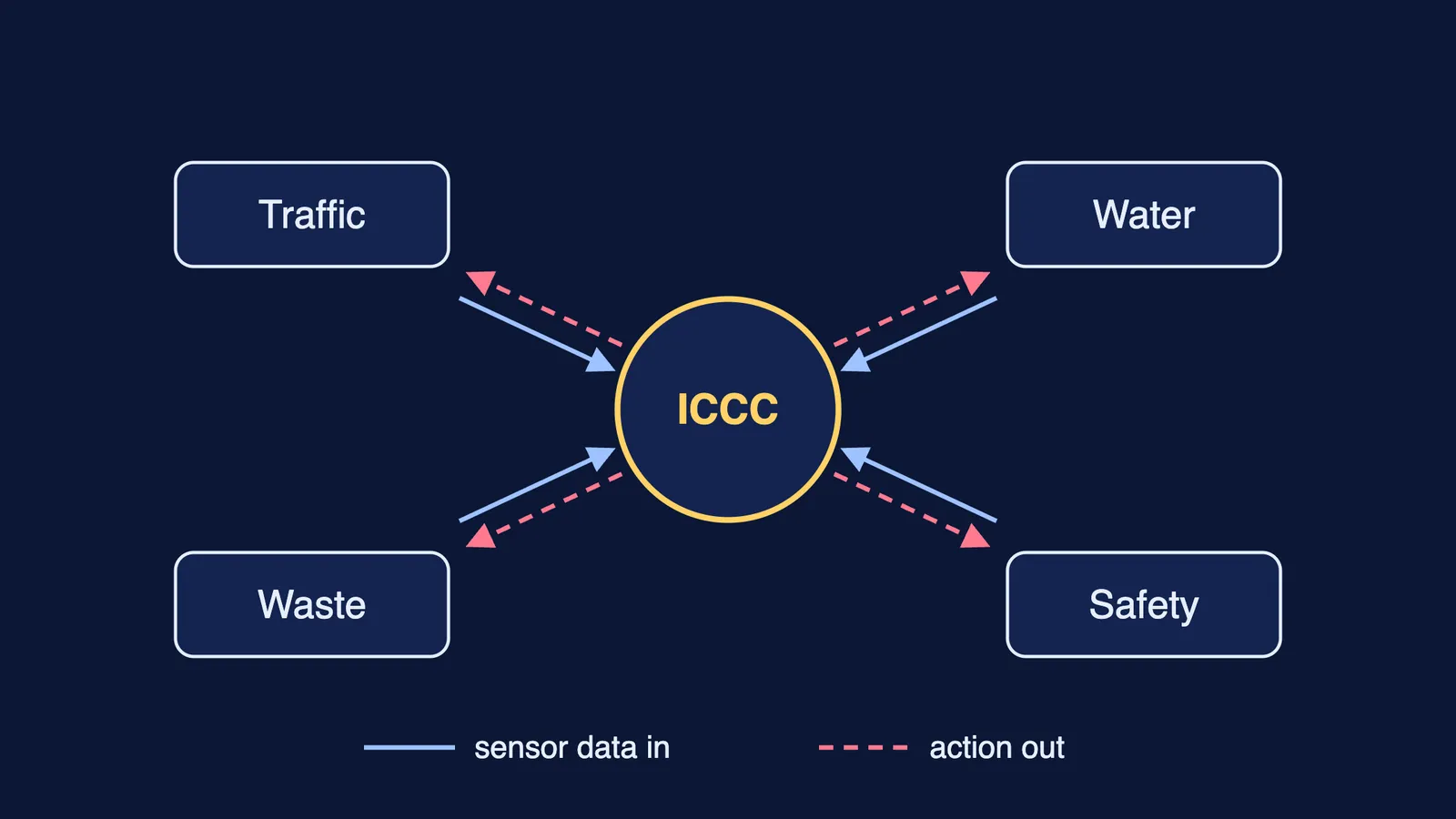
Each city chose one area to develop as a model and added pan-city projects, which the note calls technology-driven solutions. The sensors live mostly in the second part. Any smart system is a loop of four steps:
Sense: a device measures something physical, such as water pressure or a vehicle's position.
Send: the reading travels over a network to a central computer.
Decide: software or a person compares it with what is normal.
Act: someone retimes a signal, sends a repair crew or reroutes a truck.
If any step is missing, the city has gadgets, not a smart system.
What do smart city sensors actually measure?
Most of it is school physics. A smart electricity meter counts energy in kWh, as we explain in how a smart meter measures your units. Water networks use flow meters and pressure sensors. In many smart cities, garbage trucks carry RFID tags so the city knows where each one is. Traffic systems use cameras and vehicle detectors; some detectors time an echo, like car parking sensors.
The data meets in an Integrated Command and Control Centre (ICCC). The PIB note says all 100 smart cities have operational ICCCs, and that these centres worked as COVID war rooms during the pandemic.
What have India's smart city projects built?
The September 2024 PIB note lists, across the 100 cities:
over 83,000 CCTV cameras and 1,884 emergency call boxes;
more than 9,900 km of water supply network monitored through SCADA, a system that collects readings from pumps and pipes;
around 4,400 waste vehicles fitted with RFID for automatic vehicle location;
more than 52 lakh solar or LED streetlights;
an Intelligent Transport Management System monitored through the ICCCs.
The mission formally closed its funding on 31 March 2025. A Rajya Sabha reply reported by IANS via Morung Express said 7,741 of 8,064 projects (96 per cent) were complete as of 1 December 2025, with 323 still ongoing.
Project completion is not the same as a city being finished. Down To Earth reported that as of March 2025, only 18 of the 100 cities had completed all their projects.
How does a smart water network find a leak? A worked example
The PIB note says SCADA monitoring is used to reduce non-revenue water and leakages. Non-revenue water is water the city pumps but never bills. Here is the sum, with made-up round numbers for one neighbourhood.
The flow meter on the zone's inlet pipe reads 10 million litres in a day.
The household meters add up to 7.2 million litres.
Non-revenue water = (10 − 7.2) ÷ 10 = 0.28, so 28% is unaccounted for.
Check the night. At 3 am almost nobody uses water, yet the inlet still reads 60,000 litres an hour. Steady flow when use should be near zero points to a leak, not meter errors.
Pressure sensors narrow it down: pressure drops more than usual downstream of a leak, so comparing sensors sends the crew to one street instead of ten.
Sense (meters), send (SCADA), decide (the night-flow sum), act (the crew): the whole loop.
How can you check whether your city is smart?
Try this with a parent on a weekend.
Is your city one of the 100? Search its name with "smart city" and find the company that runs its projects.
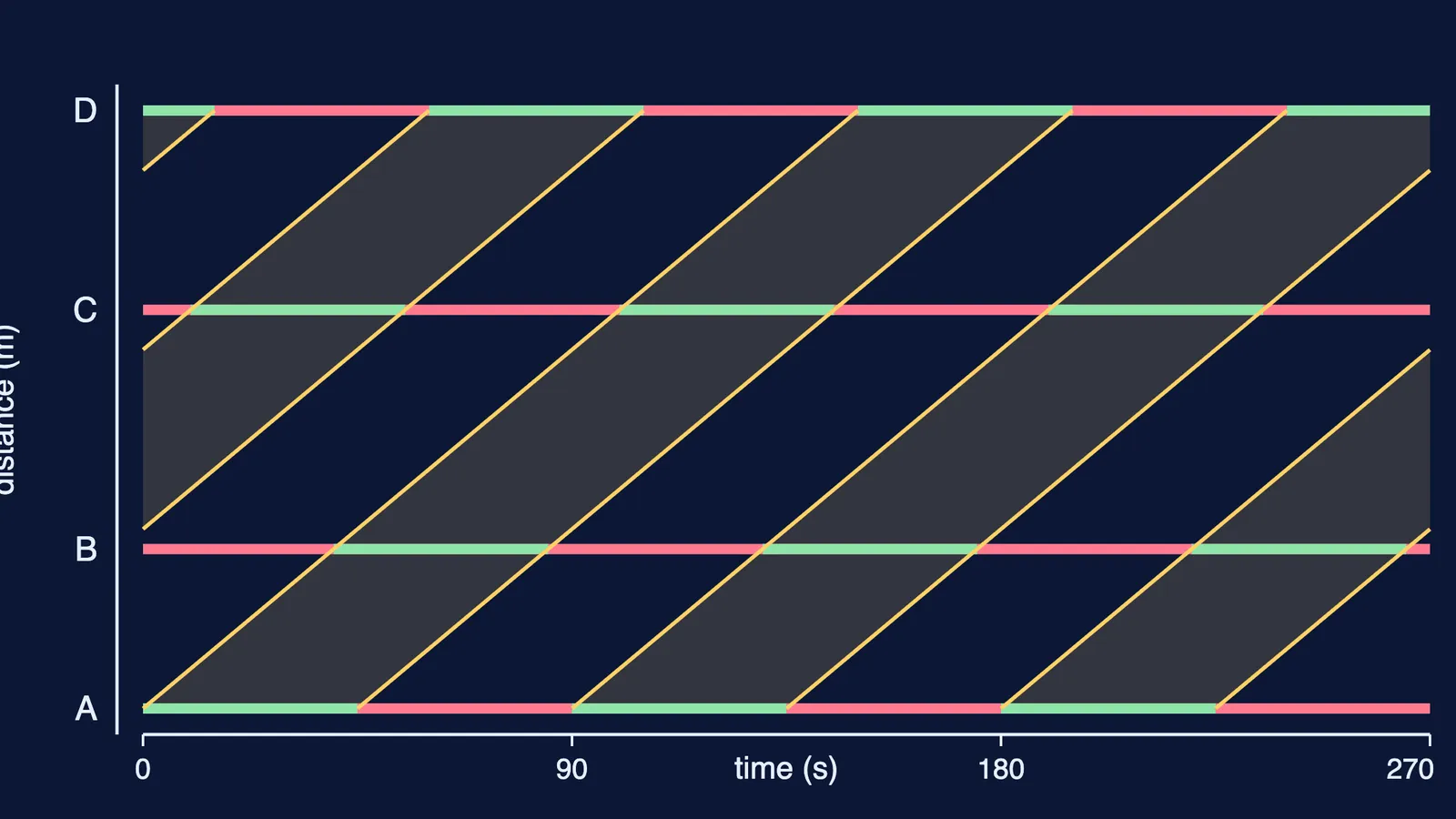
Traffic: do signals change with the queue, or run fixed cycles? Map apps estimate delays from phone data, as we explain in how map apps predict traffic.
Water: does your building get a metered bill or a flat charge? Without meters, step 2 of the leak sum is impossible.
Complaints: report a broken streetlight and count the days to the fix. That number measures the act step.
You can run the leak test at home too: read your home's water meter at bedtime and again at waking, with no water used and no tank filling overnight. If it moved, you have found a leak with a city's logic.
Flow, pressure and energy are the physics underneath all of this. If pressure drop along a pipe is hard to picture, the Fermi Simulation Lab has interactive simulations for ideas that are easier to see than to read, and the Fermi Concept Library has a lesson for each concept, from current electricity to fluid flow.