On this page
You can read the pollination pages of NCERT Class 12 Biology three times and still go blank when a question describes a strange flower and asks who pollinates it. The exam wants one move: read the clues, name the agent, and give the adaptation as your reason. An AI chatbot can play examiner for you if you give it a tight prompt. Here is the prompt, a worked round and the clue list.
Why quiz yourself instead of rereading?
Testing yourself helps you remember more than rereading does, but the benefit shows up later. In a 2006 study in Psychological Science, Henry Roediger and Jeffrey Karpicke found that students who took recall tests on prose passages remembered substantially more on tests given 2 days and 1 week later than students who restudied the same passages. On a test given after 5 minutes, rereading came out ahead. Rereading also made students more confident, which is why it feels like it is working.
A mystery-flower quiz makes you recall the clue list every time, the same kind of practice the study tested.
What clues show a flower is wind, water or insect pollinated?
Use the NCERT chapter Sexual Reproduction in Flowering Plants (section 1.2.3) as the answer key. These are its clues:
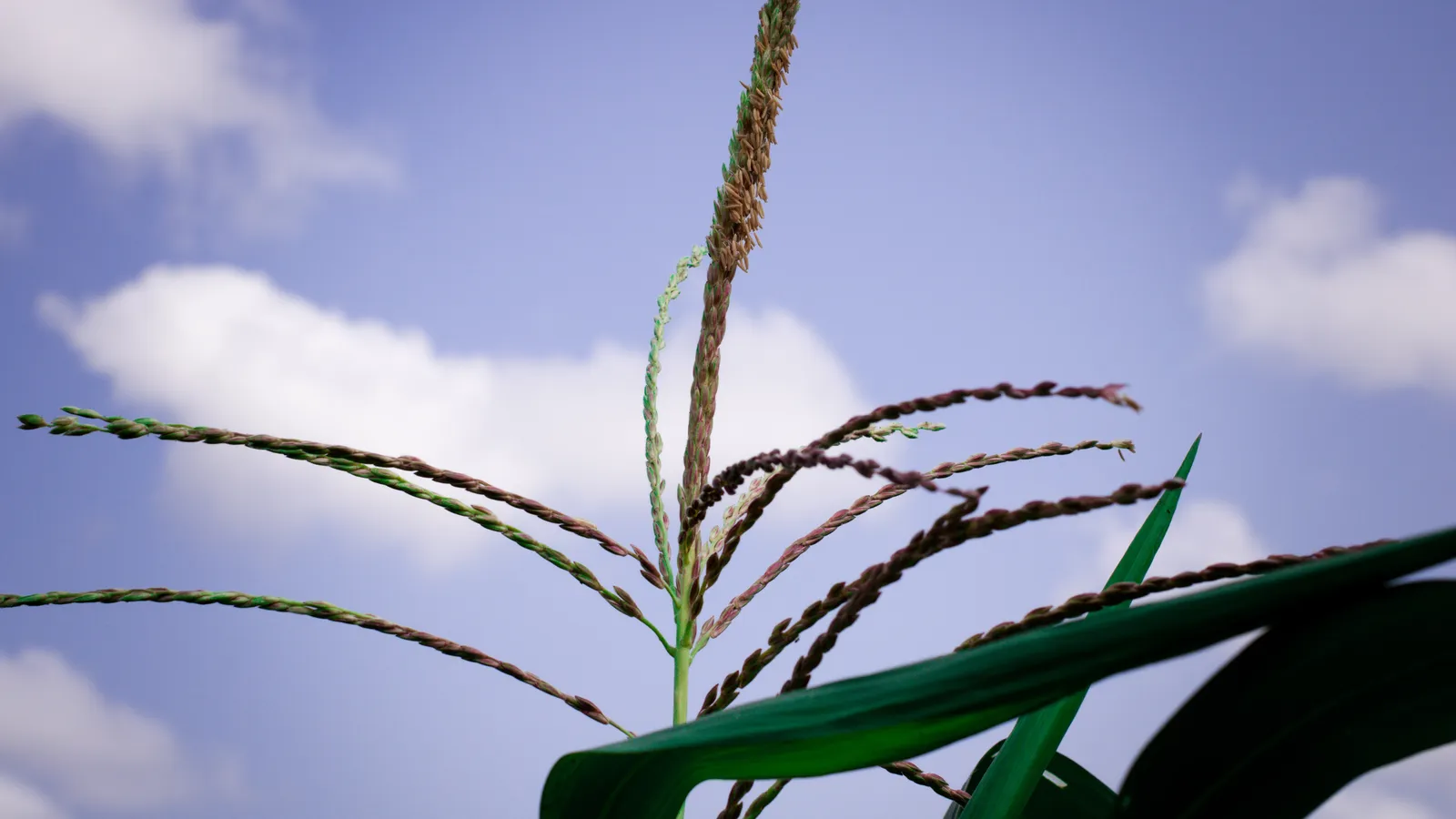
Wind: light, non-sticky pollen; well-exposed stamens; a large, often feathery stigma to trap airborne pollen; often a single ovule per ovary; many flowers packed into an inflorescence. The "silk" on a corn cob is stigma and style waving in the wind.
Water: rare, limited to about 30 genera, mostly monocots, such as *Vallisneria*, *Hydrilla* and the seagrass *Zostera*. In *Vallisneria*, the female flower reaches the surface on a long stalk, and male flowers or pollen float to it. In many seagrasses, the pollen is long and ribbon-like and travels underwater. Most water-pollinated species protect their pollen from wetting with a mucilaginous covering.
Insects: flowers that are usually large, colourful, fragrant and rich in nectar; small flowers clustered into an inflorescence so they stand out; sticky pollen. Flowers pollinated by flies and beetles give off foul odours.
The same chapter notes that wind- and water-pollinated flowers are not very colourful and do not make nectar. Insects are the answer you will give most often: an Oikos study by Ollerton, Winfree and Tarrant estimated that animals pollinate 87.5% of flowering plant species.
For more on these clues, see our guides on wind and water pollination adaptations for NEET and how flowers attract insect pollinators.
What prompt should you give the AI?
Paste this into any chatbot:
"Quiz me on pollination for NCERT Class 12 Biology. Describe one mystery flower in three clues about its structure and habitat. Don't name the plant or the agent. Wait for my answer. I will name the pollinating agent (wind, water, insect or another animal) and give one adaptation as my reason. Mark the agent and the reason separately. If my reason is vague, such as 'it lives in water', ask me which feature proves it. Then give the next flower. Every fifth flower should be a trap, such as an aquatic plant that is not water pollinated."
The rule that matters is marking the agent and the reason separately. A correct agent with a weak reason should not count as a full mark.
What does a good answer look like?
Round 1. The AI says: "This plant has a tassel at its top that sheds clouds of pollen. Lower down, long threads hang out of a sheath. The plant is a grass."
Strong answer: "Wind. The stamens are well exposed in the tassel, and the long threads are a large stigma that traps airborne pollen."
Round 2. The AI says: "This plant grows in fresh water. Its flowers rise above the water surface. They are large and colourful."
Weak answer: "Water, because it grows in a pond." That answer is wrong. NCERT names water hyacinth and water lily as aquatic plants whose flowers come above the water and are pollinated by insects or wind. Strong answer: "Insect. Large, colourful flowers held above the water point to animal visitors, not water."
How do you make the quiz harder as you improve?
Cut the AI to two clues, then one.
Ask for flowers with unusual rewards, such as the *Yucca* plant and its moth, which NCERT describes as unable to complete their life cycles without each other.
Switch roles: you describe a flower and the AI names the agent, so you practise writing clues.
Explain why each clue works. Our post on asking why after every NCERT fact shows how to do this.
Chatbots can be wrong. If the AI accepts a reason you cannot find in the NCERT chapter, check the page before you trust it.
If a clue keeps tripping you up because the idea underneath is shaky, the Fermi Concept Library has a lesson for each biology concept. Fermi's AI tutor notices where you are stuck and decides whether to explain, ask or show.
Try ten flowers tonight, and keep a list of every reason the AI marked as vague.