

On this page
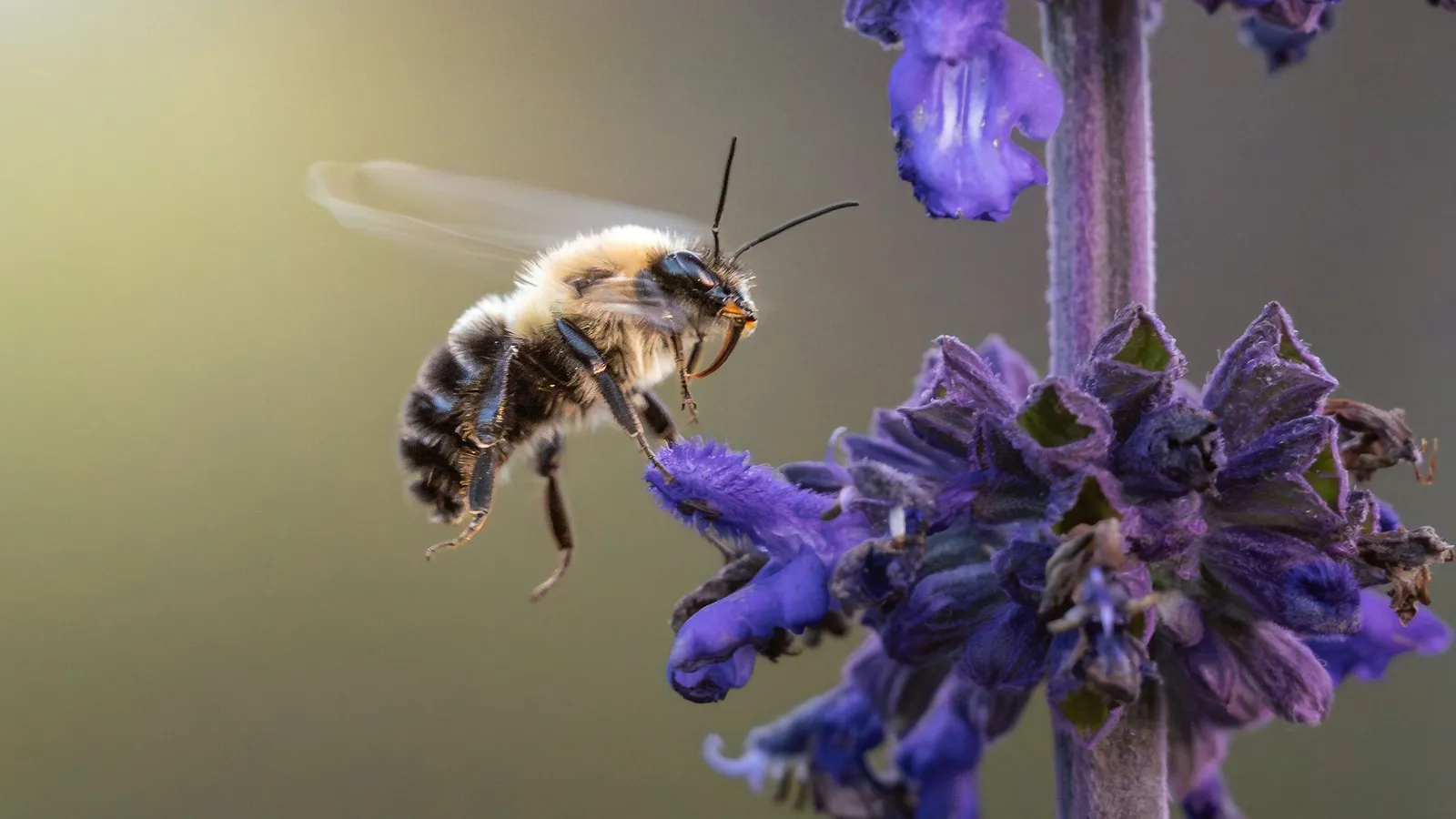
A flower cannot walk. Its pollen has to be carried to a stigma, usually by an animal. The NCERT Class 12 chapter Sexual Reproduction in Flowering Plants puts it plainly: the majority of insect-pollinated flowers are large, colourful, fragrant and rich in nectar, and among animals, insects, particularly bees, are the dominant pollinators.
This matters for most plants. In a 2011 study in Oikos, Ollerton, Winfree and Tarrant estimated that 308,006 species, or 87.5% of flowering plants, are pollinated by animals. The share rose from a mean of 78% in temperate communities to 94% in tropical ones.
How do flowers attract insect pollinators?
A flower that relies on insects has two jobs: advertise, then pay. NCERT lists the advertising first. Animals are attracted by colour and/or fragrance, and when flowers are small, many are clustered into an inflorescence so the group is easy to spot.
The signal is tuned to the visitor. NCERT notes that flowers pollinated by flies and beetles give off foul odours to attract them. If you want the chemistry and physics of why scent carries, read our explainer on why flowers have a strong smell.
Colour is also seen through the insect's eyes, not yours. A review by Briscoe and Chittka describes the basic plan of insect colour vision as UV-blue-green trichromacy, which dates back to the Devonian ancestor of all winged insects. Because most insects have a receptor for ultraviolet, which you lack, a petal can look quite different to them than it does to you.
What are floral rewards, and why do flowers need them?
A signal brings an insect once. A reward brings it back. In NCERT's words, to sustain animal visits the flowers have to provide rewards, and nectar and pollen grains are the usual floral rewards.
The reward is also where pollination actually happens. To collect nectar or pollen, the visitor touches the anthers and the stigma. Its body gets coated with pollen, which is generally sticky in animal-pollinated flowers. At the next flower, that pollen touches a stigma.
Not every visitor does the job. NCERT calls insects that consume pollen or nectar without bringing about pollination pollen or nectar robbers.
Why does Amorphophallus have such a large flower?
Some plants pay in a different currency. NCERT says that in some species the floral reward is a safe place to lay eggs, and its example is the tallest flower of Amorphophallus, which is about 6 feet tall. A similar deal exists between a moth and the plant Yucca. The moth lays its eggs in the locule of the ovary, the flower gets pollinated, and the larvae hatch as the seeds develop. Neither can complete its life cycle without the other.
Researchers have measured how the giant species, the titan arum, puts its size to work. Writing in Plant Biology in 2009, Barthlott and colleagues described its fountain-like bloom as up to 3 m high. They filmed the central column, the spadix, with a thermal camera and found it heats up in pulses starting from the base. Its surface reached over 36 °C when the surrounding air was 27 °C. Waves of carrion-like odour came in step with the heat pulses.
The authors call it a convection flower. They propose that the heat pulses, the fountain-like shape and the sheer size together let the plant make its own rising air currents, which would help carry its smell.
Two points to remember. First, the giant structure is an inflorescence, a spadix of many small flowers, even though textbooks call it a flower. Second, a carrion smell fits NCERT's rule that flowers pollinated by flies and beetles use foul odours.
How can you work out how any flower attracts insects?
Use these four questions on any flower in a textbook, an exam or a garden:
What does it show? Size, colour, and whether small flowers are clustered together.
What does it smell like? Sweet, or foul like rotting meat?
What does it pay? Nectar, pollen, or a place to lay eggs.
Does the visitor touch both anthers and stigma? If not, it is a robber, not a pollinator.
Worked example, Amorphophallus: it shows enormous size; it smells of carrion, which points to flies and beetles; it pays with a safe egg-laying site; and, the 2009 study suggests, its heat helps spread the smell. Worked example, Yucca: the reward is the ovary itself as a nursery, and pollination is the price the moth pays.
NCERT also suggests watching flowers such as mango, papaya or banana over a few days. Run the four questions on each.
If terms like autogamy, inflorescence and stigma receptivity start to blur, the Fermi Concept Library gives every biology concept its own lesson and shows where it sits in the map. To compare insect flowers with plants that skip animals altogether, read about adaptations of wind and water pollinated flowers. For where this whole idea began, see how Christian Konrad Sprengel showed that flowers recruit insects.


