On this page
Why does a flower bother with bright petals, scent and nectar? NCERT's Class 12 answer is that they attract animals that carry pollen. That answer goes back to a German schoolteacher who spent his summers watching insects. This post covers what Christian Konrad Sprengel observed, why almost nobody listened, how Darwin rescued his work, and how you can make the same kind of observations yourself.
Who was Christian Konrad Sprengel?
Britannica records that Sprengel was born in Brandenburg, Germany, on 22 September 1750 and died in Berlin on 7 April 1816. He studied theology and languages, taught school in Spandau and Berlin, and became rector of the school at Spandau. He spent so much time on botany that he neglected his duties, and in 1794 he was dismissed with a pension.
As a theologian he believed that everything in nature was made for a purpose. So, when he looked at a flower, he asked what each small part was for. That question drove all his work.
What did Sprengel discover?
Britannica lists his main findings:
The nectaries (the parts that make nectar) are often marked by special colours, and he reasoned that the colours attract insects.
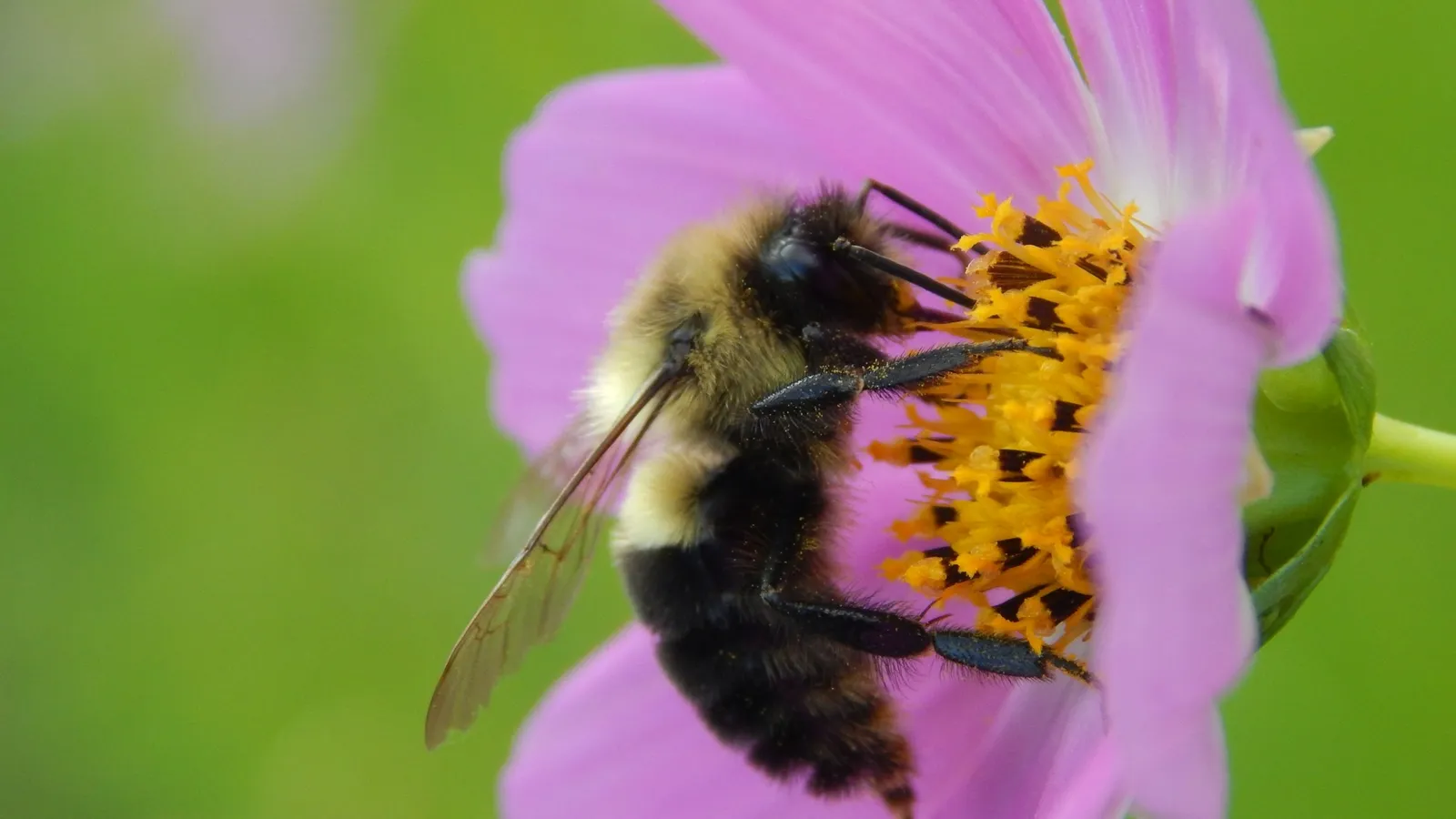
Insects carry pollen from the stamens of one flower to the pistil of another.
In many flowers that have both sexes, the stamens and pistil mature at different times, so a flower cannot fertilise itself. He called this dichogamy, a term still used.
Some flowers rely on wind instead, and he studied how they differ from insect-pollinated ones.
He put it all in a book published in 1793, Das entdeckte Geheimniss der Natur im Bau und in der Befruchtung der Blumen, "The secret of nature discovered in the structure and fertilisation of flowers". You can see the original pages in the Biodiversity Heritage Library.
Why was he ignored?
The book was not well received. Britannica says Sprengel became depressed, did not publish his other botanical research, and turned to philology instead. The idea that flowers are built around insects was ahead of its time.
How did Darwin bring him back?
Charles Darwin wrote in his autobiography that his interest in how insects fertilise flowers was "greatly enhanced by having procured and read in November 1841, through the advice of Robert Brown, a copy of C.K. Sprengel's wonderful book". That is the same Robert Brown who described Brownian motion, as told in our post on Robert Brown.
In On the Origin of Species (1859), Darwin leaned on Sprengel's dichogamy: "as C. C. Sprengel has shown, and as I can confirm, either the anthers burst before the stigma is ready for fertilisation, or the stigma is ready before the pollen of that flower is ready". (Darwin gives the initials as "C. C.")
Later in the autobiography Darwin wrote: "The merits of poor old Sprengel, so long overlooked, are now fully recognised many years after his death."
Where is Sprengel's idea in your NCERT book?
NCERT's Class 12 Biology chapter Sexual Reproduction in Flowering Plants reads like a modern summary of his book:
Most insect-pollinated flowers are large, colourful, fragrant and rich in nectar.
Nectar and pollen grains are the usual floral rewards.
Among outbreeding devices, in some species "pollen release and stigma receptivity are not synchronised". That is Sprengel's dichogamy.
Some visitors take nectar or pollen without pollinating; NCERT calls them pollen or nectar robbers.
Exam questions often ask you to name an outbreeding device and explain how it works. Our guide to outbreeding devices and pollination has practice on these.
Worked example: reading a flower's timetable
Here is how you would test for dichogamy, using sample observations of one flower over three mornings (not data from Sprengel):
Day 1: anthers split open and shed pollen; stigma lobes closed and dry.
Day 2: anthers empty and shrivelled; stigma lobes starting to open.
Day 3: stigma lobes fully open and sticky; no pollen left in this flower.
Reasoning:
Pollen is released on day 1 but the stigma is receptive only on day 3.
So this flower's own pollen is gone before its stigma can take any.
Any seeds must come from pollen carried in from another flower.
Pollen first, stigma later is called protandry. The reverse order, stigma first, is protogyny.
Common slips: calling it self-incompatibility, which is a chemical block that stops pollen growing on the stigma, not a timing difference; and assuming one observation is enough. Sprengel watched the same species over many days.
What can a student take from Sprengel's way of working?
Watch for a long time. His findings came from patient field observation, flower by flower.
Connect structure to function. Each part he studied, he linked to a job.
Do not judge an idea by its reception. His book was ignored for decades, yet Britannica describes his general theory of fertilisation as basically accepted today.
If floral structures and the terms for them are blurring together, the Fermi Concept Library covers every concept in physics, chemistry, biology, mathematics and computing.
Next step: pick one flowering plant near your home, check it at the same time for three days, and note when pollen appears and when the stigma looks sticky.