On this page
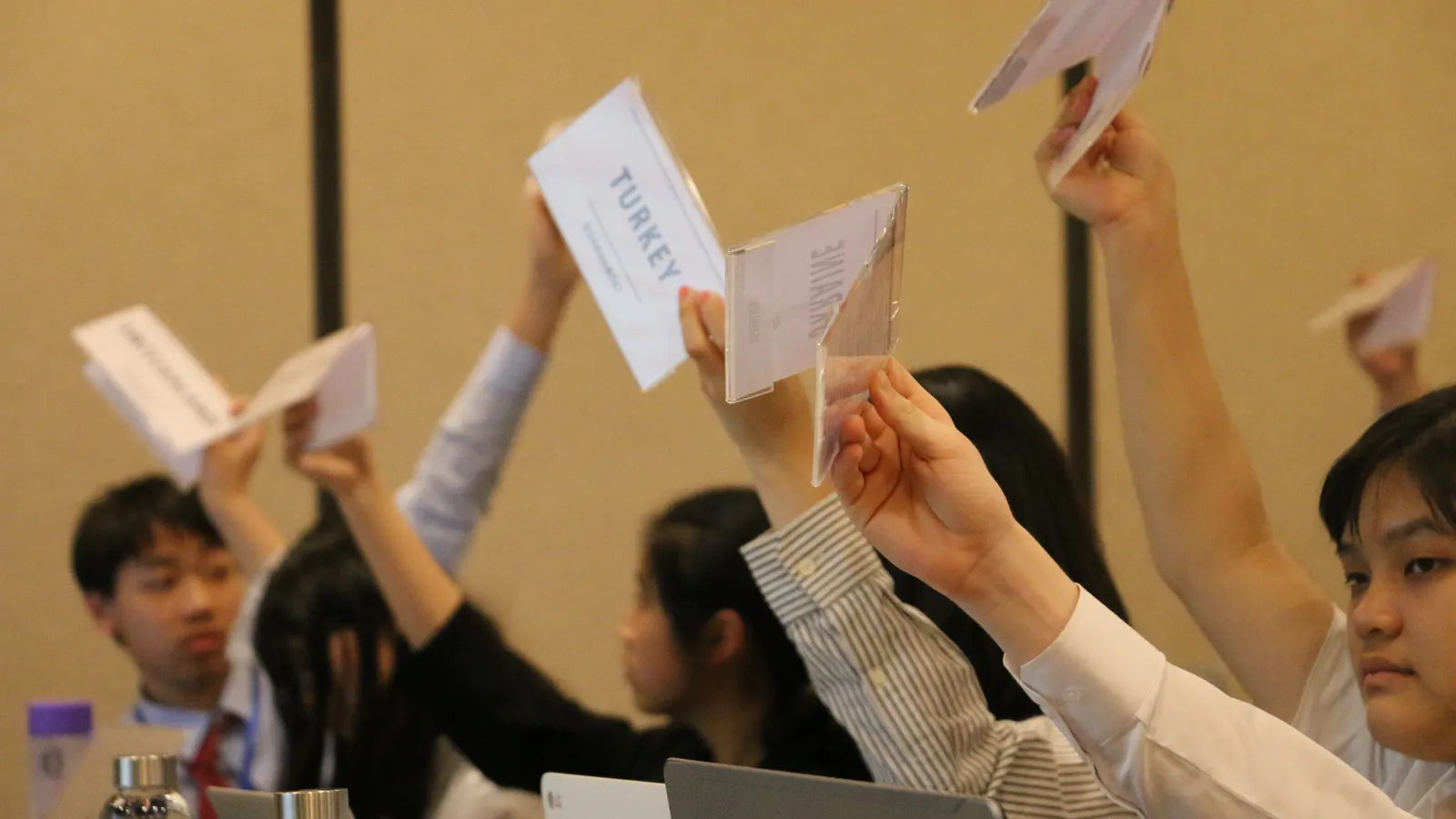
You have been given a country and a committee topic, and the position paper is due in a week. AI can get you from a confused first read to a sharp list of questions in an evening. It cannot tell you what your country actually believes. That has to come from the UN record and your government's own words.
What can AI do for a MUN position paper, and what can't it?
Think of AI as a patient senior who explains things, not as a library. It helps with understanding and planning, and is unreliable for facts, numbers, quotes and references.
The reference problem is measured. In a 2023 study in Scientific Reports, William Walters and Esther Wilder asked ChatGPT to write short literature reviews on 42 topics and checked all 636 citations it produced. 55% of the GPT-3.5 citations and 18% of the GPT-4 citations were fabricated. One invented resolution number can sink your credibility in committee.
Use AI for:
Explaining the topic in plain language and defining terms
Mapping the sub-issues and the main lines of disagreement
Turning the agenda into research questions
Giving feedback on the clarity of your draft
Use official sources for:
Every number, date and resolution symbol
What your country has said and how it has voted
Any quote you put in the paper
How do you turn a committee topic into research questions?
Say you are India in the General Assembly's First Committee, which deals with disarmament and international security. Ask AI to teach, not to write, with these prompts in order:
"Explain this agenda item to a Class 11 student in 200 words. Do not give statistics or quote any documents."
"List the five or six sub-issues inside this topic and the main disagreement in each."
"Turn those into 10 research questions a delegate must answer from UN documents and government statements. For each, say which kind of document would answer it."
Prompt 3 matters most. You come away with questions such as "Has India made a statement on this item in recent sessions?" or "Was there a recorded vote on the last resolution?" Those questions send you to the right place; the answers do not come from the chatbot.
If your topic leans on science, such as climate, nuclear energy or pandemics, the Fermi Concept Library has a lesson for each concept in physics, chemistry and biology, so you understand the science before you argue about it.
Where do you find your country's real position?
Four official places cover most of what a delegate needs.
UN document symbols. The UN Library guide to document symbols explains that A/ marks General Assembly documents, S/ marks Security Council documents, and RES in a symbol marks a resolution, as in A/RES/ and S/RES/.
Resolutions by session. The UN Library list of General Assembly resolutions is arranged by session, so you can find what was adopted on your item year by year.
Voting records. The UN Library guide to General Assembly voting points to voting data in the UN Digital Library. It also notes that the majority of General Assembly resolutions are adopted without a vote, so a missing vote record does not mean your country had no view.
Your government's own statements. For India, the Permanent Mission of India to the UN in New York keeps General Assembly and Security Council statements year by year, and the Ministry of External Affairs publishes speeches, statements and press releases. Most countries have similar pages.
All 193 Member States sit in the General Assembly, while the Security Council has 15 members, 5 permanent and 10 non-permanent, according to the UN's page on its main bodies.
What does a good research sheet look like?
Make one row per research question and fill in four parts:
Question, from AI prompt 3.
What AI said, written as a guess, never pasted into the paper.
Official source, as a document symbol or a link to a government page.
What the source actually says, in your own words, with a short exact quote if you need one.
When parts 2 and 4 disagree, part 4 wins every time. Our guide on checking references when AI makes up sources shows how to test a citation quickly.
Should you say you used AI?
Check your conference rules first, then be open about it. UNESCO's guidance on generative AI in education and research is based on a humanistic vision and calls for a human-agent approach, with people, not tools, in charge of how AI is used. A one-line note works well, and our post on how to mention AI use in a school project has sample wording. If this is your first conference, start with how to prepare for Model UN as a beginner.
Tonight, run the three prompts, write 10 questions, and answer the first three from UN and government pages only.