On this page
If you have studied blood films or protozoan diseases, you have met William Leishman twice: on a bottle of stain and in the name of a parasite. Here is how that happened, plus a revision card to keep the two apart.
Who was William Leishman?
William Boog Leishman was born in Glasgow on 6 November 1865, studied at the University of Glasgow and joined the Royal Army Medical Corps in 1887, according to his biography on Wikipedia. He served in India, moved to the army hospital at Netley in England in 1897, and became assistant professor of pathology at the Army Medical School in 1900.
He later worked with Almroth Wright on inoculation against typhoid, a story we tell in our post on Almroth Wright and the typhoid vaccine. Leishman was Director-General of Army Medical Services from 1923 and died in London in 1926.
What is Leishman stain and how does it work?
Leishman stain is a Romanowsky-type blood stain: polychromed methylene blue combined with eosin and dissolved in methanol, which both carries the dyes and fixes the blood film, as this overview of Romanowsky stains explains.
Dmitri Romanowsky had published his stain, a mix of aged methylene blue and eosin, in 1890-91. Leishman's version, published in the British Medical Journal on 21 September 1901 as a simple and rapid method of producing Romanowsky staining in malarial and other blood films, gave labs one solution that fixes and stains.
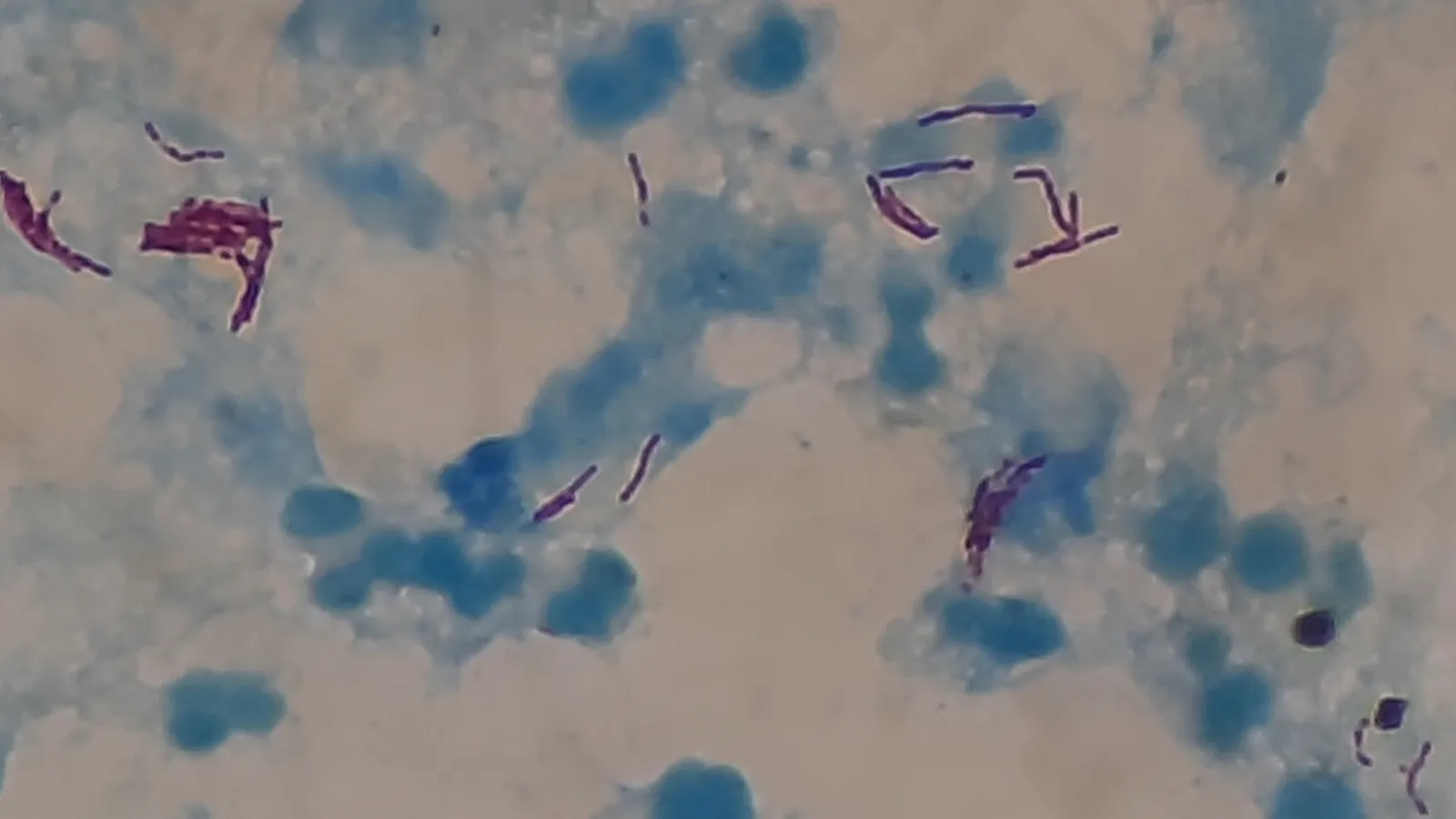
In a finished film, eosin colours red cells pink-orange, while azure dyes formed from methylene blue colour nuclei purple. Gustav Giemsa published a close cousin a year later; see our post on Gustav Giemsa's malaria stain.
How did Leishman find the kala-azar parasite?
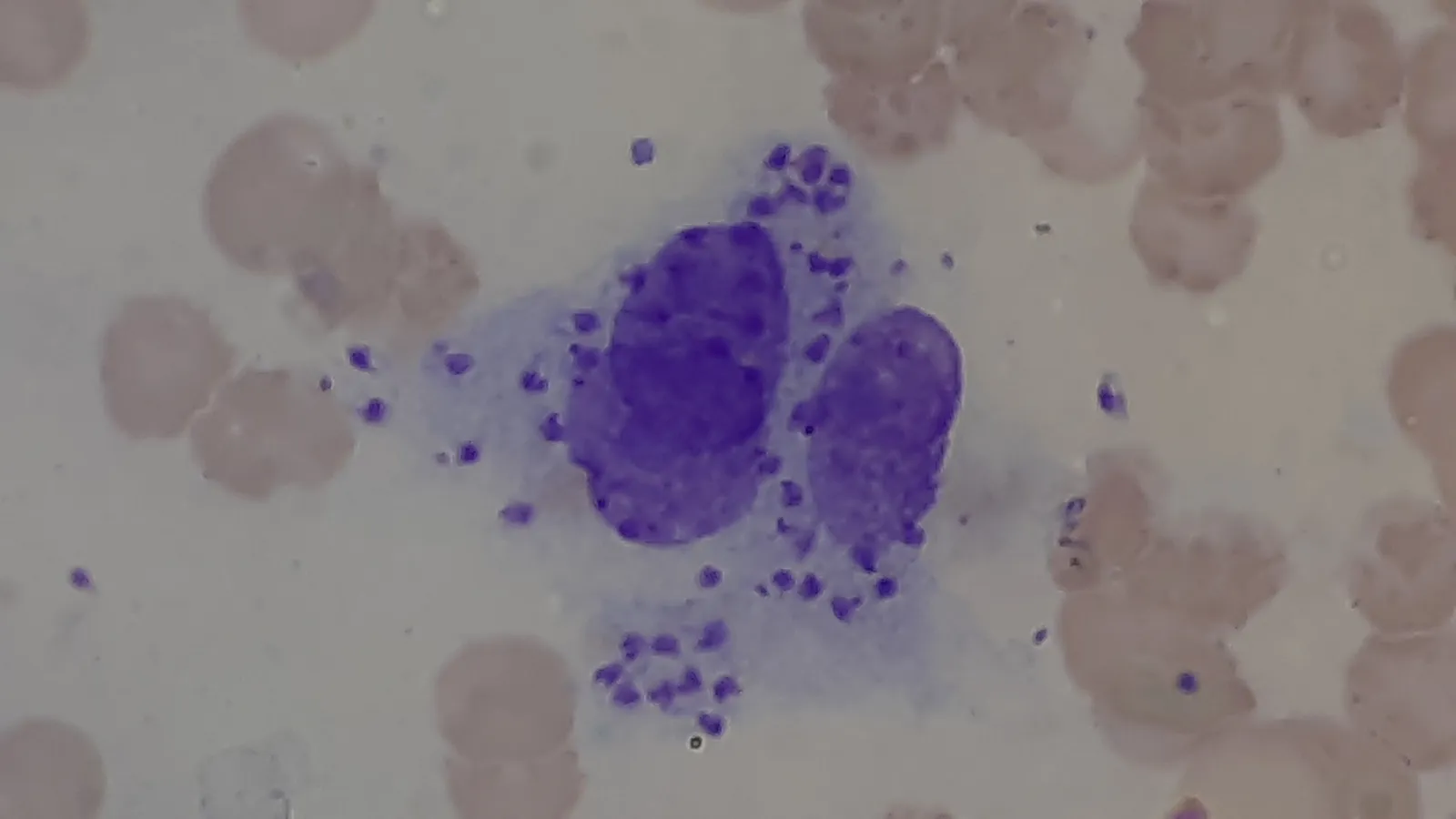
In November 1900, Leishman looked at smears taken after death from the spleen of a soldier who had died of wasting and an enlarged spleen while stationed at Dum Dum, near Calcutta, according to a 2017 history of leishmaniasis in Parasites & Vectors. In them he saw tiny oval bodies. The same review notes that he took them for degenerated trypanosomes and called the illness Dum-dum fever.
He published only in 1903. His paper, On the possibility of the occurrence of trypanosomiasis in India, appeared in the BMJ on 30 May 1903, according to its Crossref record.
The disease already had a name in India. Kala-azar comes from the Hindi and Urdu word kala (black) and the Persian azar (disease), as the Parasites & Vectors review explains.
Why is the parasite called Leishmania donovani?
Charles Donovan of the Indian Medical Service found the same parasite independently in Madras in 1903, as a 2008 paper in the Journal of Medical Biography describes. That paper credits Donovan as the first to see the parasite in peripheral blood, a clue to how insects could pick it up.
Ronald Ross commented on both men's findings in November 1903, concluding that the bodies were a new protozoan rather than degenerated trypanosomes. In a follow-up paper he proposed the name Leishmania donovani, which honours both men, and by the end of 1904 the name was generally adopted, according to the Parasites & Vectors history.
Does kala-azar still matter in India?
Yes. Visceral leishmaniasis, or kala-azar, is fatal in over 95% of untreated cases, and an estimated 50,000 to 90,000 new cases occur worldwide each year, according to the WHO fact sheet on leishmaniasis. It spreads through the bites of infected female phlebotomine sandflies.
India has made large gains. The WHO India page on leishmaniasis reports the disease in 54 districts across Bihar, Jharkhand, Uttar Pradesh and West Bengal, with cases down 98% since 1992, to 1,275 in 2021. It adds that by the end of 2021, 98% of blocks had reached the elimination threshold of fewer than 1 case per 10,000 people.
The Indian side of the story includes Upendranath Brahmachari's work on treatment, told in our post on Upendranath Brahmachari. This article is history and biology, not medical advice: a long fever with weight loss needs a doctor or your nearest government health centre.
A revision card: Leishman, Leishmania and the usual mix-ups
Copy these five lines, then cover the right half and test yourself.
Tool vs organism: Leishman stain (1901) is the dye; Leishmania donovani is the parasite.
Leishman vs Donovan: Leishman saw it after death, in a soldier from Dum Dum, and published in 1903; Donovan found it in Madras in 1903, including in samples taken from living patients.
Vector: kala-azar spreads by sandfly, not mosquito. Malaria is the mosquito one.
Stain family: Leishman and Giemsa are both Romanowsky stains; purple nuclei, pink red cells.
Name: kala-azar means black disease.
Self-test: who proposed the name Leishmania donovani, and which two people does it honour?
If protozoa, vectors and diseases blur together, the Fermi Concept Library gives every biology concept its own lesson and its place in the map, so you can see how the pieces connect. And if a whole chapter feels too big to start, Fermi's AI tutor works out what you already know and builds a plan for the session.
Next time you see a purple-and-pink blood film, you will know whose name is on the bottle.