On this page
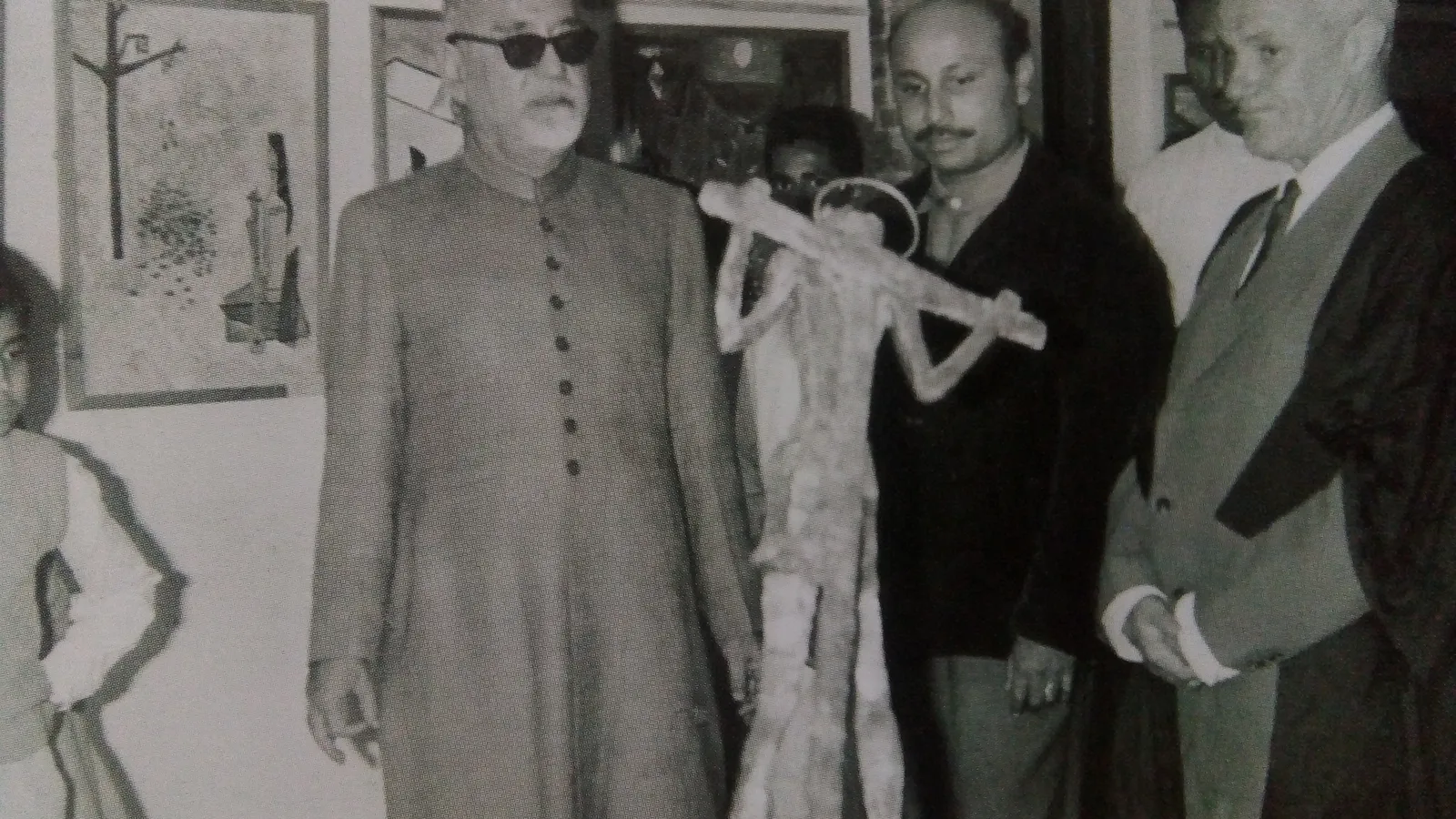
In October 1937, Mahatma Gandhi gathered educators and provincial education ministers at Wardha around one question: what if school taught children through useful work, not only through books? The committee asked to turn that question into a working school plan was chaired by Zakir Husain, then head of Jamia Millia Islamia and later President of India.
What was the Wardha Scheme of basic education?
The Wardha Education Conference met under Gandhi's presidentship on 22-23 October 1937, and a committee chaired by Zakir Husain was given the task of preparing a syllabus on the lines of its resolutions, according to the Gandhi Heritage Portal. The portal notes that Gandhi's address and the conference proceedings became the basis of Nai Talim, the "new education".
The conference resolved on four points, summarised in a 2021 paper in the Journal of Polity & Society:
Free and compulsory education for seven years.
The mother tongue as the medium of instruction.
A curriculum centred on some form of productive work drawn from the local environment.
Every other subject integrated with that chosen craft.
Husain's committee set out its plan as Basic National Education, also called the Wardha Scheme. Historian Joachim Oesterheld of Humboldt University Berlin describes it as the first blueprint for universal, free and compulsory education on a nation-wide scale, one that aimed to help end the artificial distinction between physical and mental work.
Who was Zakir Husain?
Husain earned a doctorate in economics at the University of Berlin and became Vice-Chancellor of Jamia Millia Islamia in 1926, according to Jamia's official history. When Jamia could not afford its salaries, he cut his own to Rs. 80. He became Jamia's Chancellor in 1963, while serving as Vice-President of India.
He was born on 8 February 1897 and served as India's third President from 13 May 1967 until his death on 3 May 1969, according to the President of India's website.
Did Nai Talim work?
Partly. Oesterheld's paper records that the Congress adopted a resolution on national education at its Haripura session in February 1938, accepting the Wardha principles except the idea that craft work should make schools self-supporting. Congress-run provinces began introducing the scheme from 1938, but ran short of funds, trained teachers and new textbooks. The Central Advisory Board of Education approved the scheme in general, but recommended junior and senior basic schools and voluntary English at the senior level.
The method was also hard to teach well. Oesterheld cites M. Mujeeb, who wrote that "correlations improvised for the sake of orthodoxy" by teachers with a poor knowledge of both the craft and the subject had added to the confusion. Husain himself concluded in 1941 that "if basic education has derived some benefit from being adopted by governments, it has also suffered harm", as quoted in the same paper.
The idea has not gone away. In July 2024, NCERT's vocational education institute issued guidelines for 10 bagless days for students in grades 6 to 8, in line with NEP 2020, in which students meet local artists and craftspeople and learn by doing.
How can you use learning through craft today?
The part of Husain's plan you can use at home is its method: start from a real activity, then follow each question it raises into a subject. Here is a four-step version for a Class 9 to 12 student, built on something many Indian kitchens do daily: cooking dal in a pressure cooker, with an adult around.
Do it and notice. Cook one batch and write down three things you saw: the whistle, the time it took, how the lentils changed.
Ask why, subject by subject. Physics: why does trapped steam cook food faster? Chemistry: what happens to proteins and starch when they are heated? Maths: if one cup of dal needs a certain amount of water, how much do two and a half cups need?
Find the textbook idea behind each answer. The physics question leads to how pressure changes the boiling point of water; the maths question is ratio and proportion.
Explain it back. Tell a parent or sibling, in two minutes and without notes, why the cooker whistles. Where you get stuck is what to study next.
A parent can help with three questions and no lecture: "What did you notice? Which chapter is that from? Can you explain it to me?"
If a step-3 idea is hard to picture, the Fermi Simulation Lab has interactive simulations for ideas that are easier to see than to read. If the gap turns out to be a missing concept, the Fermi Concept Library gives each concept in physics, chemistry, biology and mathematics its own lesson.
Pick one everyday task this week and run it through the four steps. Husain's committee hoped work done with the hands could carry a whole curriculum; you only need it to carry one chapter.