On this page
On 13 April 1955, a young doctor moved into a room on the campus of a small cancer hospital in Adyar, Chennai. Her first pay was Rs 200 a month (Open magazine). Dr V. Shanta never really left. She lived in that same top-floor room until the end of her life and gave 65 years to cancer patients, many of them people who could not have paid for private care.
Who was Dr V. Shanta?
Viswanathan Shanta was born on 11 March 1927 and died on 19 January 2021, according to a tribute from the International Agency for Research on Cancer, the World Health Organization's cancer agency. She earned her MBBS at Madras Medical College in 1949 and completed an MD in gynaecology and obstetrics six years later (The Better India).
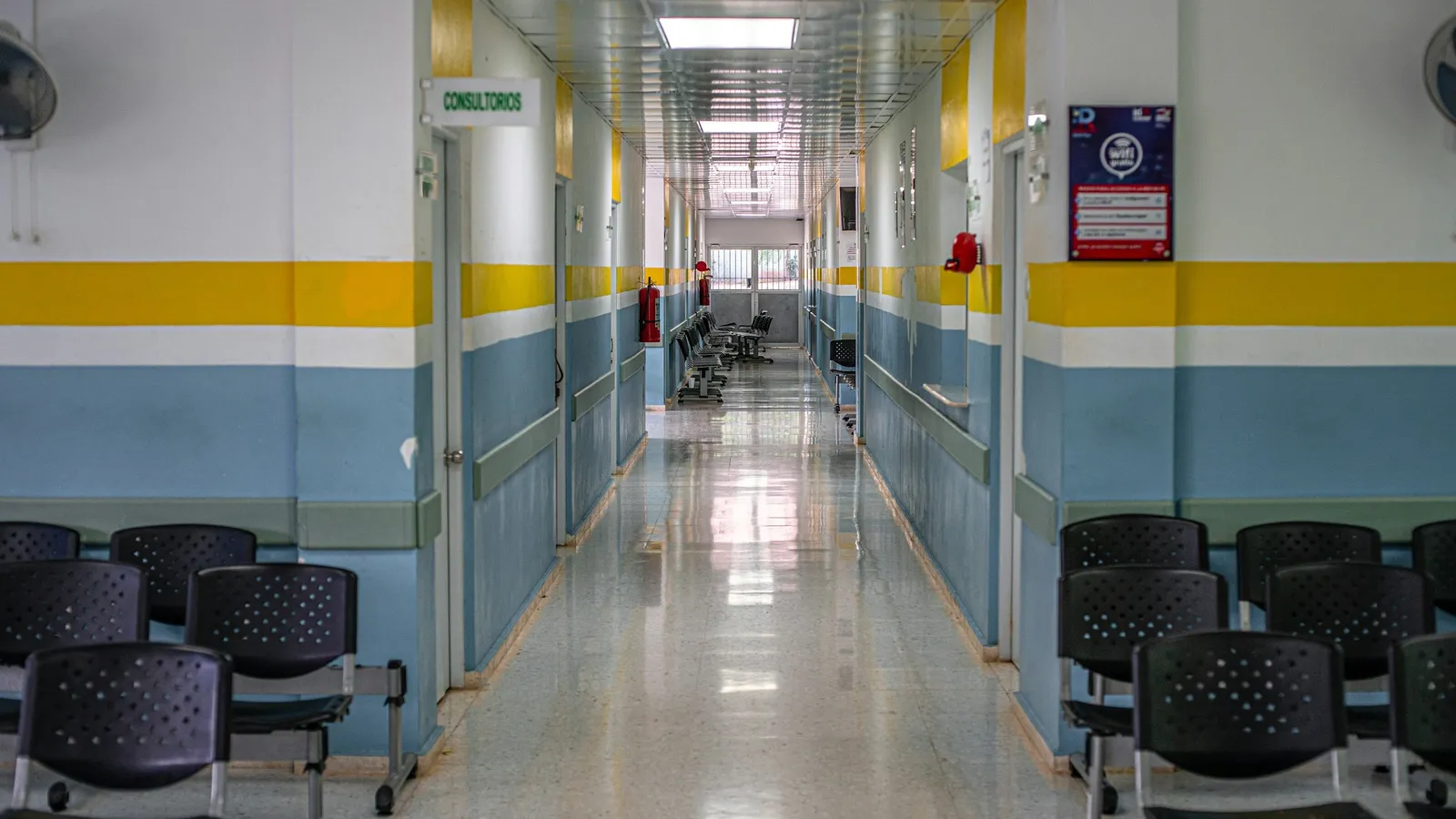
The Cancer Institute had opened in 1954, founded by the Women's Indian Association under Dr Muthulakshmi Reddy. Shanta joined as one of its first medical officers. "I jumped at the opportunity and joined the Institute," she said (The ASCO Post, 2019). The first building had 12 beds, she told the same interviewer, and soon "patients occupied every available space, and outpatient services were conducted in the corridors." You can read how it began in our profile of Muthulakshmi Reddy and the founding of the Cancer Institute.
How did the Adyar Cancer Institute keep treatment affordable?
The short answer: what a patient paid depended on what they could afford, not on what treatment they needed.
"Approximately 30% of our patients are boarded, lodged, and treated free of cost," Shanta said in her 2019 ASCO Post interview. The next line matters just as much: "Treatment protocols are the same for both paying and nonpaying patients."
In 2005 the Ramon Magsaysay Award Foundation put the figure higher: services were free or subsidised for about 60% of the institute's 100,000 patients a year, and travel allowances helped poor patients come back for repeat treatment. It gave her that year's Magsaysay Award for Public Service and described the institute's ethos as "Service to all".
She also tackled cost from the other side. In the ASCO Post she said "the spiraling costs of cancer care must be dealt with," and that new technology should be used "not because they are available, but because they add value and are cost-effective."
What did she build beyond the hospital?
According to the IARC tribute, she set up the Madras Metropolitan Tumour Registry in 1981 and mentored the Tamil Nadu Cancer Registry Project, which covers the state's population of about 80 million people. A cancer registry is a careful count of who gets which cancer, where and when; that data helps a state plan where screening and treatment are needed.
She pushed hard for catching cancer early. Her line, quoted by IARC, was: "Fear not cancer diagnosis, but its delay." The Magsaysay citation credits her with setting up India's first comprehensive paediatric cancer clinic and the institute's first programme for early cancer detection in rural areas. It also records the institute's growth from twelve beds to a 428-bed hospital and research centre by 2005. By 2019 it had 650 beds (The ASCO Post). She received the Padma Bhushan in 2006 and the Padma Vibhushan in 2016 (The Better India).
If you are studying biology for NEET or the boards, the science behind her work is on your syllabus: start with our guide to cancer biology for NEET, then read how Kamal Ranadive built cancer research in India.
What can a student who wants to do medicine learn from her?
Shanta's career gives you a useful test for any career in health, not only oncology. Sit down with a notebook for ten minutes and answer these five questions honestly.
Who will my work serve? Shanta built her life around patients who could not pay. Name the people you picture helping.
Do I understand the science, or have I only memorised it? Pick one topic, such as how radiation damages a cell's DNA, and explain it aloud without notes.
Which role fits me? A cancer centre also needs registry statisticians, medical physicists, nurses, counsellors and researchers. Write down two roles besides doctor.
Who pays, and who gets left out? Ask a family member or local doctor what one common treatment costs near you, and who in your town could not afford it.
Am I ready for the long haul? She stayed at one institution for 65 years. What would keep you going in year ten?
If question 2 shows a gap, the Fermi Concept Library has a lesson for every concept in physics, chemistry, biology, mathematics and computing, so you can rebuild the idea from the start instead of memorising the answer.
This is a story about a career, not medical advice. If you or someone in your family has symptoms that worry you, see a doctor promptly; that is the lesson Shanta spent her life teaching.