On this page
Cancer research in India today runs through large institutes. Kamal Ranadive helped build its laboratory science from the 1940s onwards, working at the Indian Cancer Research Centre in Bombay. She used inbred mice, careful microscopy and tissue grown outside the body to ask why some animals develop breast cancer and others do not. This post follows her published work, explains how her experiments were designed, and draws out what a NEET or biology olympiad student can learn from them.
Who was Kamal Ranadive?
The Indian Women Scientists' Association (IWSA) profile of Kamal Ranadive records that she took her BSc and MSc from Pune and specialised in experimental biology. She was one of 12 founder members of IWSA in 1973 and its president from 1977 to 1979.
She worked with the pathologist V. R. Khanolkar in Bombay. According to the history page of ACTREC, Tata Memorial Centre, the Indian Cancer Research Centre (ICRC) was inaugurated on 30 December 1952 with Khanolkar as its founding director, and was renamed the Cancer Research Institute (CRI) in 1966. Ranadive later led the institute. ACTREC lists her as director of CRI from 1963 to 1967, while IWSA gives her term as acting director as 1966 to 1970, so the exact years differ between the two records.
What did she study?
Her publication record traces a clear line of questions.
In 1945 she published, as sole author, a comparison of the normal mammary glands of four strains of mice varying in their susceptibility to breast cancer in the Proceedings of the Indian Academy of Sciences.
In 1947, with Khanolkar, she published the effect of foster-nursing on the morphology of the mammary glands in mice.
In 1955, with Susheela Waravdekar, she published two papers on how a "milk borne tumor agent" influenced endocrine glands in mice.
In the 1960s she reported, in the British Journal of Cancer, mammary cancer induced by the chemical 1,2:5,6-dibenzanthracene and in vitro studies of how mouse mammary gland responds to hormones.
By 1971 her group was studying leukaemia in the institute's own ICRC strain of mice.
IWSA credits her with setting up the Experimental Biology Laboratory and the first tissue culture laboratory in India at ICRC. It also notes work on the bacterium that causes leprosy, on pre-cancerous changes linked to tobacco use, and on whether dietary and natural products could help prevent cancer.
How were her experiments designed?
The titles above show three classic tools. Here is the logic behind each, the kind of reasoning NEET assertion-reason questions test.
Compare strains. Inbred mouse strains are genetically uniform within a strain but differ between strains. If a high-risk strain and a low-risk strain have mammary glands that look different before any tumour appears, that difference is a clue to what makes tissue vulnerable.
Swap the mothers. Foster-nursing separates two routes from mother to pup. Pups born to a high-risk mother but nursed by a low-risk mother get the high-risk genes but not the high-risk milk. If tumour rates follow the nursing mother, something in the milk matters; if they follow the birth mother, genes matter more.
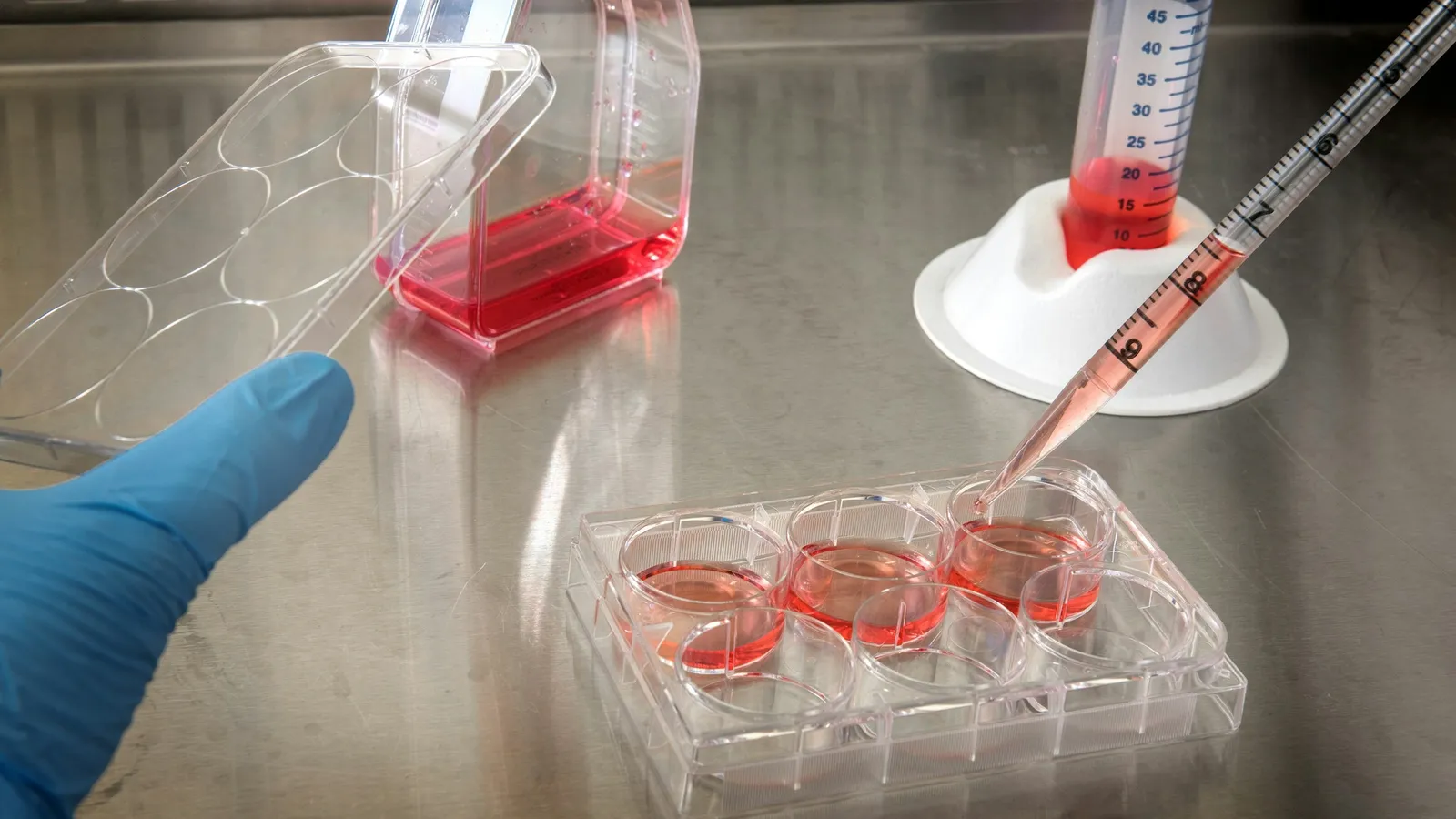
Grow tissue outside the body. In culture, a researcher can add one hormone at a time and watch the tissue respond, without the rest of the body's hormones getting in the way.
Common mistakes when you reason about experiments like these. Students often say a factor "causes" cancer when an experiment only shows it changes the risk. Another slip is forgetting that a foster-nursing study needs both swaps, high-risk pups on low-risk mothers and the reverse, to be convincing. Our guide to cancer biology for NEET covers the terms you need, such as oncogenic viruses and carcinogens.
How was she recognised?
IWSA lists the Sr. Col. Amirchand Award of the Indian Council of Medical Research in 1958, the first Silver Jubilee Research Award of the Medical Council of India in 1964, the Watumal Award for work on human leprosy, and the Sandoz Award in 1976 for work on environmental carcinogenesis. She was awarded the Padma Bhushan for medicine in 1982. After retiring, IWSA records, she worked on the nutrition and health of tribal women and children in Rajpur and Ahmednagar through government-sponsored projects run by the association.
What can a student take from how she worked?
Start with the normal. Her 1945 paper looked at healthy glands before studying tumours. Knowing the normal structure makes the abnormal easy to spot, in research and in NCERT diagrams alike.
Design for one difference. Strain comparisons, foster-nursing and tissue culture each isolate one factor. Ask "what is the control?" whenever you read an experiment.
Build tools for others. A tissue culture laboratory served many researchers, not only her.
Take science outside the lab. Her later work with tribal communities turned research skill into public health work.
If terms like carcinogen or tumour virus are still fuzzy, the Fermi Concept Library covers every concept in physics, chemistry, biology, mathematics and computing.
Your next step: pick one experiment from your biology textbook and write down its control group and the single variable it changes.