On this page
A car moves, but it is not alive. A seed sits still for months, but it is. Chapter 10 of Class 6 science asks how to tell the difference, then follows living things from seed to plant and egg to adult. This post covers the characteristics of living beings, the germination experiment with worked results, plant movement, two animal life cycles and the mistakes students make.
Where is this chapter?
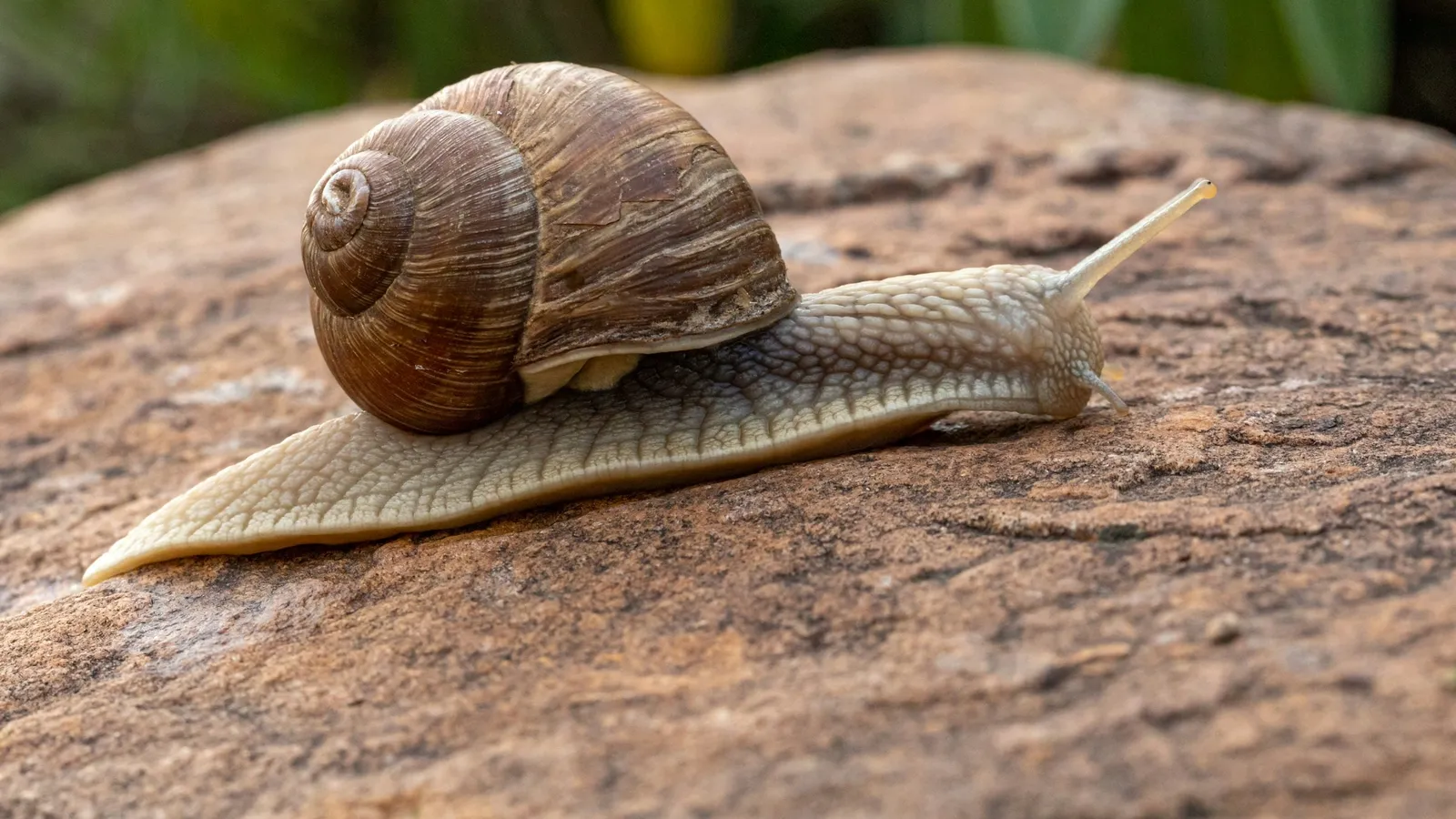
"Living Creatures: Exploring their Characteristics" is Chapter 10 of Curiosity, NCERT's Class 6 science book marked Reprint 2026-27. The chapter opens with a snail shell on a walk: it does not move, yet it is part of a living animal.
What do all living beings have in common?
The chapter's list: living beings move, need food, grow, respire, excrete, respond to stimuli, reproduce and eventually die. No single feature is enough on its own. A car moves but does not grow, eat or reproduce.
Plants show these too, which surprises many students:
Movement: flowers open; the hairs of the insect-eating Drosera bend inward to trap insects; climbers wind around supports.
Respiration: leaves have tiny pores called stomata for air to move in and out.
Excretion: grasses and roses release extra water and minerals as droplets on leaves.
Response: touch-me-not (chhui-mui) leaves fold when touched, and amla leaves fold after sunset.
Why is "is a plant alive?" a hard question?
Researchers have studied exactly this. In Opfer and Siegler (2004), many preschoolers knew plants and animals share biological properties but still did not conclude that plants are alive. When 5-year-olds were taught that plants, like animals, move in goal-directed ways, a large majority then judged plants to be living. Learning that plants grow or need water helped much less.
That is why the chapter spends time on Drosera, chhui-mui and shoots turning to light. Noticing that a plant acts with a purpose is what changes the answer.
Worked example: the four-pot germination experiment
Activity 10.2 sows four bean seeds in each of four pots for 15 days:
Pot A: sunlight, no water.
Pot B: sunlight, so much water it always covers the soil.
Pot C: moist soil, kept in the dark.
Pot D: moist soil, in sunlight.
Reason it out with the chapter's facts. Seeds need water to soften the seed coat, and air from the spaces between soil particles. The book says light is not needed for bean seeds to germinate.
Pot A has air but no water: no germination.
Pot B has water but the water shuts out air: no germination.
Pot C has water and air: germinates, even in the dark.
Pot D has water and air: germinates.
To report results with numbers, count sprouted seeds. Say 3 of 4 sprout in pot C and 4 of 4 in pot D (sample counts; yours will differ). Pot C: 3 ÷ 4 × 100 = 75%. Pot D: 4 ÷ 4 × 100 = 100%. Across both, 7 of 8 seeds sprouted. Pots A and B: 0 of 4 each, or 0%. A single unsprouted seed in pot C does not mean light is needed; one seed can fail for many reasons, which is why the activity uses four seeds per pot.
Which way do roots and shoots grow?
In Activity 10.3, seedlings are fixed upright, upside down, or in a box with light from one hole. Results: roots grow downwards and shoots upwards, even when the seedling is turned over (both bend round), and shoots bend towards light from one side. The chapter's "Know a scientist" box describes Jagadish Chandra Bose, who built the crescograph to record how plants respond to stimuli and how fast they grow.
What are the life cycles of a mosquito and a frog?
Mosquito: egg, larva, pupa, adult. Larvae and pupae live in water but come to the surface for air. The book says an adult may survive 10 to 15 days, and that preventing stagnant water stops mosquitoes breeding. If you find larvae in coolers, pots or containers, tell an adult or your teacher.
Frog, with the book's approximate timings: spawn (day 1), embryo (days 3 to 4), tadpole with tail (days 7 to 10), tadpole with legs (8 to 10 weeks), froglet (12 weeks) and adult (14 weeks). From froglet to adult is 14 - 12 = 2 weeks. The habitat changes too: tadpoles live in water, adults live in water and on land.
Which mistakes cost marks?
Using movement alone to decide if something is alive.
Calling a seed non-living because it does nothing visible.
Saying seeds need sunlight to germinate.
Thinking mosquito larvae breathe under water. They come up for air.
Muddling the frog stages. Learn spawn, tadpole, froglet, adult in order.
A one-week practice routine
Day 1: Set up pots C and D at home with four soaked beans each, after writing predictions.
Day 3: Check daily and record sprouted seeds as a count and a percentage.
Day 5: Without notes, write the eight characteristics of living beings. Self-testing like this helps; students who tested themselves remembered more a week later than those who re-read.
Day 7: Draw both life cycles from memory, then compare with the book.
If a step such as respiration in plants feels unclear, the Fermi Concept Library covers every concept in physics, chemistry, biology, mathematics and computing. See also how Class 6 groups plants and animals, and in Class 7, life processes in plants.
Today, soak four bean seeds overnight and write down which conditions you think they need to sprout.