On this page
Ask a Class 7 student where a plant gets its food and you may hear "from the soil". That answer feels right, and it is what Chapter 10 of the new NCERT book sets out to change. The chapter builds the case one experiment at a time. This guide follows those experiments, shows you how to reason through the set-ups examiners like, and lists the ideas students most often get wrong.
What does Chapter 10 of Class 7 Curiosity cover?
Life Processes in Plants is Chapter 10 of NCERT's *Curiosity* for Grade 7 (first edition April 2025, reprint 2026-27). It covers:
What plants need to grow, tested with three potted saplings over two weeks.
The starch test on a leaf with alcohol and iodine.
The role of sunlight, chlorophyll and carbon dioxide in making starch.
Oxygen release shown with a water plant under a funnel.
Stomata, tiny pores on the leaf surface.
Transport: xylem for water and minerals, phloem for food.
Respiration in plants, shown with germinating moong seeds and lime water.
What does each experiment prove?
Read every experiment as "one thing is missing, so what happens?"
Three pots: A in sunlight with water, B in sunlight without water, C in the dark with water. A grows most, so plants need both sunlight and water.
Leaf with green and non-green patches: after the iodine test, only the green patches of a leaf from a plant kept in sunlight turn blue-black. So chlorophyll and sunlight are needed to make starch.
Half a leaf in a bottle with caustic soda: caustic soda absorbs carbon dioxide. The half inside does not make starch; the half outside does. So carbon dioxide is needed.
Water plant in sunlight and in the dark: bubbles collect only in sunlight, and the gas makes a lit matchstick burn brightly. So oxygen is released, and it happens in light.
Put together, these give the word equation in the chapter:
Carbon dioxide + water → glucose + oxygen (in the presence of sunlight and chlorophyll)
Worked examples
Example 1: why the leaf goes in alcohol. The leaf is first softened in boiling water, then placed in alcohol in a test tube standing in hot water until it turns colourless. Removing the green colour lets you see the iodine colour change clearly. The test tube sits in a water bath because alcohol catches fire easily and must never go near a flame directly.
Example 2: reading a set of four plants. Four identical plants with water are kept: (1) in sunlight with carbon dioxide, (2) in sunlight without carbon dioxide, (3) in the dark with carbon dioxide, (4) in the dark without carbon dioxide. Which make starch? Only (1), because it alone has all of sunlight, chlorophyll, water and carbon dioxide. Which release oxygen from photosynthesis? Again only (1). All four still respire.
Example 3: recording growth. Suppose after two weeks you record:
Pot A: height 10 cm to 16 cm, leaves 6 to 11, still green.
Pot C: height 10 cm to 13 cm, leaves 6 to 7, turning yellow.
Pot A grew 16 − 10 = 6 cm and gained 11 − 6 = 5 leaves. Pot C grew 13 − 10 = 3 cm and gained 1 leaf. Your numbers will differ. The pattern to explain is that the plant without light grew less and lost its green colour. (These are sample numbers to show how to work out the change, not results from the book.)
Example 4: the red ink twig. A white-flowered twig stands in red-coloured water overnight. Next day the petals and leaves show red, and a cut across the stem shows red spots. The red ink travelled up the xylem, the same route water and dissolved minerals take.
What do students get wrong about plants?
These ideas are well studied. Haslam and Treagust (1987) built a two-tier diagnostic test on photosynthesis and respiration in plants and found that misconceptions were consistent across secondary year levels, that a high percentage of secondary students did not understand the nature and function of respiration, and that many had little understanding of how photosynthesis and respiration are related.
The mistakes to watch for:
"Plants get their food from the soil." Roots take in water and minerals. The food, glucose, is made in the leaves.
"Plants photosynthesise by day and respire by night." Plants photosynthesise only in light, but every part of the plant, green or not, respires all the time.
"A non-green patch has no chlorophyll at all." The chapter is careful here: it may simply have too little to make starch you can detect.
"Xylem carries food." Xylem carries water and minerals up; phloem carries food to other parts.
"Only leaves photosynthesise." Leaves are the main site, but any green part with chlorophyll can.
A one-week practice plan
Day 1: Write each experiment as "what was missing, what happened, what it proves", as in the list above.
Day 2: Start the red ink twig activity at home with an adult; check it the next day.
Day 3: Make a side-by-side list for photosynthesis and respiration: raw materials, products, when it happens, where. This matches the chapter's first exercise.
Day 4: Answer the chapter questions from memory, then check.
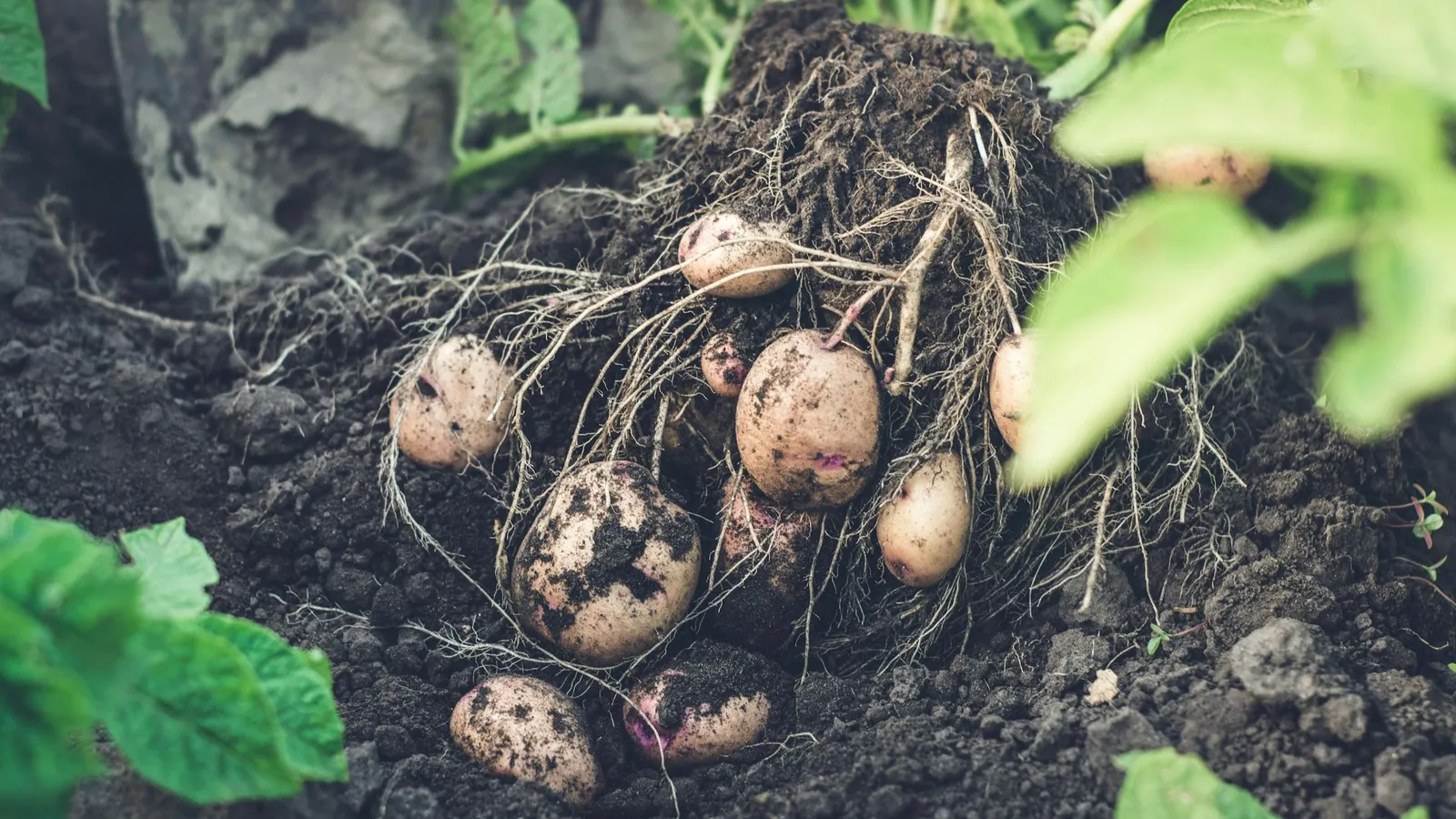
Day 5: Explain to a parent where the starch in a potato came from.
The companion post on life processes in animals covers respiration in your own body. Students who go on to biology in Class 11 and 12 will meet the same process in more detail; our guide to photosynthesis for NEET shows how far it goes. If the link between photosynthesis and respiration still feels fuzzy, the Fermi Concept Library has every concept in biology with its own lesson.
This week, set up the red ink twig at home and predict where the colour will show up first.