

On this page
Photosynthesis is a high-yield chapter, but many students learn it as three separate lists: pigments and photosystems, Calvin cycle steps, and C3 versus C4 differences. Questions often link them, for example by asking where the ATP for the Calvin cycle comes from, or why C4 plants lack photorespiration. This post tells the chapter as one connected story and works through the numbers you are expected to know.
What does the syllabus include?
The NEET (UG) 2026 syllabus lists the site of photosynthesis, pigments, photochemical and biosynthetic phases, cyclic and non-cyclic photophosphorylation, the chemiosmotic hypothesis, photorespiration, the C3 and C4 pathways and factors affecting photosynthesis. NCERT's Class 11 chapter on photosynthesis in higher plants covers each of these. Check the syllabus for your exam year when it is notified.
What happens in the light reactions?
Light reactions take place on the thylakoid membranes. NCERT describes two photosystems, each with a reaction centre of chlorophyll a: P680 in PS II and P700 in PS I, named for their absorption peaks.
Water splitting is linked to PS II: 2H₂O → 4H⁺ + O₂ + 4e⁻. This is where the oxygen comes from.
Non-cyclic photophosphorylation uses both photosystems in the Z scheme and makes ATP and NADPH.
Cyclic photophosphorylation uses only PS I, probably in the stroma lamellae, which lack PS II and NADP reductase. It makes ATP but not NADPH.
Chemiosmosis: protons build up in the thylakoid lumen and flow back to the stroma through ATP synthase, which makes ATP.
How does the Calvin cycle work?
The pathway is named after Melvin Calvin, who received the 1961 Nobel Prize in Chemistry "for his research on the carbon dioxide assimilation in plants". NCERT notes that he labelled carbon dioxide with radioactive carbon-14, and that the first product found was 3-phosphoglyceric acid (PGA), a 3-carbon compound. Plants that fix carbon this way are called C3 plants.
The cycle has three stages in the stroma:
Carboxylation: RuBisCO adds CO₂ to ribulose bisphosphate (RuBP, 5 carbons), giving two molecules of 3-PGA.
Reduction: 2 ATP and 2 NADPH are used per CO₂ fixed.
Regeneration: RuBP is remade, using 1 more ATP per CO₂.
NCERT calls these the "dark reactions" by convention, but stresses that they do not happen in darkness. They depend on ATP and NADPH from the light reactions.
Worked example: counting ATP, NADPH and water
How much ATP and NADPH does one glucose need? Each CO₂ needs 3 ATP and 2 NADPH. Glucose has six carbons, so the cycle must turn six times: 6 × 3 = 18 ATP and 6 × 2 = 12 NADPH. That matches NCERT's summary: six CO₂, 18 ATP and 12 NADPH in, one glucose out.
How much water must be split to supply that NADPH? Each NADPH needs 2 electrons, so 12 NADPH need 24 electrons. Splitting 2H₂O gives 4 electrons, so 24 electrons need 12 H₂O, which release 6 O₂. This is the same balance as NCERT's overall equation: 6CO₂ + 12H₂O → C₆H₁₂O₆ + 6H₂O + 6O₂.
Why does cyclic photophosphorylation matter? The Calvin cycle uses ATP and NADPH in a 3:2 ratio. NCERT suggests that cyclic photophosphorylation, which makes extra ATP only, may help meet that difference.
How do C4 plants differ?
The C4 pathway is also called the Hatch and Slack pathway. In their 1966 study of sugar-cane leaves, Hatch and Slack exposed leaves to radioactive CO₂ and found that after about one second, more than 93% of the fixed radioactivity was in malate, aspartate and oxaloacetate, 4-carbon acids, and only later in 3-PGA and sugars.
NCERT describes the pathway:
In mesophyll cells, PEP carboxylase fixes CO₂ onto phosphoenolpyruvate (PEP, 3 carbons) to form oxaloacetic acid (OAA, 4 carbons). Mesophyll cells lack RuBisCO.
The 4-carbon acids move to bundle sheath cells, the large cells around the veins that give C4 leaves their Kranz ("wreath") anatomy. There CO₂ is released and enters the Calvin cycle.
The 3-carbon remainder returns to the mesophyll and is turned back into PEP.
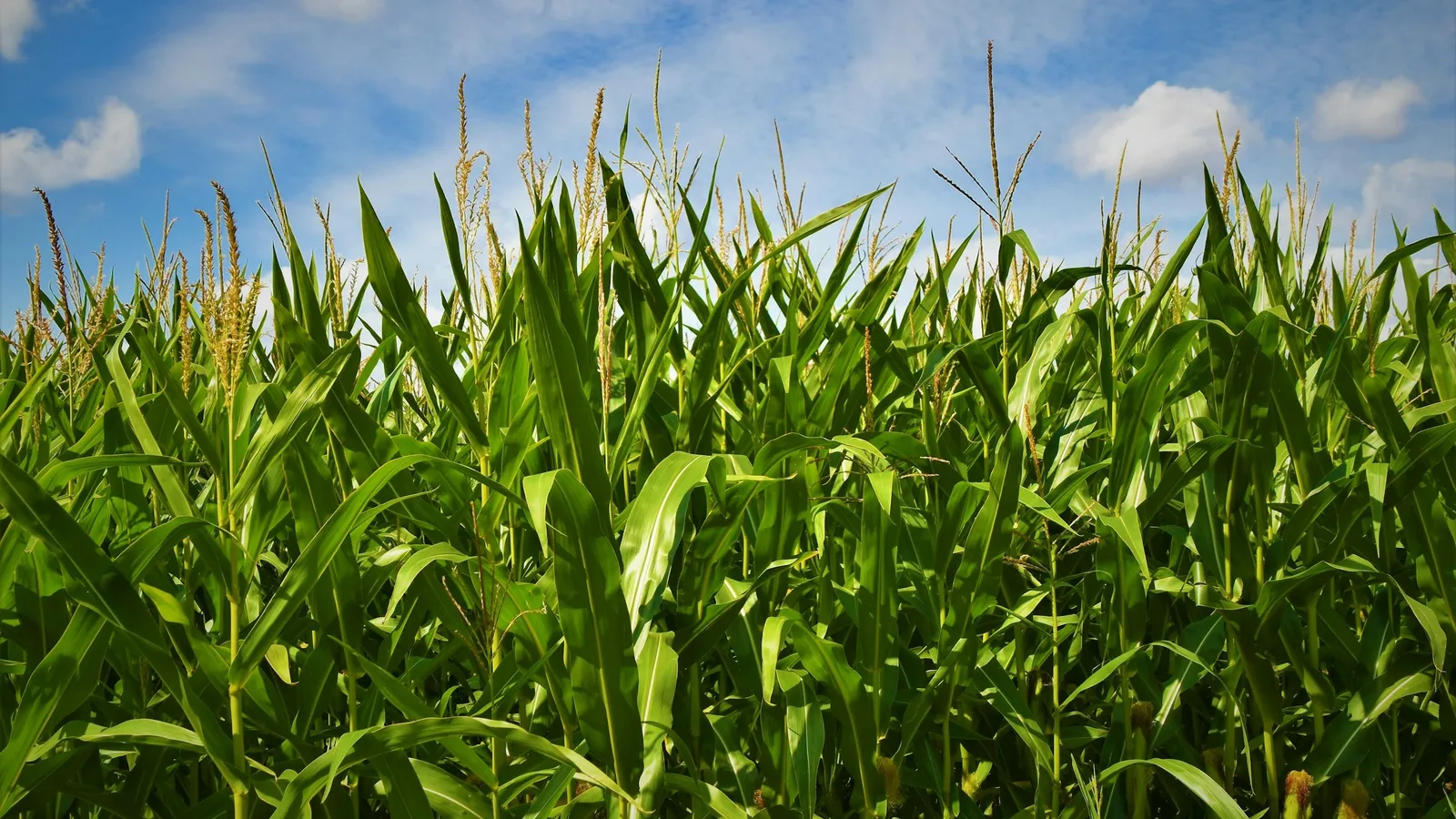
This concentrates CO₂ around RuBisCO. Because RuBisCO can bind O₂ as well as CO₂, C3 plants lose some fixation to photorespiration, which makes neither sugar nor ATP nor NADPH. C4 plants such as maize and sorghum avoid it, tolerate higher temperatures and have greater biomass productivity.
Which mistakes cost the most marks?
Saying the Calvin cycle runs in the dark. It needs the products of the light reactions.
Mixing up P680 and P700. P680 is PS II, which splits water; P700 is PS I.
Saying C4 plants do not use the Calvin cycle. They do, in the bundle sheath cells.
Confusing the first acceptor and the first product. In C4 plants the acceptor is PEP (3 carbons) and the first product is OAA (4 carbons). In C3 plants the acceptor is RuBP (5 carbons) and the first product is 3-PGA.
Giving cyclic photophosphorylation an NADPH output. It makes ATP only.
For more on studying NCERT chapters like this one, read why NCERT matters for NEET.
A practice routine
Draw the whole story (twice a week): thylakoid on the left, stroma on the right, arrows for water, O₂, ATP, NADPH and CO₂. Label where each happens.
Number drill: work out ATP and NADPH for 1, 2 and 5 glucose, and the water split for each.
C3 versus C4 table from memory: cell types, first acceptor, first product, enzyme, photorespiration.
Space it out. Revisit this chapter on a schedule, not just before the exam. Our spaced revision schedule shows how to plan the gaps.
When a step in the pathway does not make sense, the Fermi Concept Library covers every concept in physics, chemistry, biology, mathematics and computing, so you can go back to the idea behind it before trying questions again.
Today, without notes, write out the ATP, NADPH and water count for three molecules of glucose, then check it against the worked example.


