On this page
In February 1804, a Havana doctor tried a new medicine on his own children and then told the whole city what happened. The doctor was Tomás Romay, and the medicine was the smallpox vaccine. His public test started Cuba's first vaccination campaign, which he ran for three decades. The story also has a hard side, and it is worth knowing too.
Who was Tomás Romay?
Tomás Romay Chacón (1764-1849) was a physician in Havana; the dates are from the library record of his collected works on Wikimedia Commons_(IA_64521350RX1.nlm.nih.gov).pdf). He worked at a time when smallpox was one of the most feared diseases in the world.
Smallpox was fatal in up to 30% of cases, according to the World Health Organization. The same WHO page notes that Edward Jenner's smallpox vaccine of 1796 was the first successful vaccine, and that smallpox was declared eradicated in 1980. You can read how Jenner built his case in our post on Edward Jenner and the evidence for smallpox vaccination.
How did the smallpox vaccine reach Cuba in 1804?
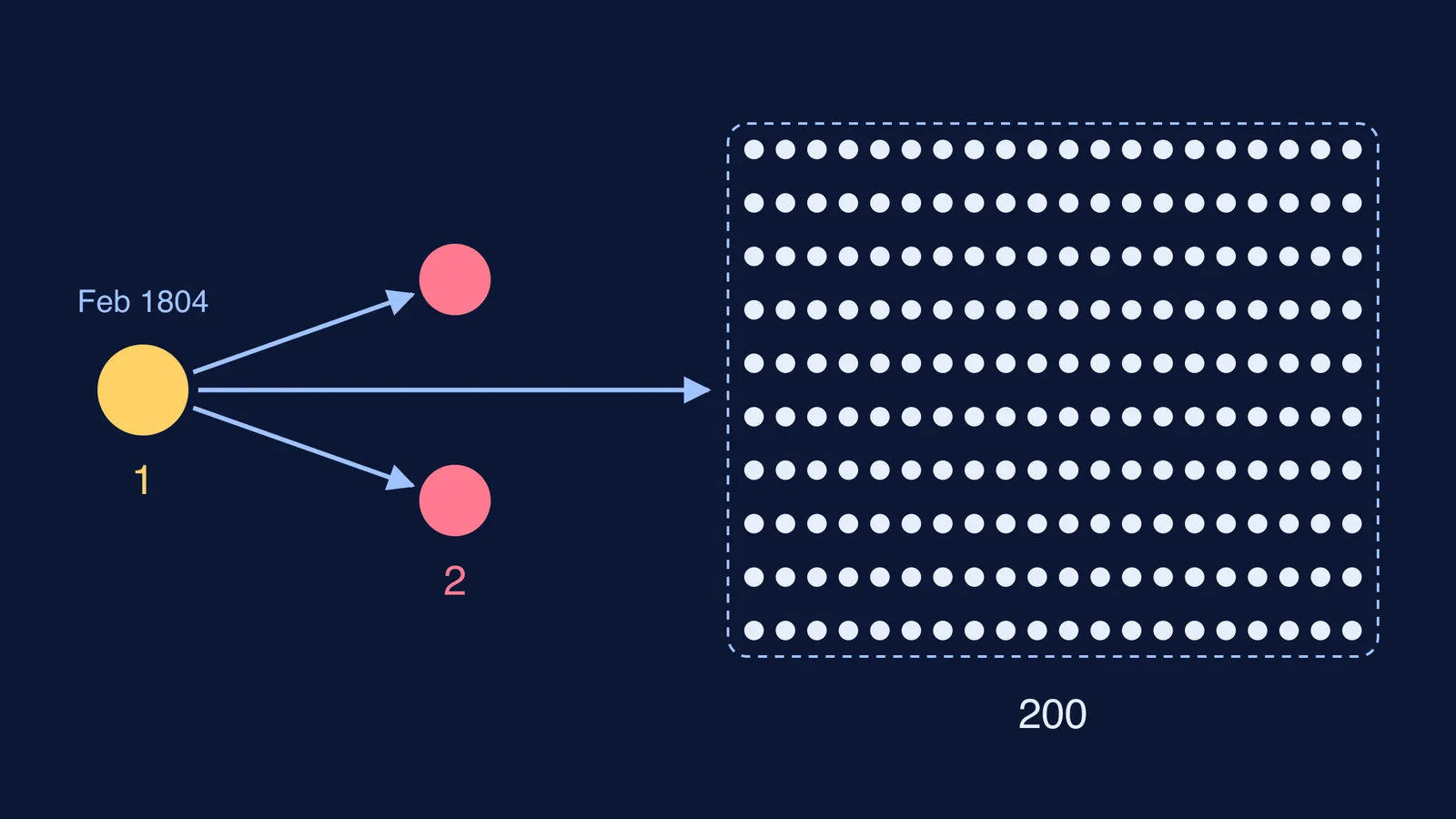
It came inside a child's arm. Historian Farren Yero tells the story in an essay for Age of Revolutions. On 12 February 1804, an eight-year-old enslaved girl who had arrived from Puerto Rico the day before stood in Romay's living room. About a week earlier, her arm had been cut and vaccine material put into it, and the spot had formed a blister of fluid.
Romay drained that fluid and used it to vaccinate his two sons. This was arm-to-arm vaccination. Fluid from one person's fresh blister was cut into the next person's skin, so the vaccine stayed alive by passing from body to body.
Why did Romay test the vaccine on his own children?
To win the city's trust. Yero writes that Romay published his account in the newspaper *Papel Periódico de La Habana*, describing it as an experiment he had performed on his own children. Putting his own sons first was a way to show readers he believed in the vaccine.
Word spread. Using fluid extracted from that one girl, Romay went on to vaccinate 200 other children, according to Yero's essay.
The state soon took over. A history of Cuba's immunisation programme in MEDICC Review by Dr Miguel A. Galindo records that Spain's Royal Vaccination Expedition, led by Francisco Xavier de Balmis, reached Havana on 26 May 1804. A Central Vaccine Administration was set up on 13 July 1804 with Romay at its head, a post he held for the next 31 years. Under his direction, some 311,342 people were vaccinated against smallpox in Cuba from 1804 to 1835. The same article records that smallpox was declared eliminated in Cuba in 1923. Cuba later produced another public-health pioneer, Carlos Finlay, who linked yellow fever to mosquitoes.
What does the usual story leave out?
The children who carried the vaccine were often enslaved. In her essay, Yero describes how planters volunteered enslaved children from their estates to travel in and between the capital as a small network of child carriers, and notes that these children's own experiences of the vaccine are otherwise undocumented. She also argues that Romay continued to rely on the slave trade and slavery to spread the vaccine. In 1811 he sent a sharp rebuke to Cuba's merchant body, the Consulado, after inspecting the slave ship *Consejero*, which had lost a fourth of its captives to smallpox on the voyage from Loango in Central Africa.
Both things are true. Romay's campaign vaccinated hundreds of thousands of people, and it depended on children, many of them enslaved, who could not say no.
How can you study Romay's story like a scientist?
Here is a worked example you can do in five minutes with the numbers above.
The chain problem. The girl's arm was cut "a week or so" before Romay harvested it, according to Yero. If each link lasts about a week, keeping the vaccine alive for one year needs a chain at least 52 links long, each link a person never vaccinated before. Miss the window and the chain breaks. That is why a government office mattered: someone had to find the next arms, week after week.
Five questions to ask any "I tested it on my own family" story:
What was compared? Two sons is a test, not a trial. There was no comparison group.
Could others check it? Partly: Romay published his account so readers could follow what he did.
Who carried the risk, and could they refuse? Children carried it, and the enslaved children among them had no real choice.
What happened at scale? MEDICC Review counts 311,342 people vaccinated over 31 years.
What is the biology? Vaccination works because your immune system remembers. Our explainer on the principle of vaccination and memory cells covers the biology.
If memory cells or active immunity still feel shaky when you reach that fifth question, the Fermi Concept Library has every concept in biology, each with its own lesson and its place in the map.
Next time you read a "brave doctor" story, run it through those five questions.