On this page
Smallpox killed people for thousands of years and is now gone. The story usually starts with Edward Jenner, a country doctor, and a boy named James Phipps. The real history is more interesting: Jenner was not the first to try cowpox, his evidence would not pass a modern ethics board, and he got some things wrong. This post covers what he did, how good his evidence was, and what students can learn from it.
What did people do about smallpox before Jenner?
Smallpox was fatal in up to 30% of cases, according to the World Health Organization. The main protection before Jenner was variolation: deliberately infecting someone with material from a smallpox sore, usually giving a milder illness.
In his review in Baylor University Medical Center Proceedings, Stefan Riedel describes how variolation reached Europe in the early 1700s through reports from Istanbul. In 1721 it was tested on six prisoners in London's Newgate prison, all of whom survived. In Boston's epidemic the same year, about half of the city's 12,000 people caught smallpox, and the fatality rate for the natural disease was 14%.
What did Jenner do in May 1796?
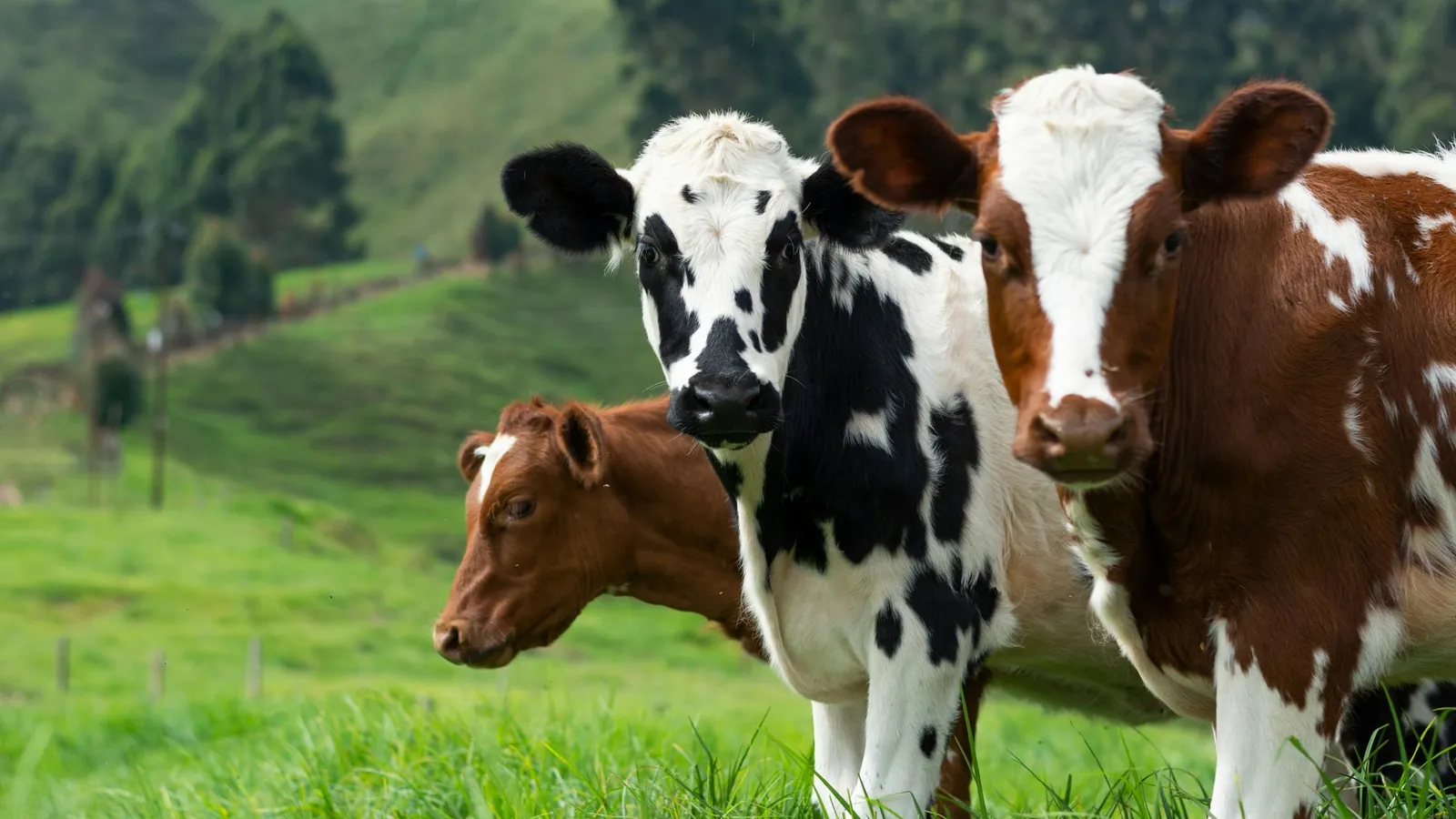
Country people had long said that dairymaids who caught cowpox, a mild disease, did not get smallpox. Jenner tested the claim. In his own account, Case XVII of An Inquiry into the Causes and Effects of the Variolae Vaccinae, he wrote that he chose "a healthy boy, about eight years old". Matter from a sore on the hand of a dairymaid was "inserted, on the 14th of May, 1796, into the arm of the boy by means of two superficial incisions".
The boy felt unwell around the seventh to ninth day, then recovered. On 1 July Jenner inoculated him with matter from a smallpox pustule, "but no disease followed". Months later, a second attempt also had no effect. Riedel names the boy as James Phipps and the dairymaid as Sarah Nelmes.
How strong was his evidence?
Jenner sent a short report to the Royal Society in 1797, and it was rejected, Riedel writes. He added more cases and published the Inquiry himself in 1798. It contains 23 numbered cases.
Cases I to XVI are mostly histories of people who had caught cowpox naturally, sometimes decades earlier, and later failed to take smallpox when exposed or inoculated.
Case XVII is the deliberate experiment on the boy.
Cases XVIII to XXIII describe further deliberate inoculations, some passing cowpox matter from one child's arm to the next.
Worked example: judging the evidence
Use the numbers to see why one case cannot settle the question, and why it was still worth publishing.
What one case can show. Even with a 14% fatality rate, most people survived smallpox. One protected boy could be chance, or he might have been immune from an earlier mild infection nobody noticed.
What the scale of the problem was. Riedel reports that in eighteenth-century Europe about 400,000 people died of smallpox each year. Taking Boston's 1721 figures, about 6,000 cases × 14% ≈ 840 deaths in one city in one epidemic.
What would convince us today. A large group given the vaccine, a comparable group not given it, the same exposure, and follow-up over years. Jenner had none of this, which is why others had to confirm his idea with many more vaccinations.
Common mistakes when reading historical evidence:
Treating a famous case as proof. It is a starting point, not a trial.
Ignoring what was wrong. Jenner thought cowpox started as a horse disease, a theory discredited in his lifetime. Riedel also notes that vaccination did not give lifelong immunity, so revaccination was needed.
Judging the past only by today's ethics. Deliberately exposing a child to smallpox would not be allowed now. It is fair to say so, and also to see that variolation, then accepted practice, carried its own risk.
Was Jenner the first to use cowpox?
No. Riedel describes how a farmer, Benjamin Jesty, used cowpox from cattle to protect his family during an outbreak in 1774. Jenner's contribution, in Riedel's words, was to be "the first person to confer scientific status on the procedure and to pursue its scientific investigation". He named it vaccination, from the Latin vacca, cow. He had already been elected a Fellow of the Royal Society for his work on cuckoos.
How did vaccination end smallpox?
The WHO describes an intensified global eradication campaign from 1967. The last known natural case was in Somalia in 1977, and in 1980 WHO declared smallpox eradicated, the only infectious disease to reach that point. NCERT Class 12 Biology credits vaccines and immunisation programmes with this result, and its chapter on human health and immunity is where the topic appears in CBSE and NEET-UG preparation.
What can a student take from Jenner's way of working?
Test what people "just know". Folk wisdom about dairymaids became a testable claim.
Record cases in detail. His dates, symptoms and methods let others check and extend his work.
Rejection is not the end. The Royal Society turned him down, and he gathered more evidence.
If the immune response behind vaccines is unclear, the Fermi Concept Library covers every concept in physics, chemistry, biology, mathematics and computing, each with its own lesson. For exam-focused revision, read our guide to human health and immunity.
Try this now: in one paragraph, design a fair trial of a new vaccine, naming the comparison group, what you measure and for how long.