On this page
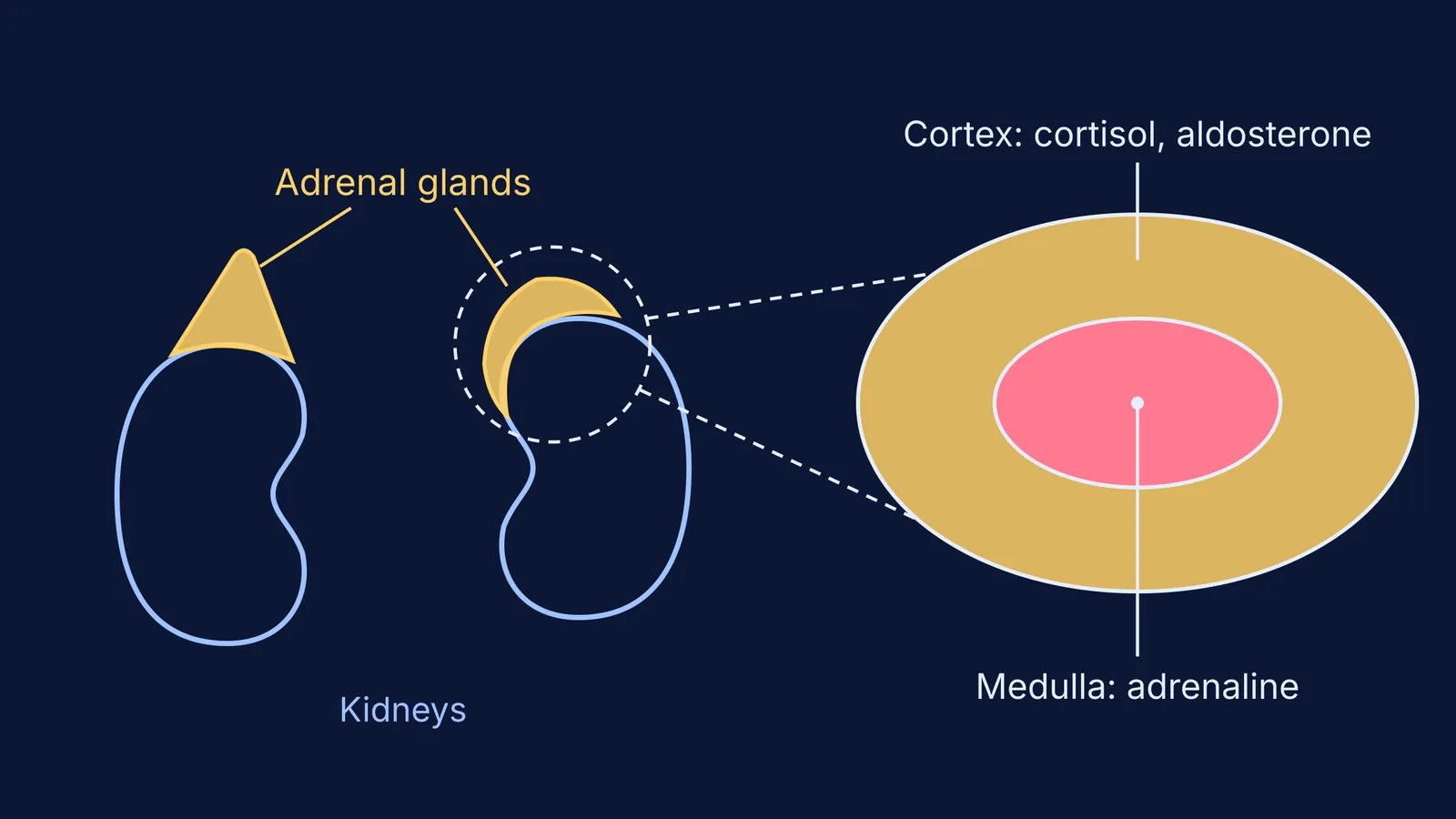
In 1855 a London doctor named Thomas Addison noticed that some very ill patients shared an odd set of signs, and that the same two small organs, sitting on top of the kidneys, were diseased in them. His report tied an illness to a gland at a time when nobody knew what that gland did. That idea runs through the chemical coordination chapter you study today.
Who was Thomas Addison?
Thomas Addison was born in 1795 in Longbenton, in the north of England, and took his medical degree at the University of Edinburgh in 1815, according to his biography on Wikipedia. He spent his working life at Guy's Hospital in London, where he became a full physician in 1837 and lectured on practical medicine alongside Richard Bright. He died in 1860.
He came to the adrenal glands by another route. He was studying a severe anaemia that killed patients without leaving an obvious lesion at post-mortem, and that work led him to the adrenal glands, then called the supra-renal capsules.
What did Addison describe in 1855?
In 1855 Addison published a slim monograph of 39 pages, illustrated with 11 large colour plates, on disease of the supra-renal capsules, as the surgeon and historian Harold Ellis describes in the Journal of Perioperative Practice. Its full title was On the Constitutional and Local Effects of Disease of the Suprarenal Capsules.
Addison summed up the pattern as "general languor and debility, remarkable feebleness of the heart's action, irritability of the stomach, and a peculiar change of color in the skin", as quoted on The Medical Biochemistry Page. In everyday words: tiredness and weakness, a weak heartbeat, an upset stomach, and skin that turned a bronze shade.
The same source notes that in these early cases the glands were damaged mostly by tuberculosis, which accounted for 70-90% of them.
Why was it an early link between a gland and illness?
The adrenal glands had been known as structures since the Italian anatomist Bartolomeo Eustachi described them in 1563-4, according to the history section on adrenal glands. For almost three centuries, though, their job was unclear. Addison connected a clear cluster of symptoms in living patients with damage to one particular organ found after death.
Experiments followed fast. On 25 August 1856, Charles-Edouard Brown-Sequard told the Academie des Sciences in Paris that removing both adrenal glands from cats, dogs, rabbits, guinea pigs and mice was fatal, usually within 12 hours, as neurologist J. M. S. Pearce recounts in ACNR. Pearce also points out that Addison's monograph did not mention a secretory role for the glands.
The French physician Armand Trousseau helped popularise the name "Addison's disease", according to his Wikipedia entry. Nearly a century later, Edward Kendall, Philip Hench and Tadeusz Reichstein shared the 1950 Nobel Prize in Physiology or Medicine "for their discoveries relating to the hormones of the adrenal cortex, their structure and biological effects" (Nobel Prize).
What is Addison's disease today?
The NHS defines Addison's disease (primary adrenal insufficiency) as a rare condition where the adrenal glands do not work properly (NHS). The NHS says the most common cause now is the immune system mistakenly attacking the adrenal glands, and the main treatment is daily steroid medicine to replace the missing hormones, usually for life.
In Addison's disease the adrenal cortex cannot make enough cortisol or aldosterone, as The Medical Biochemistry Page explains. The inner part of the gland, the medulla, makes adrenaline; our explainer on the adrenal cortex and medulla sets out the split, and the story of how Jokichi Takamine isolated adrenaline picks up the medulla side.
How can you use Addison's method in biology revision?
Addison worked from a pattern of effects back to one damaged organ. You can run the same reasoning forwards on any gland question. Here is a worked example for "Why does the skin darken in Addison's disease?", using the mechanisms set out on The Medical Biochemistry Page.
Name the damaged tissue: the adrenal cortex.
Name what goes missing: cortisol and aldosterone.
Follow the feedback loop: low cortisol removes the normal brake on the pituitary, so it releases more ACTH.
Trace the side effect: ACTH and alpha-MSH stimulate the skin's pigment cells, the melanocytes, so the skin darkens.
Predict a second effect: aldosterone normally helps the kidneys hold on to sodium, so less aldosterone means more sodium lost in urine.
Use the same five steps on any disorder: tissue, missing or extra hormone, feedback, first effect, second effect. Our table of hormone deficiency and excess disorders, sorted by gland gives you plenty to practise on.
If step 3 is where you lose the thread, the Fermi Concept Library has a lesson for every concept in biology, each with its place in the map, so you can see how the pituitary, the adrenal cortex and the kidney connect.
Next time you revise chemical coordination, try writing Addison's five-step chain for one gland disorder from memory.