On this page
On 10 January 2008, Tata Motors showed a four-door car with a launch price of one lakh rupees, about US$2,500, according to the Tata Nano entry on Wikipedia. Ten years later, in June 2018, Tata produced one Nano and sold three, Autocar Professional reported. In between lies a clear lesson in engineering trade-offs.
What design choices made the Tata Nano so cheap?
The Nano's engineers started from a price and worked backwards. The Wikipedia entry lists the main choices:
A 624 cc two-cylinder petrol engine mounted at the rear, driving the rear wheels.
One windscreen wiper instead of the usual pair.
Three wheel nuts per wheel instead of four.
A wing mirror on the driver's side only in the base model.
No power steering in the base model, because the car was light enough without it.
12-inch wheels and drum brakes front and rear.
No external fuel cap: the fuel inlet sat under the front bonnet.
Each cut saves a little material, time and weight. This was not crude work: the development of the Nano led to 31 design and 37 technology patents being filed, according to the same entry.
Why did the Tata Nano fail in the market?
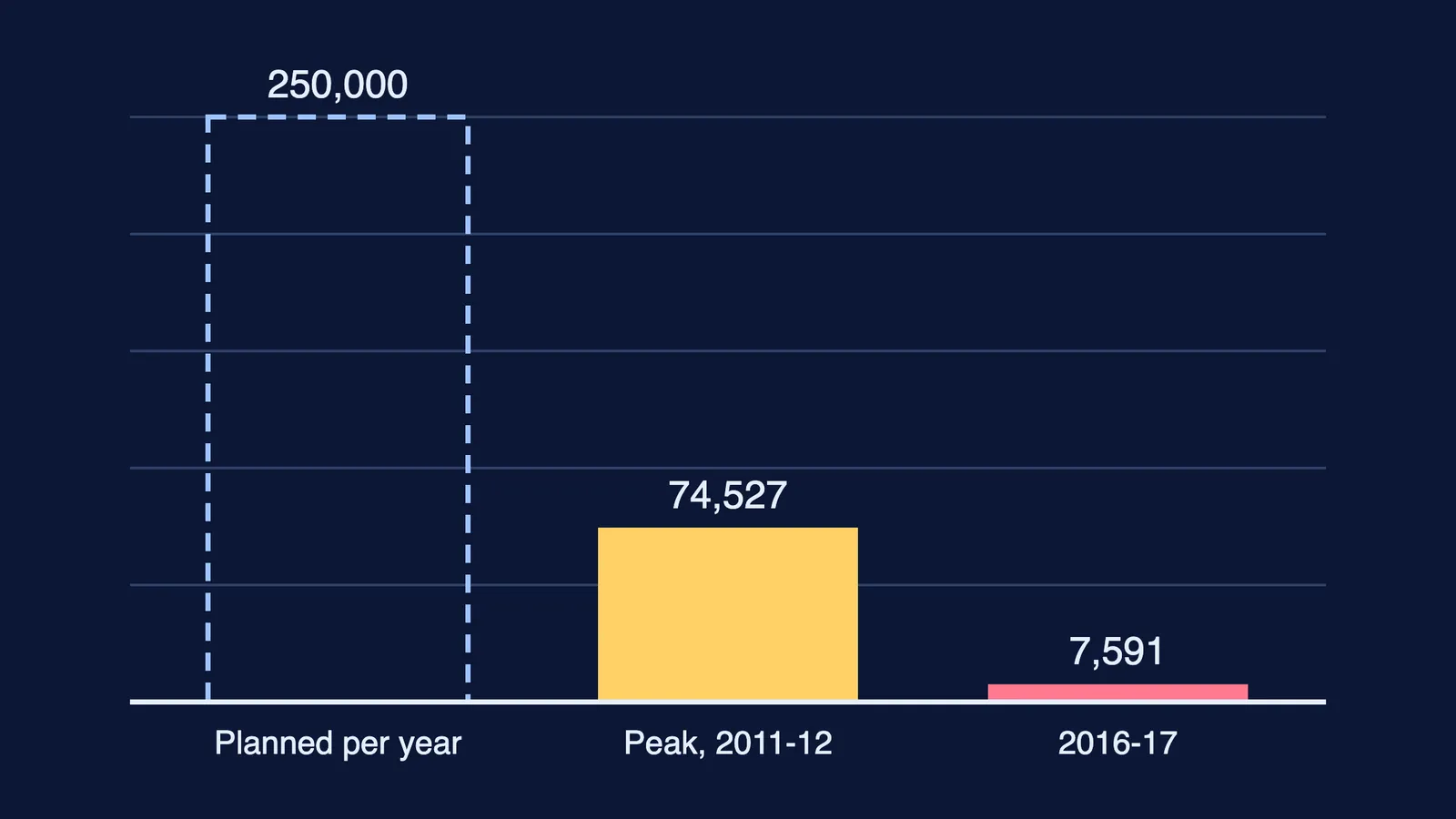
Tata Motors planned to sell 250,000 Nanos a year at launch, but the best year, 2011-12, brought 74,527 sales, according to the sales table in the Wikipedia entry. An AFP report carried by IndustryWeek noted that the company had once expected 25,000 a month, and that monthly sales fell as low as 509 units in November 2010. Four problems piled up.
The factory moved. After a land dispute at Singur, West Bengal, Tata decided to leave on 3 October 2008 and announced a Sanand, Gujarat plant on 7 October, per the Singur controversy entry.
Fires made headlines. There were reports of several Nano fires. Tata blamed foreign electrical equipment found on top of the exhaust system and offered to retrofit the exhaust and electrical systems, but did not recall the cars (Wikipedia).
The label stuck. In November 2013, Ratan Tata told a news channel: "It became termed as a cheapest car by the public and, I am sorry to say, by ourselves, not by me, but the company when it was marketing it. I think that is unfortunate" (PTI via Oneindia). In January 2012, AFP quoted him saying: "I don't think we were adequately ready with an advertising campaign or a dealer network" (IndustryWeek). The Nano came to be seen as a poor man's car, which turned some buyers away (Wikipedia).
Safety exposed the limits. In January 2014, Global NCAP gave the entry-level Nano, which had no airbags, a zero-star rating for adult protection in a 64 km/h frontal crash; its structure collapsed, and it had no three-point seatbelt on the rear seats (Global NCAP).
Sales reached just 7,591 in 2016-17 (Wikipedia).
How much energy does a 64 km/h crash carry?
The Global NCAP test runs at 64 km/h (Global NCAP). Kinetic energy is KE = ½mv², so it grows with the square of speed. Here is a worked example with an illustrative 600 kg car.
64 km/h is 17.8 m/s, so KE = ½ × 600 × 17.8² ≈ 95 kJ.
At 32 km/h (8.9 m/s), KE ≈ 24 kJ. Half the speed, a quarter of the energy.
Almost all of that 95 kJ has to be absorbed as the car crushes against the barrier. If it stops over 0.5 m, the average force is 95,000 J ÷ 0.5 m = 190 kN, about 32 times the car's own weight.
That is the bind. A car 3,099 mm long (Wikipedia) has little room to crumple, and a structure that collapses lets that energy reach the people inside. Physics ignores the price tag. If ½mv² still feels abstract, the Fermi Simulation Lab has interactive simulations for ideas that are easier to see than to read. For the drivetrain side, read how gears and clutches let a vehicle move.
What can students learn from the Nano's trade-offs?
Use this five-step check on any design, from a science-fair model to a robot:
Name the one number you are optimising, such as cost, mass or time. The Nano's was price.
List what the user must never lose. For a family car: safety, reliability, and pride in owning it.
For every cut, ask who notices it and when. One wiper is invisible on day one; a crash rating is front-page news.
Test the story, not just the product. Ask five people to describe your design in one word. If the word is "cheap", you have a marketing problem.
Study failures next door. The Comet airliner and metal fatigue is another case where a sound idea met a limit nobody had priced in.