On this page
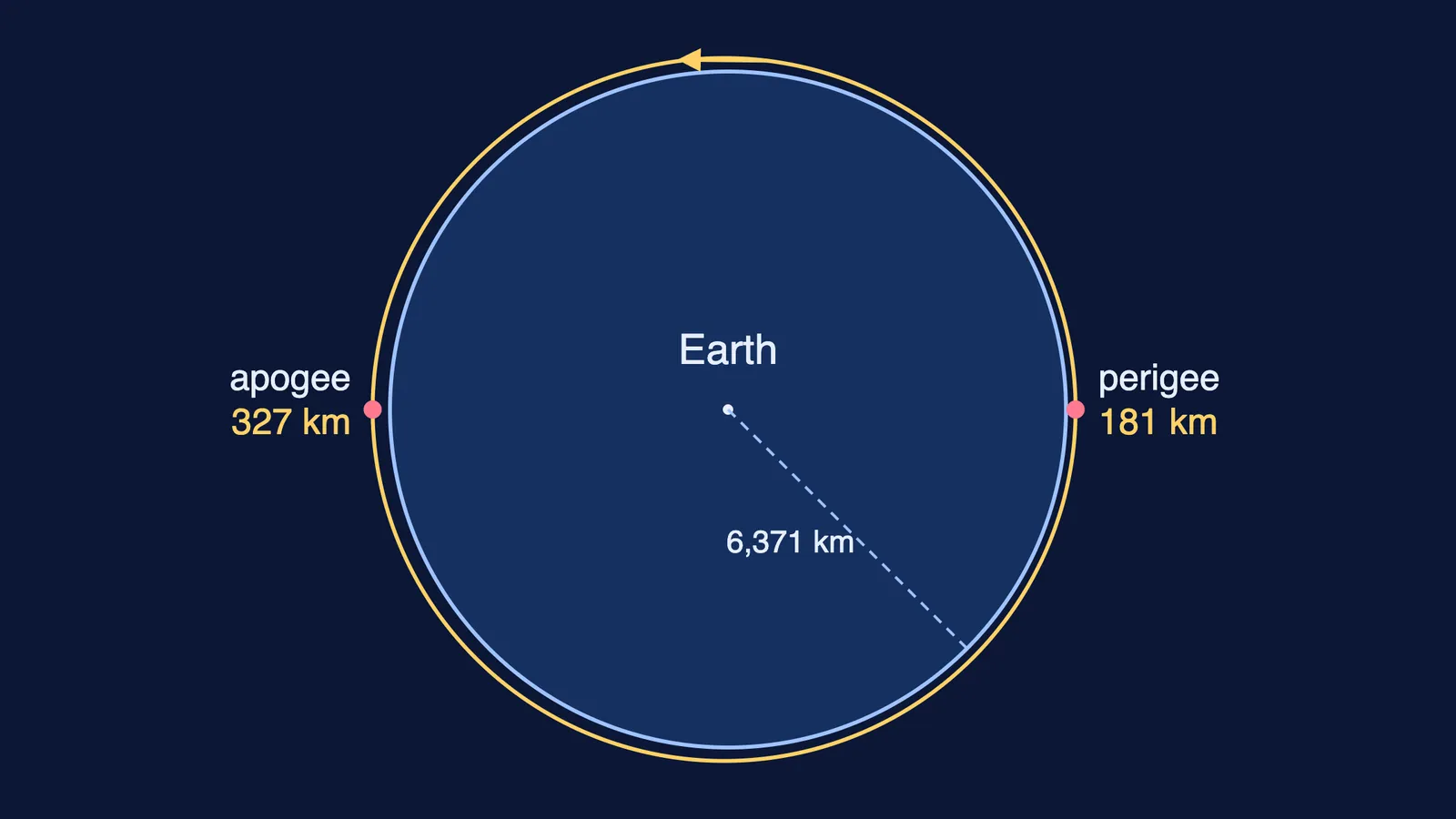
On 23 September 1999, NASA's Mars Climate Orbiter fired its main engine to slip into orbit around Mars, passed behind the planet, and was never heard from again. The Mars Climate Orbiter Mishap Investigation Board Phase I report traced the loss to a mismatch in units, not to a broken part. If you have ever lost marks for writing "5" instead of "5 N", this is the same mistake at the scale of a planet.
Why did the Mars Climate Orbiter crash?
The orbiter launched on 11 December 1998 to become the first interplanetary weather satellite and a radio relay for the Mars Polar Lander, according to the Phase I report. During the nine-month cruise, small thruster firings called Angular Momentum Desaturation (AMD) events removed spin that built up in the reaction wheels. Because the single solar array was lopsided, sunlight pushed unevenly, and these firings happened 10 to 14 times more often than expected.
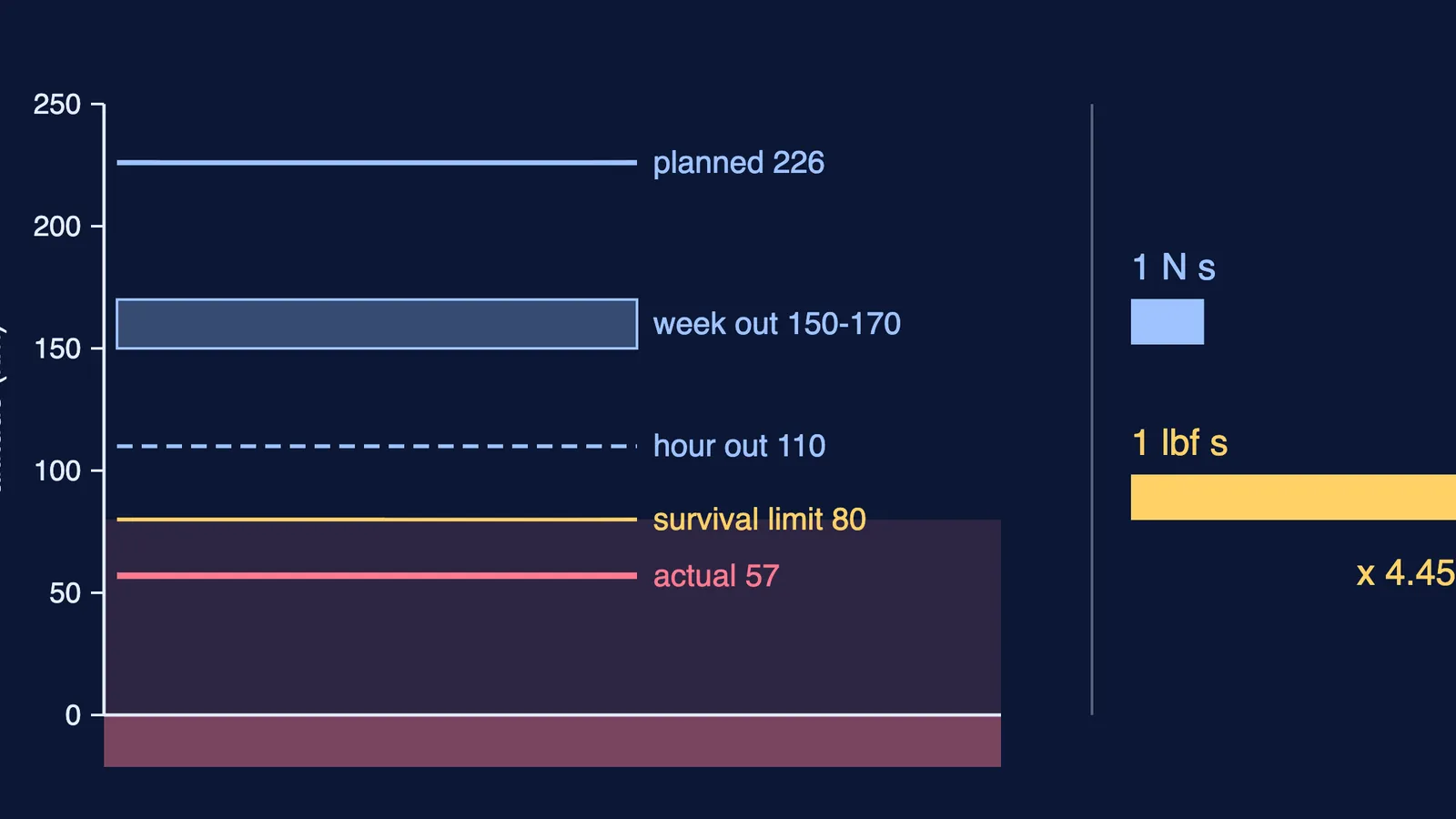
The board named the root cause as the "failure to use metric units in the coding of a ground software file, 'Small Forces,' used in trajectory models." The impulse data in the AMD file "was delivered in lb-sec instead of the specified and expected units of Newton-sec", so the navigation software underestimated each push by a factor of 4.45. NASA's own mission page puts it in one line: ground software used English units, while onboard software worked in metric.
How far off course did one unit put the orbiter?
According to the Phase I report, after the last planned course correction on 15 September 1999, the closest approach to Mars was meant to be 226 km above the surface. In the following week, navigators' estimates slid to 150-170 km. About an hour before arrival, the best estimate was as low as 110 km. The minimum altitude the orbiter could survive was 80 km.
The engine started at 09:00:46 UTC, and the signal disappeared behind Mars at 09:04:52 UTC, 49 seconds earlier than predicted. It never returned. Recalculating afterwards with the corrected numbers, the navigators put the real closest approach at 57 km, far too low to survive.
What is a pound-second, and why is it 4.45 times a newton-second?
Impulse is force multiplied by the time it acts, and it equals the change in momentum. In SI units it is the newton-second (N s), which is the same as kg m/s. A pound-second here means a pound-force acting for one second, and the Phase I report gives the conversion it hinged on: 1 pound force = 4.45 newtons. So "6" in pound-seconds is 4.45 times as much push as "6" in newton-seconds.
Here is the mistake as a worked example, with an illustrative 600 kg probe:
A thruster pushes with 2 lbf for 3 s. Impulse in the units given: 2 x 3 = 6 lbf s.
Convert first: 6 x 4.45 = 26.7 N s.
Change in velocity: Δv = J / m = 26.7 / 600, about 0.045 m/s.
Now make the orbiter's mistake and read "6" as 6 N s: Δv = 6 / 600 = 0.010 m/s.
Check the dimensions: N s / kg = (kg m/s^2)(s) / kg = m/s. The formula passes either way; only the input label was wrong.
One undercount looks harmless. Repeat it at every firing for nine months and, by the board's estimate, the orbiter arrived about 170 km lower than planned. The dimension check you use to derive the spring-mass period using dimensional analysis catches a wrong formula, not a mislabelled input.
Why does your teacher insist on units?
A bare number is half a message. The Phase I report describes Lockheed Martin Astronautics operating the spacecraft in Denver while JPL ran navigation. A file passed between them, the written specification said newton-seconds, and the readers assumed the units they expected. Your answer sheet is an interface too: the examiner has only the unit you wrote. After the loss, the board's first recommendation for the Mars Polar Lander was to verify the consistent use of units throughout.
Use six habits on every numerical problem:
Write the unit beside every given value before you start.
Convert everything to SI in the first line, using the unit factor method for conversions.
Carry units through every line, not only the last one.
Check the dimensions of your final expression.
Ask whether the size of the answer makes sense.
When you copy a number from a table, graph or someone's notes, read its unit first: the orbiter's exact failure.
When a unit slip costs you marks, log it in an error notebook you review each week, with the line where the conversion should have happened. To see where that line falls in a full solution, the Fermi Problem Library has worked problems with a step-by-step solver that explains the reasoning rather than printing an answer. If impulse itself feels shaky, the Fermi Concept Library gives each physics concept its own lesson.
Next time you write "N s" at the end of a line, you are doing the check the orbiter's ground software skipped.