On this page
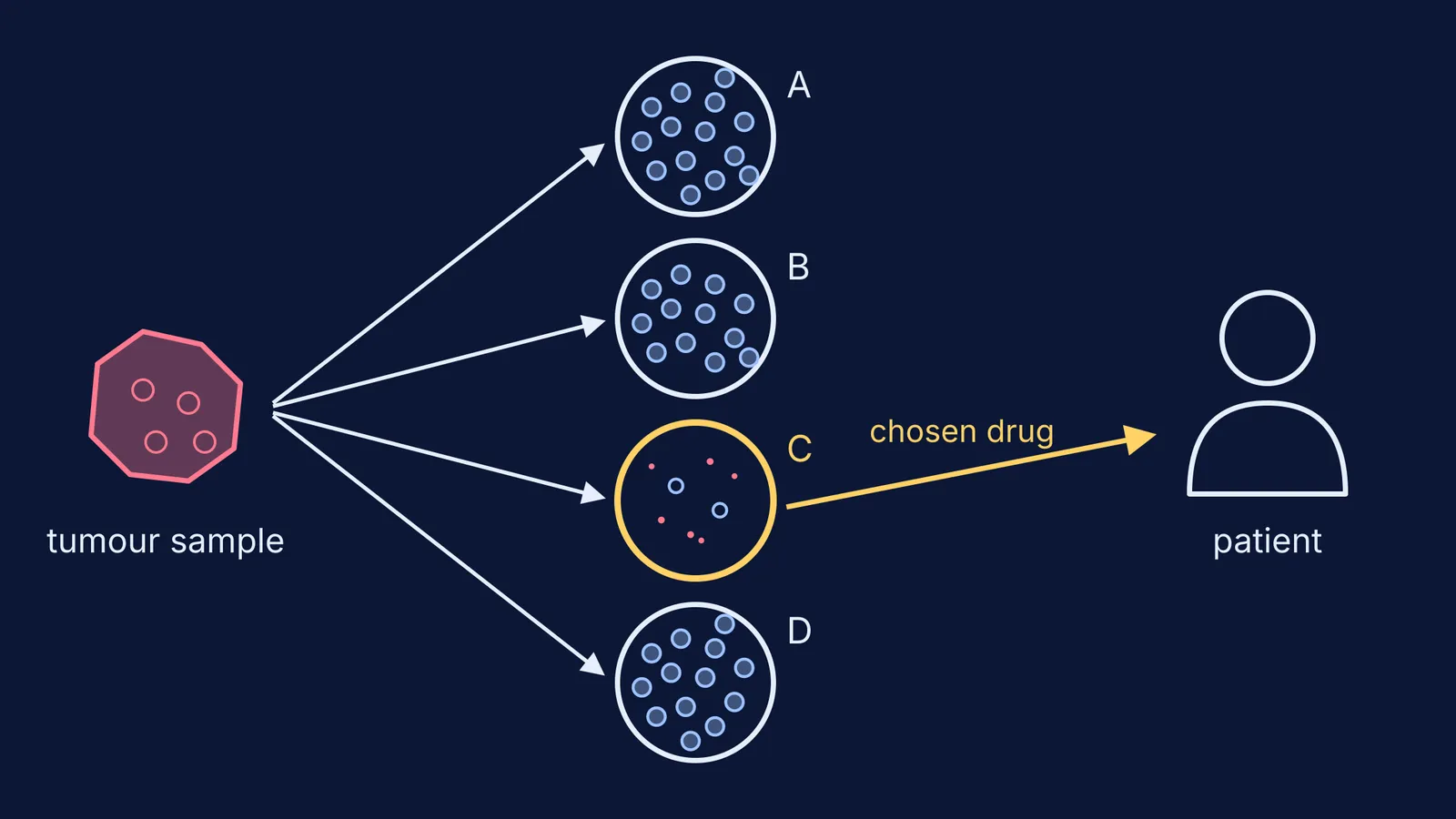
In 1951, a young doctor at Harlem Hospital in New York and her colleagues published a study of 93 patients with incurable cancers who had been given folic acid antagonists (PubMed record of the 1951 paper). Her name was Jane Cooke Wright. Over the next decade she worked on a lab method that still sounds modern: grow cells from a patient's own tumour, expose them to a drug, and see whether the dish predicts how the patient responds.
Who was Jane Cooke Wright?
Jane Cooke Wright (1919-2013) was an American cancer physician who graduated with honours from New York Medical College in 1945, according to the US National Library of Medicine. She joined the cancer research unit run by her father, the surgeon Louis T. Wright, at Harlem Hospital in 1949, and became its head at 33 after his death in 1952 (Shah, Cureus 2025).
The NLM biography credits her with more than 75 research papers on cancer chemotherapy over a 40-year career, and says that in 1955 she became director of cancer chemotherapy research at New York University Medical Center. In 1964 she co-founded the American Society of Clinical Oncology (Shah, Cureus 2025), one of its seven founders and, as a Black woman, someone who had overcome both racial and gender bias (Cancer History Project).
How did Jane Cooke Wright test drugs on patients' own tumour cells?
Wright developed a way to test possible cancer drugs on human tissue culture rather than on laboratory mice (Cancer History Project). In the words of the 2025 review, "By isolating malignant cells from patients and growing them in vitro, Wright was able to test the effects of various experimental drugs directly on those cells" (Shah, Cureus 2025).
The bet: a drug that damages a patient's tumour cells in a dish is a better candidate for that patient than one that leaves them growing. But does the dish predict the person? Her team's 1957 paper was titled "Investigation of the relation between clinical and tissue-culture response to chemotherapeutic agents on human cancer" (New England Journal of Medicine, 1957), and a follow-up appeared in 1962 (Cancer, 1962). Her co-authors on both included the cell biologist Jewel Plummer Cobb, who cultured the patients' tumour cells (The Jackson Laboratory).
What did her 1951 methotrexate study show?
In 1948 a paper reported temporary remissions in children with acute leukaemia treated with one of them, aminopterin (New England Journal of Medicine, 1948). Wright's work widened the target to solid tumours.
The 2025 review puts it plainly: "In 1951, her research demonstrated for the first time that methotrexate, up until then studied primarily in the context of leukemia, could also induce tumor regression in patients with advanced breast and skin cancers" (Shah, Cureus 2025). The same review notes that methotrexate later became a central part of treatment for breast cancer, childhood leukaemias and lymphomas, and that Wright argued for combining several drugs because cancers adapt to resist a single one. That idea runs through later medicine too, as in David Ho's case for combination drug therapy against HIV.
Today the US National Library of Medicine lists methotrexate as an antimetabolite used, among other conditions, for acute lymphoblastic leukaemia, some non-Hodgkin's lymphomas and mycosis fungoides, a lymphoma of the skin (MedlinePlus).
How does methotrexate work?
Methotrexate is a folate antagonist that inhibits the enzyme dihydrofolate reductase (DHFR), which depletes the cell's supply of reduced folate (International Immunopharmacology, 2026). Blocking DHFR is believed to stop the cell making nucleotides, the building blocks of DNA, and so to halt the cell cycle (Molecular Pharmacology, 2006). Folate is the vitamin at the centre of Lucy Wills's work on folate and anaemia in Bombay.
The chain, as you might write it in a biology answer:
A dividing cell must copy its DNA, which needs a steady supply of nucleotides.
Making nucleotides needs folate in its reduced form, kept topped up by DHFR.
Methotrexate, a folate antagonist, blocks DHFR.
Reduced folate runs out, nucleotide production stops, and DNA copying stalls.
A cell that cannot copy its DNA cannot divide.
What can students learn from Wright's method?
The NLM biography says Wright built a database cross-referencing cancers and patients to help judge how well the drugs worked. You can borrow that habit for revision:
Take a sample: a short set of questions from your weakest chapter.
Test two methods on it, for example rereading notes on one half and self-testing on the other.
Record each result in one line: topic, method, score, mistake.
Choose the method that worked on your own sample, not a friend's.
If you are not sure which chapter to sample first, Fermi's AI tutor works out what you already know and builds a plan for the session. For the biology behind this story (enzymes, DNA replication, the cell cycle), the Fermi Concept Library gives each concept its own lesson and its place in the map.
For another route to fighting tumours, read how James Allison freed T cells to attack tumours.