On this page
Chloroform is a molecule you meet in Class 12 chemistry as trichloromethane, CHCl3. In 1847 it became a surgical anaesthetic almost overnight. The person who made that jump was not a chemist. He was a doctor who delivered babies, and the test was done on himself.
What did James Young Simpson discover in 1847?
Surgical anaesthesia was barely a year old. On 16 October 1846, William Morton's ether was used during an operation on Gilbert Abbott in Boston, the first public demonstration, as Harvard's Countway Library records. Simpson, born in Bathgate in 1811, had been Professor of Midwifery at the University of Edinburgh since 1840, according to the Royal College of Physicians of Edinburgh. He wanted an agent that would ease the pain of childbirth.
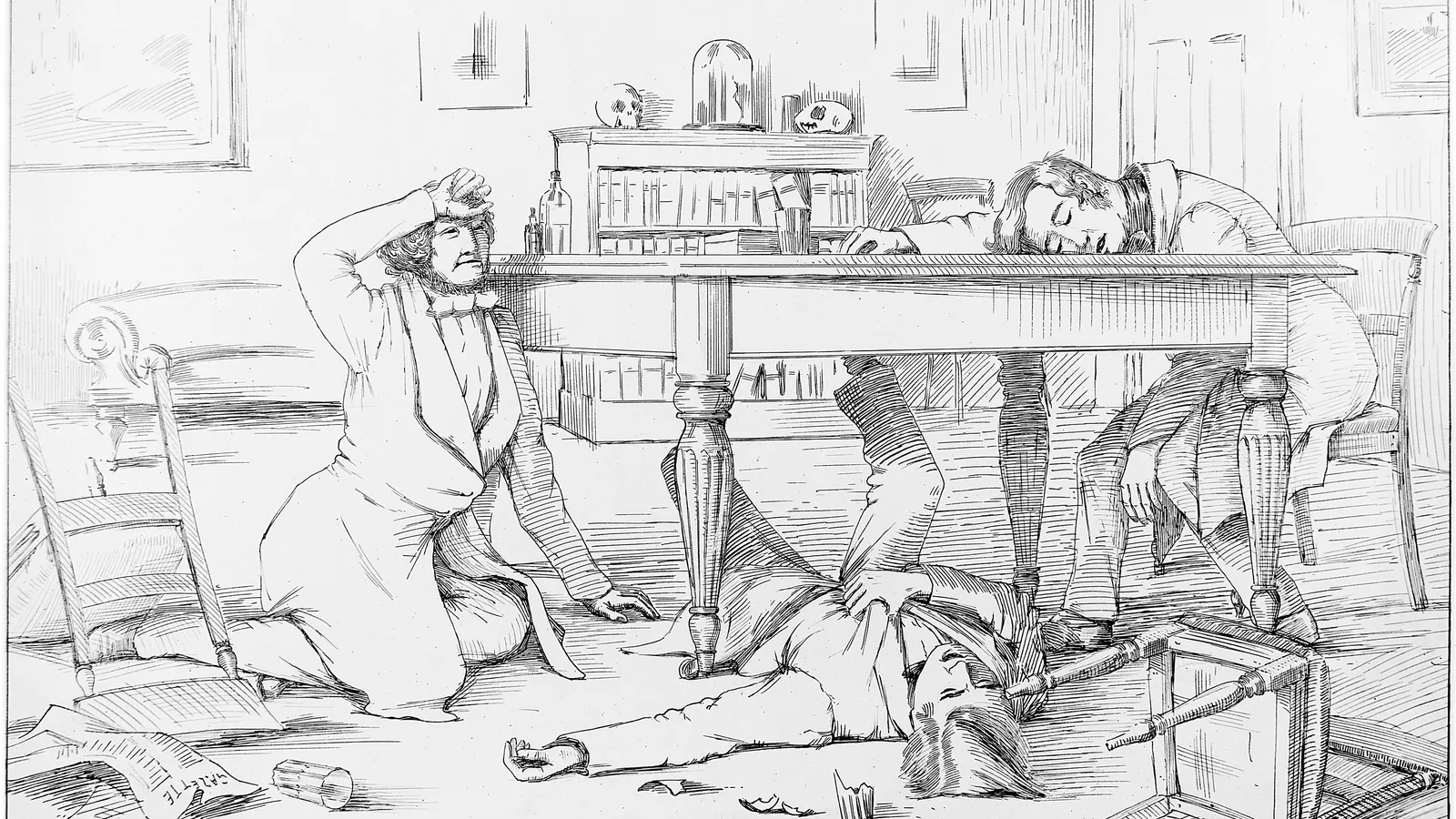
His method was blunt. Simpson and his assistants Matthew Duncan and George Keith tried inhaling different chemicals in his dining room to see which ones knocked them out. On the evening of 4 November 1847, they tried chloroform and felt elation followed by a sudden loss of consciousness, as the University of Edinburgh's history pages describe. A higher dose, the page notes, would most likely have killed them. Simpson first used chloroform in childbirth on 8 November 1847 and described it in a pamphlet, *Account of a New Anaesthetic Agent*.
He also published a paper in The Lancet that November, titled On a new anaesthetic agent, more efficient than sulphuric ether63271-3). The Edinburgh account says that within weeks chloroform had almost completely replaced ether as the standard anaesthetic.
Who actually discovered chloroform?
Not Simpson. He found a use for a compound chemists had already made. American physician Samuel Guthrie appears to have made it in 1831, German chemist Justus von Liebig prepared it around the same time, and French chemist Jean-Baptiste Dumas worked out its empirical formula and gave it the name chloroform in 1834, as the Wikipedia article on chloroform summarises.
Simpson was not even the first to describe its anaesthetic effect. Robert Mortimer Glover described chloroform's anaesthetic effect in a dog, after injecting it, in an 1842 thesis.
Why was chloroform dangerous?
Chloroform boils at about 61 °C (source), so it evaporates easily and can be breathed in from a cloth. The dose, though, was hard to control.
In 1848, 15-year-old Hannah Greener died under chloroform while having an infected toenail removed. She was the first human death from the drug, as the Glover article notes. The chloroform article adds that John Snow built an inhaler in 1848 to regulate the dose. In 1911, a researcher named Levy showed in animal experiments that chloroform could cause ventricular fibrillation, a deadly heart rhythm. In 1934, a review of the statistics by Killian put the risk of death at between 1 in 3,000 and 1 in 6,000 for chloroform, against 1 in 14,000 to 1 in 28,000 for ether. The same source says the latest reported anaesthetic use of chloroform in the Western world was in 1987.
In its early years, though, opinion moved in its favour. The Royal College of Physicians of Edinburgh notes that Queen Victoria received chloroform during childbirth on 7 April 1853, which quickly silenced opposition to Simpson's case for pain relief in labour.
How does this connect to your Class 12 haloalkanes chapter?
Chloroform is the textbook polyhalogen compound. Here is how to turn its story into exam answers.
Name it. CHCl3 is methane with three hydrogens replaced by chlorine, so the IUPAC name is trichloromethane. Practise with our guide to naming haloalkanes and haloarenes.
Explain why it can be inhaled. A boiling point near 61 °C (source) makes it volatile at room temperature. Compare its trend with others in boiling point and density trends of haloalkanes.
Explain the dark bottle. In UV light and air chloroform slowly turns into phosgene, COCl2, an extremely poisonous gas (source). Write it balanced: 2CHCl3 + O2 → 2COCl2 + 2HCl. Check your atoms: 2 carbon, 2 hydrogen, 6 chlorine and 2 oxygen on each side.
Explain the additive. Commercial chloroform is stabilised with ethanol or amylene; ethanol turns any phosgene into the relatively harmless diethyl carbonate, according to the same article.
Name a modern use. Its main use today, the same article says, is reacting with hydrogen fluoride to make HCFC-22, a precursor of Teflon.
If one of these steps leaves you unsure, the Fermi Concept Library has a lesson on each chemistry concept and shows where it sits in the wider map, so you can go back to naming or volatility before returning to the question.
For a halogen story with a darker ending, read about Thomas Midgley's leaded petrol and CFCs.
When you can tell this story from the molecule up, write a three-mark answer on why chloroform is stored in dark bottles, then try related problems in the Fermi Problem Library, whose step-by-step solver explains the reasoning.