On this page
An artificial foot that needs a shoe, a fridge that needs a steady power supply, a heart test that needs an expensive machine: each works well, but not for everyone. Three Indian designs took on these problems by asking a different question. Not "what is the best possible version?" but "what is the version that does the essential job, at a price people can pay, in the place they actually live?"
What is frugal innovation?
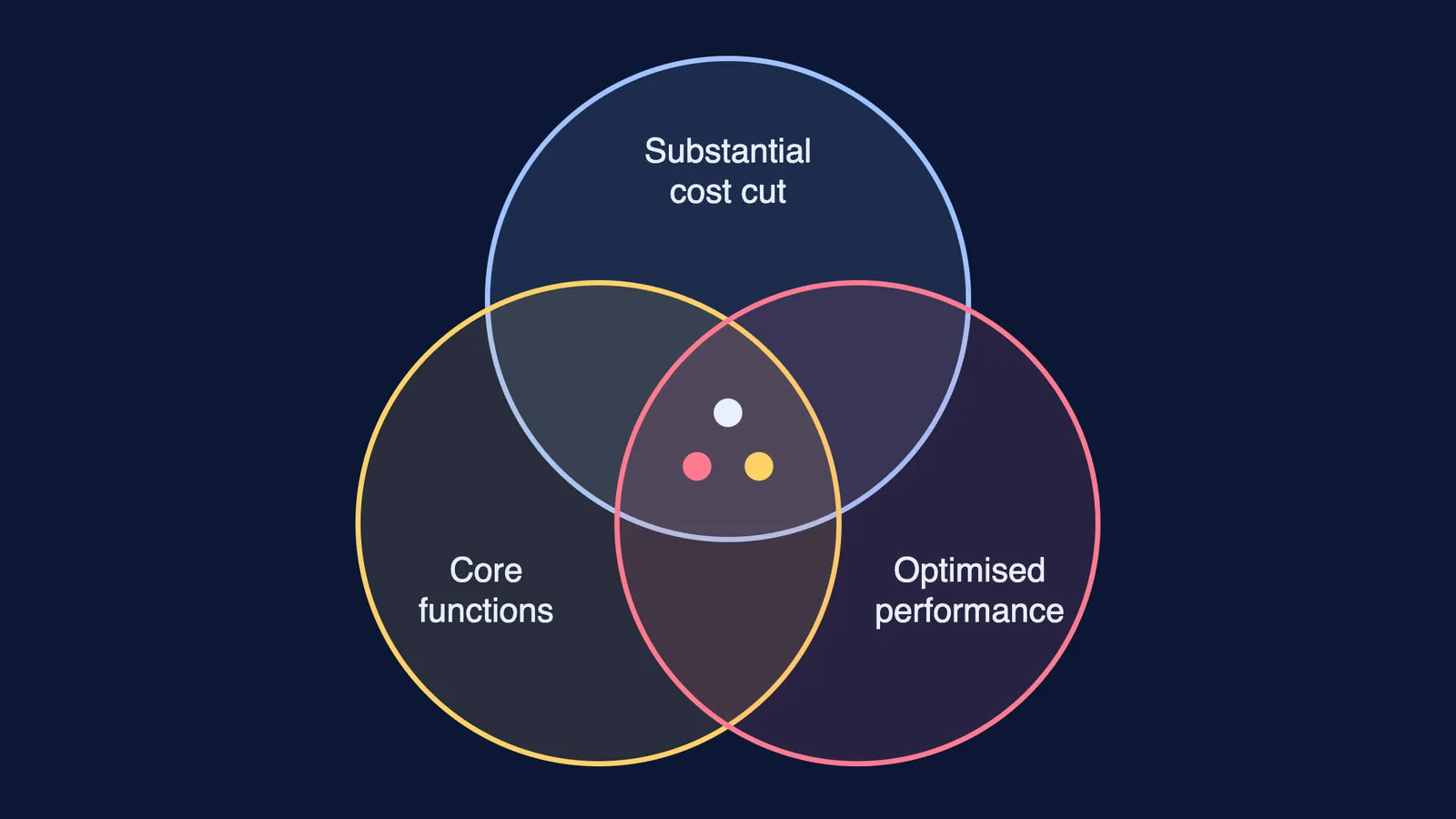
Frugal innovation is designing a product with a substantial cut in cost, a focus on core functions and an optimised (not maximal) level of performance, according to a 2016 study by Timo Weyrauch and Cornelius Herstatt in the Journal of Frugal Innovation. They reached those three criteria by reviewing the research and interviewing 45 managers and researchers.
You may hear the Hindi word jugaad used for the same idea. Jugaad usually means a clever quick fix with whatever is at hand. Frugal innovation, as the study defines it, asks for more: the low cost has to be designed in, and the performance has to stay good enough for the job.
How did the Jaipur foot keep prosthetics cheap?
In 1968, surgeon P K Sethi and craftsman Ram Chandra Sharma made a prosthetic foot from rubber, plastic and wood that cost only about $45 to produce, as the Science Museum in London records. The Jaipur foot did not need a shoe, which mattered in India, where many people go barefoot.
A good design was not enough on its own. In the first seven years after 1968, hardly 50 limbs were fitted, according to C K Prahalad, quoted on the history page of BMVSS, the Jaipur society set up in 1975 that now fits the foot. Today BMVSS gives limbs free of charge, and its own counter shows more than 7 lakh limbs provided. If prosthetics interests you as work, read our guide to the bachelor's course in prosthetics and orthotics.
How does a clay fridge cool without electricity?
Mansukh Bhai Prajapati, an innovator from Gujarat, built the Mitticool, a clay cabinet that keeps fruit, vegetables and milk reasonably fresh without electricity. In 2022 the Bureau of Indian Standards issued IS 17693:2022 for this kind of non-electric clay cooling cabinet, which works on evaporative cooling, ANI reported, citing the consumer affairs ministry.
The physics is the same as a matka. Water soaks into the porous clay and evaporates from the outer surface. Evaporation needs energy (latent heat), and the water takes it from the clay and the air inside, so the inside cools. It works best in dry air, where water evaporates fast. Clay has another everyday trick too: see why a kulhad is cooler to hold than a steel tumbler.
What made a low-cost ECG machine possible?
GE's engineers in India built the MAC 400, a battery-operated, lightweight ECG machine that was designed and manufactured in India, Knowledge at Wharton reported. It cost $800 instead of $2,000 for a conventional ECG machine and brought the cost of a test down to about $1 (50 rupees) per patient, according to Nesta. The team had 18 months to build it, and its printer was adapted from the ones in bus-terminal kiosks across India.
The core job stayed the same: record the heart's electrical signal clearly. To learn what that trace shows, see what the P, QRS and T waves of an ECG mean.
What design rules do frugal innovations share?
Put the three stories side by side and five rules appear:
Start with the user's real setting. Barefoot walkers, homes without steady power, clinics far from cities.
Name the one core job. Walk; keep food cool; record the heart.
Use what is already cheap and local. Rubber and wood, clay, a kiosk printer.
Let physics do the work. Evaporation cools the Mitticool for free.
Plan how it reaches people. The Jaipur foot reached far more people once BMVSS was fitting it.
How can you try frugal design on a school problem?
Try the rules on keeping a classroom's drinking water cool in May.
Setting: no fridge, hot and fairly dry afternoons, a tight budget.
Core job: water a few degrees cooler than the room, all day.
Local parts: an unglazed clay pot, a cotton cloth, a shady window ledge with a breeze.
Physics: a wet cloth around the pot adds surface for evaporation; moving air carries the vapour away.
Reach: one student refills it and re-wets the cloth each morning.
Then test it like an engineer: measure the water with a thermometer in a wet-cloth pot and a bare pot for a week, and note the humidity each day. If a step in the physics is unclear, the Fermi Concept Library covers every concept in physics, chemistry, biology, mathematics and computing, and the Fermi Simulation Lab has interactive simulations for ideas easier to see than read.
Pick one thing in your home that costs too much or breaks too often, and run it through the five rules this weekend.