On this page
Charles Hatchett (1765–1847) was not a university professor. He was the only son of a prosperous London coach-builder, and he took up chemistry alongside music, art and travel, according to a 2013 history by chemists James and Virginia Marshall.
Who discovered niobium?
Charles Hatchett discovered niobium in 1801, while examining minerals at the British Museum, according to the Royal Society of Chemistry. He announced it to the Royal Society on 26 November 1801 and called it columbium, symbol Cb (RSC Education). Today it is niobium, element 41.
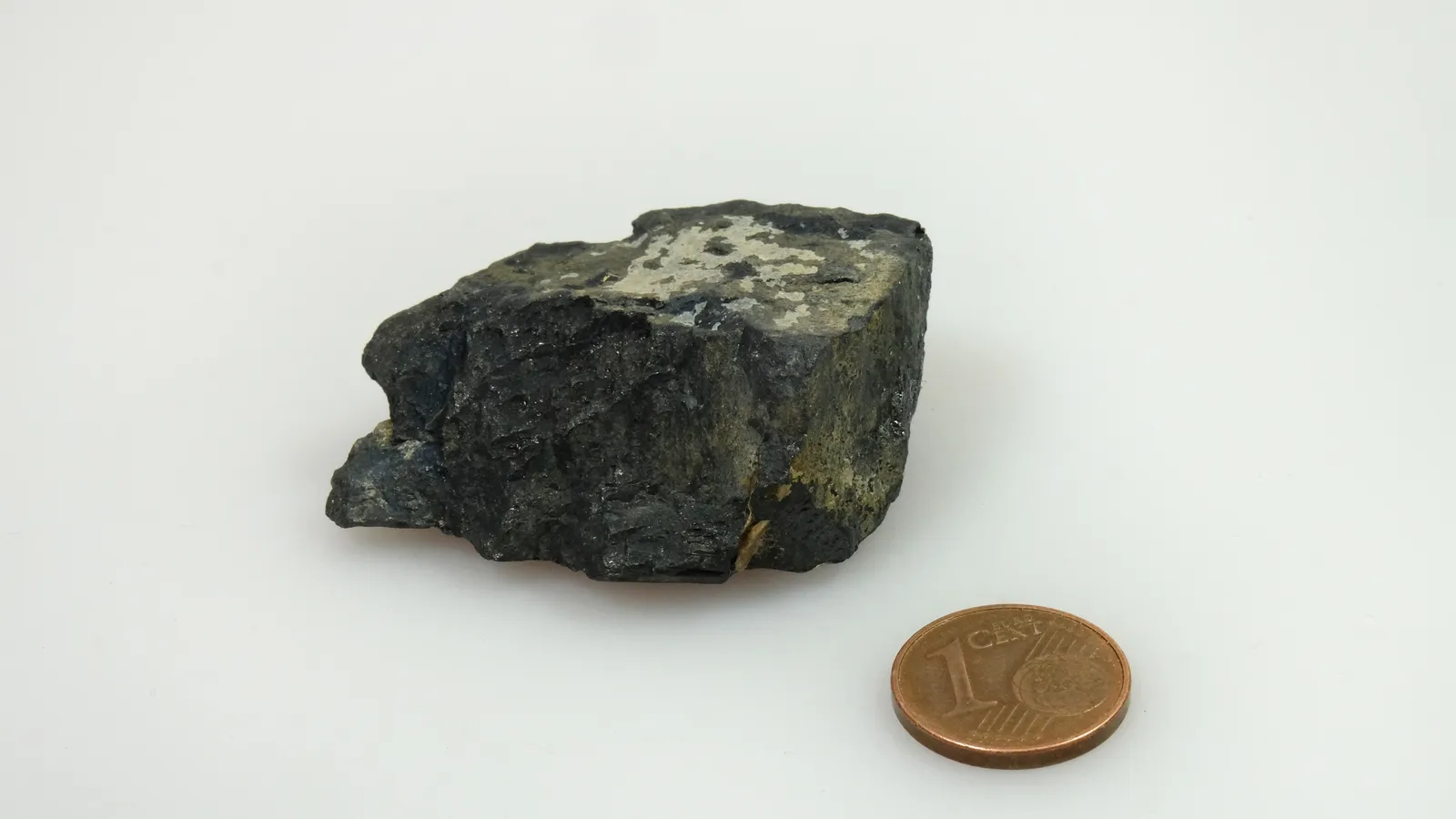
In his 1802 paper, Hatchett wrote that Sir Hans Sloane's catalogue described the specimen only as “a very heavy black stone” and that it had been sent to Sloane by a Mr. Winthrop of Massachusetts. The Marshalls trace it to John Winthrop II, a colonial governor of Connecticut, and to the Middletown–Haddam area there. The mineral is now called columbite.
How did Hatchett prove it was a new element?
He ruled out everything else, step by step, as the Marshalls' account shows:
He took 200 grains (13.0 g) of the stone and heated it red-hot with “carbonate of potash”.
He dissolved the product in boiling water and treated it with nitric acid, which gave a white precipitate.
He showed the rest of the solution was mostly iron, using the Prussian blue test and tincture of galls.
He listed every possible candidate for the white solid: the 22 metals and earths in Lavoisier's 1789 Treatise, plus 8 elements discovered since.
He used established tests to rule out all of them. The solid did not react with nitric acid or ammonia, gave an orange precipitate with tincture of galls, and formed no sulphide with potassium sulphide.
His paper, “An analysis of a mineral substance from North America, containing a metal hitherto unknown”, appeared in Philosophical Transactions of the Royal Society in 1802, volume 92, pages 49–66. The pure metal came much later: Christian Blomstrand produced a sample in 1864, says the RSC.
Why was columbium renamed niobium?
In 1802 Anders Ekeberg in Uppsala found tantalum in a Swedish mineral. In 1809 William Hyde Wollaston compared the two and concluded they were the same metal, according to the Marshalls. He noted that columbite's specific gravity was 5.918 and tantalite's was 7.953, but suggested the gap might come from the state of oxidation or from cavities in the columbite. The names were then used interchangeably for 32 years; nobody yet understood that two different elements could have such similar properties.
The German chemist Heinrich Rose settled it in 1844, proving that columbite contained both elements, and renamed columbium niobium (RSC; Rose's paper in Annalen der Physik). The name comes from Niobe, the daughter of Tantalus in Greek myth (RSC Education). The RSC's niobium podcast notes that IUPAC made niobium the official name only in 1950, and that the last American Chemical Society paper mentioning columbium dates from 1953.
Why are the two so alike? Niobium sits directly above tantalum in group 5, and the lanthanide contraction makes their atoms almost the same size. You can see the same effect in why 5d elements have higher ionisation enthalpy.
Where is niobium used today?
Mostly in steel. The US Geological Survey's 2025 summary estimates that about 77% of US niobium consumption goes into steels and about 21% into superalloys. It also says Brazil accounts for about 92% of world production. A niobium-titanium alloy is a superconductor, used in magnets for MRI scanners and particle accelerators, says the RSC.
What can you learn from Hatchett's method?
Your salt analysis practical works the same way: you identify an unknown ion by ruling things out. Here is a five-step checklist drawn from Hatchett's work and Wollaston's mistake:
Write the full candidate list first. Hatchett listed every known metal and earth. You list the ions in your syllabus.
Choose tests that split the list. A group reagent that removes many candidates beats a test that removes one.
Record the negatives. “No precipitate” rules things out. Hatchett's proof was mostly negatives.
Do not explain away a result that does not fit. Wollaston could not account for a big density gap and kept his conclusion anyway. If an observation clashes with your answer, recheck the answer.
Claim only what your tests show. Hatchett claimed a new oxide, not a pure metal.
The same habit helps with titration end points and viva questions. For another element found in an American mineral, read about Andrés Manuel del Río and vanadium.
If step 4 is where you slip, the Fermi Problem Library has worked problems with a step-by-step solver that explains the reasoning rather than printing an answer. If the gap is the background idea, such as why elements in the same group look alike, the Fermi Concept Library gives each chemistry concept its own lesson and shows where it fits in the map.