

On this page
Vanadium, element 23, was first found in Mexico. Andrés Manuel del Río (1764–1849) discovered it in 1801 in the laboratory of the Real Seminario de Minería in Mexico City, according to a 2020 history by José Alfredo Uribe Salas in the journal Asclepio. European chemists gave the credit to the Swedish chemist Nils Gabriel Sefström, who rediscovered the element 30 years later, and the name vanadium became official in 1831.
So the honest answer is: del Río first, Sefström second. Here is how a correct discovery got lost, and what it teaches you about lab work.
How did del Río find a new element in lead ore?
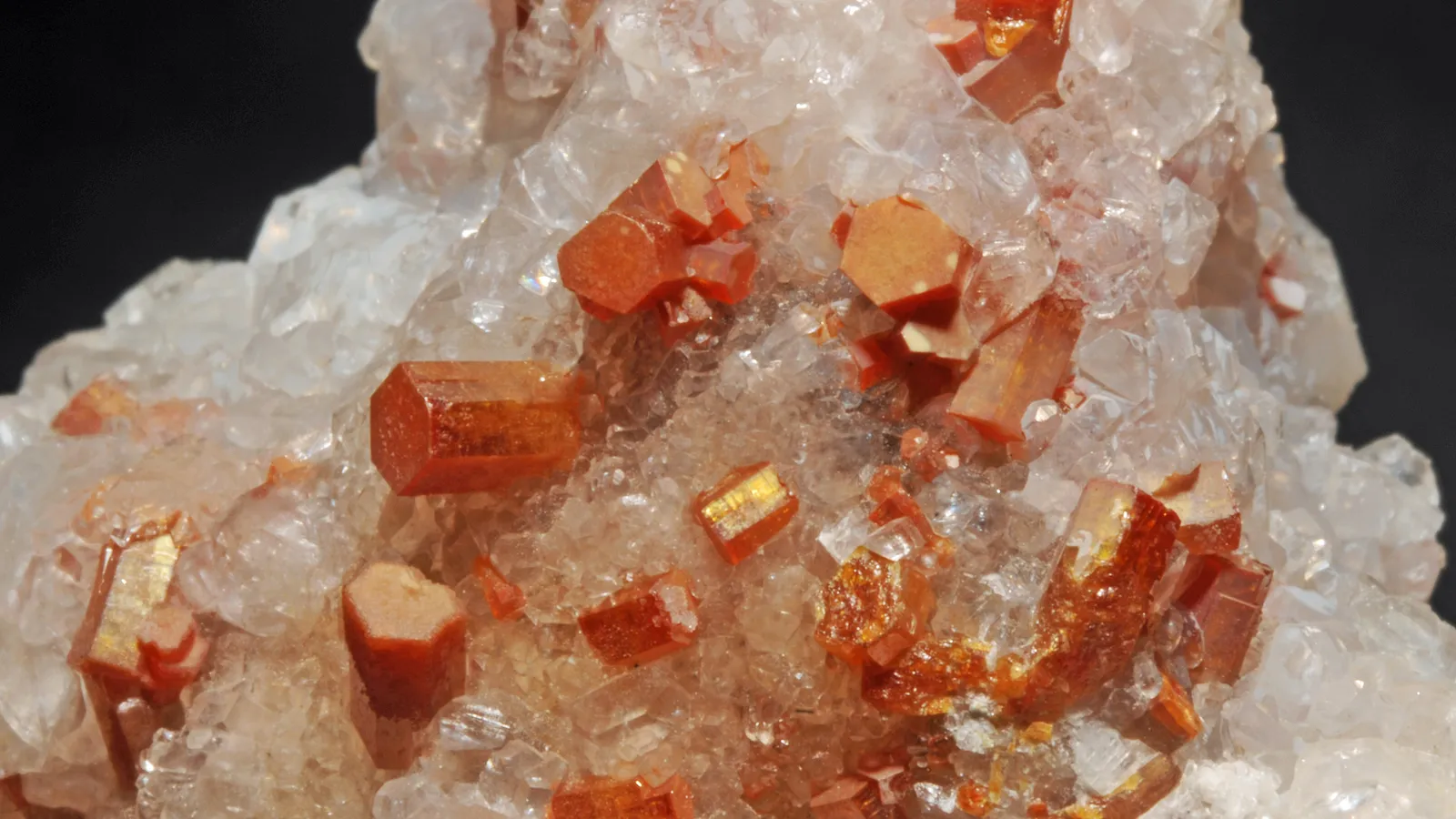
Del Río had trained at the mining academies of Freiberg and Schemnitz and was an expert on lead ores, according to chemists James and Virginia Marshall’s history of the discovery in The Hexagon. His sample was *plomo pardo*, a “brownish-grey lead” mineral from the Zimapán region, known today as vanadinite.
His analysis, as the Marshalls reconstruct it, went like this:
Hot sulfuric acid removed the lead as lead sulfate and left a green solution.
Ammonia gave white crystals; acidifying gave a brown-grey residue.
He dissolved the residue in hot nitric acid, evaporated the acid and diluted with water; the solution gave yellow precipitates with silver, mercury and lead nitrates.
A borax bead test gave a green colour.
He called the new metal panchromium, “all colours”, for its many coloured compounds, and also erythronium, for the red colour of its compounds. He sent a full paper to the French chemist Jean-Antoine Chaptal, but it was lost in a shipwreck.
The colours were real chemistry. Vanadium ions in solution are yellow in the +5 oxidation state, blue in +4 and green in +3, as LibreTexts’ chemistry of vanadium/Descriptive_Chemistry/Elements_Organized_by_Block/3_d-Block_Elements/Group_05%3A_Transition_Metals/Chemistry_of_Vanadium) explains. For why d-block ions are coloured at all, read our explainer on crystal field splitting and colour.
Why did Paris decide it was only chromium?
Alexander von Humboldt, del Río’s friend and classmate from Freiberg, reached Mexico in 1803 and took a specimen to the Institut de France in 1804, the Marshalls record (part one, part two). Chromium’s discoverer, Nicolas-Louis Vauquelin, had moved on, so the job fell to his assistant Hippolyte Victor Collet-Descotils. In 1805 he ran three quick tests and declared the new metal to be chromium.
One of those tests did not fit. With mercury nitrate he got a “yellowish” precipitate instead of the deep red that Vauquelin had seen for chromium. Some French scientists questioned the result, but the case was treated as closed. Humboldt’s handwritten label on the sample, now in Berlin’s natural history museum, says del Río had finally recognised “ordinary chromium”.
How did it get the name vanadium?
In Sweden, Sefström was studying iron from Taberg at the Falun Mining School. The iron was malleable, yet it left a black powder in hydrochloric acid, a sign usually linked to brittle iron. In that powder he found a new metal; Berzelius checked the analysis, and the announcement came in 1831, according to the Marshalls’ third article. Because its salts were so colourful, it was named after Vanadis, the Scandinavian goddess Freya.
In Berlin, Friedrich Wöhler had been re-examining del Río’s sample but fell ill. In a letter to Justus Liebig he wrote, “I was a jackass not to have discovered it 2 years earlier,” as the Marshalls quote it. Wöhler then showed that Swedish vanadium was the same element as del Río’s erythronium, and Berzelius publicly recognised del Río as the original discoverer.
In 1947 two Mexican authors, Manuel Sandoval Vallarta and Arturo Arnaiz y Freg, argued in Nature for restoring the name erythronium; a reply printed alongside it rejected the idea. Today, metallurgical use, chiefly as an alloying agent for iron and steel, made up more than 90% of reported US vanadium consumption in 2025, according to the US Geological Survey.
What can you learn from del Río’s mistake?
Del Río’s chemistry was right; the checking failed. You meet a smaller version of this in salt analysis, when the test tube disagrees with the answer you expected. Use this four-step check before changing your answer:
Write down exactly what you saw. “Yellowish precipitate”, not “positive test”.
Compare with the reference result, test by test. Collet-Descotils had two matches and one clear miss.
Repeat the test that disagrees, with fresh reagent and a known control if your lab has one.
Keep both explanations open until the repeat is done. In Paris the case was closed without a repeat of the test that disagreed, and the error stood for 26 years.
Our guide to using salt colour as a preliminary clue treats early observations as clues, not verdicts. If oxidation states or d-block colours still feel shaky, the Fermi Concept Library has a lesson for every concept in chemistry, each with its place in the map. For practice, the Fermi Problem Library has worked problems with a step-by-step solver that explains the reasoning rather than printing an answer.
For another element that hid inside a familiar mineral, read how Martin Klaproth discovered uranium.


