On this page
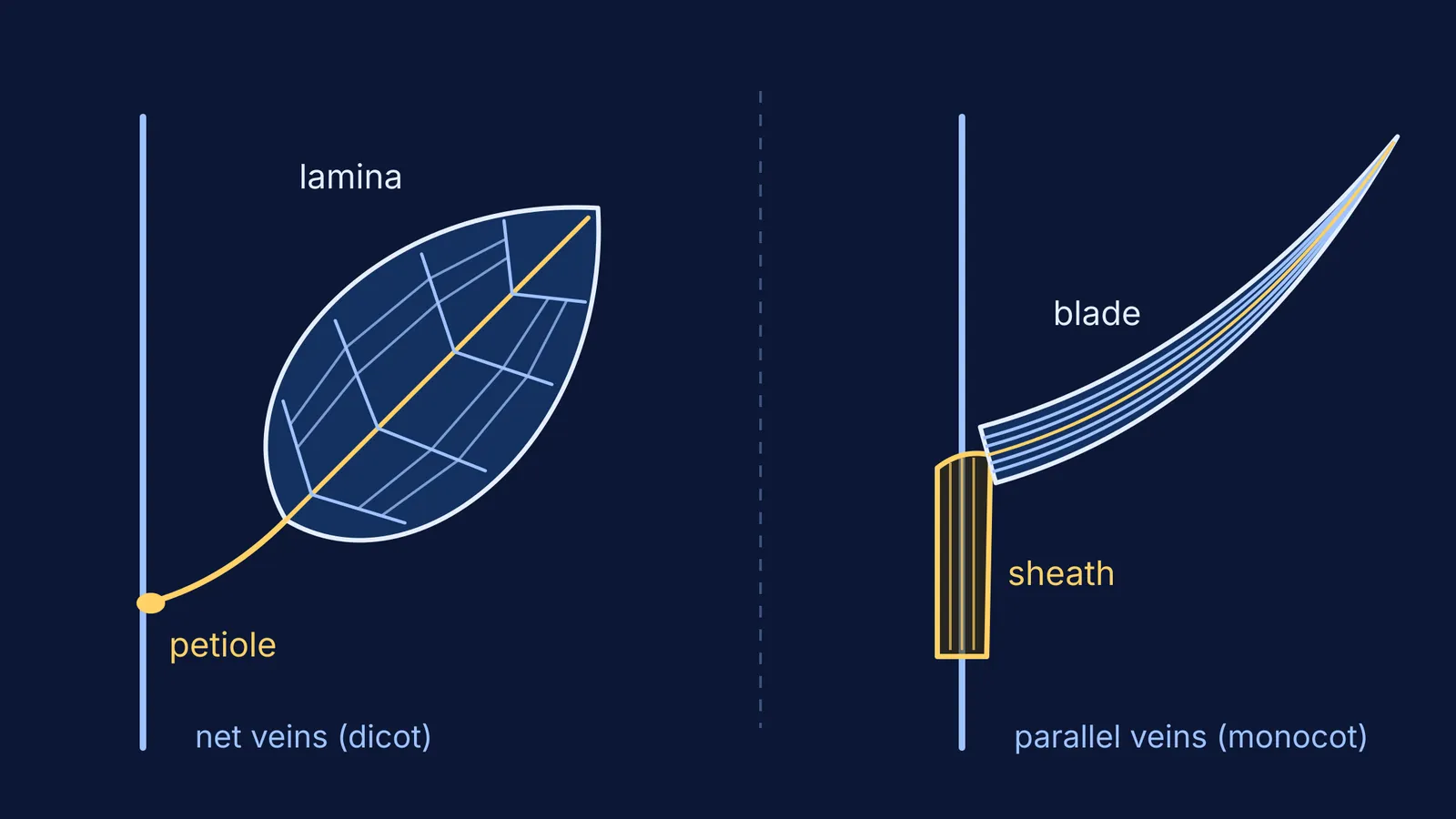
Look at a wheat leaf and you'll see its veins run side by side in straight lines, not in a net. Agnes Arber spent her career on questions like that one. She was a British plant morphologist who studied the form of flowering plants, especially the monocots. In 1946 she became the first female botanist elected a Fellow of the Royal Society, according to Cambridge University Press's page for her book on monocotyledons.
Who was Agnes Arber?
Arber was born in London on 23 February 1879 and died in Cambridge on 22 March 1960, as her Wikipedia biography records. Her father, the artist Henry Robert Robertson, gave her drawing lessons as a child. The plant morphologist Ethel Sargant later became her mentor. Arber worked at Cambridge's Balfour Laboratory for Women from 1909 until it closed in 1927, then in a small laboratory in a back room of her house. In 1948 she became the first woman to receive the Linnean Society's Gold Medal.
A 2025 paper in the Journal of the History of Biology by Vera Straetmanns says she was elected to the Royal Society "as the first female botanist and the third woman overall". It adds that she studied plants under a dissecting microscope and in tissue cross sections, and that she was "a very skilled draftswoman".
What did Agnes Arber find out about monocots and grasses?
Morphology is the study of a plant's external structure. As the NCERT Class 11 chapter on the morphology of flowering plants puts it, flowering plants vary hugely in form, yet "they are all characterised by presence of roots, stems, leaves, flowers and fruits". The same chapter lists the monocot traits you learn for exams:
one cotyledon in the seed, as in wheat and maize
usually a fibrous root system instead of a tap root
parallel venation in most leaves
a leaf base that expands into a sheath covering the stem
Arber's *The Monocotyledons: A Morphological Study* came out in 1925 in the Cambridge Botanical Handbooks series. Cambridge University Press describes it as an anatomical and comparative study of the whole group, with 160 figures.
Her 1934 book *The Gramineae* turned to cereals, bamboos and grasses. Its publisher says it was the first published general description of the family, with more than 200 figures. Because the family includes wheat, millet and rice, the book opens with the history of how people have used these plants.
She also asked what a monocot leaf really is. In 1918 she published The Phyllode Theory of the Monocotyledonous Leaf in Annals of Botany, weighing the anatomical evidence. A phyllode is a modified leaf stalk (petiole) that looks and works like a leaf, as in many Australian acacias, according to Wikipedia's article on phyllodes. The theory holds that many monocot leaves match such phyllodes rather than the blade of a dicot leaf. Botanists were still testing it decades later: a 1973 study of the snake plant, Sansevieria, read its leaf development as support for the idea.
What is the partial-shoot theory of the leaf?
She first set out her partial-shoot theory in 1941 and explained it in greater detail in her 1950 book *The Natural Philosophy of Plant Form*, as Straetmanns's history paper explains. In Arber's words, "the leaf is a partial-shoot, revealing an inherent urge towards becoming a whole-shoot, but never actually attaining this goal".
Your NCERT chapter already uses this way of thinking in one direction: "The flower is a modified shoot". Arber applied it to leaves. She saw a leaf as a shoot that starts out but never fully becomes one.
How can you study plant form the way Arber did?
Arber's method was to look closely, draw what she saw and compare. You can try a 20-minute version with two leaves that are easy to find in many Indian homes and school gardens: a grass or maize leaf and a china rose (hibiscus) leaf.
Look for two minutes without drawing. Notice where each leaf joins the stem.
Draw both leaves side by side, the same size. Draw only what you see.
Label the leaf base, the petiole (if there is one), the blade and the midrib.
Trace the veins with a pencil. Do they form a net, or run side by side?
Write one sentence on each leaf, using NCERT terms: "reticulate venation, petiole present" or "parallel venation, leaf base forms a sheath".
Then ask Arber's question: on the grass leaf, which part might be the leaf stalk?
Check: did you draw the sheath wrapping the stem, and not invent a petiole for the grass leaf? Practise the same habit with the difference between monocot and dicot seeds and dicot versus monocot stem cross sections.
If venation, cotyledons and phyllotaxy are blurring together, the Fermi Concept Library gives every biology concept its own lesson and shows where it sits on the map.
Next time you walk past a lawn, pick one blade of grass and try to find its sheath.