

On this page
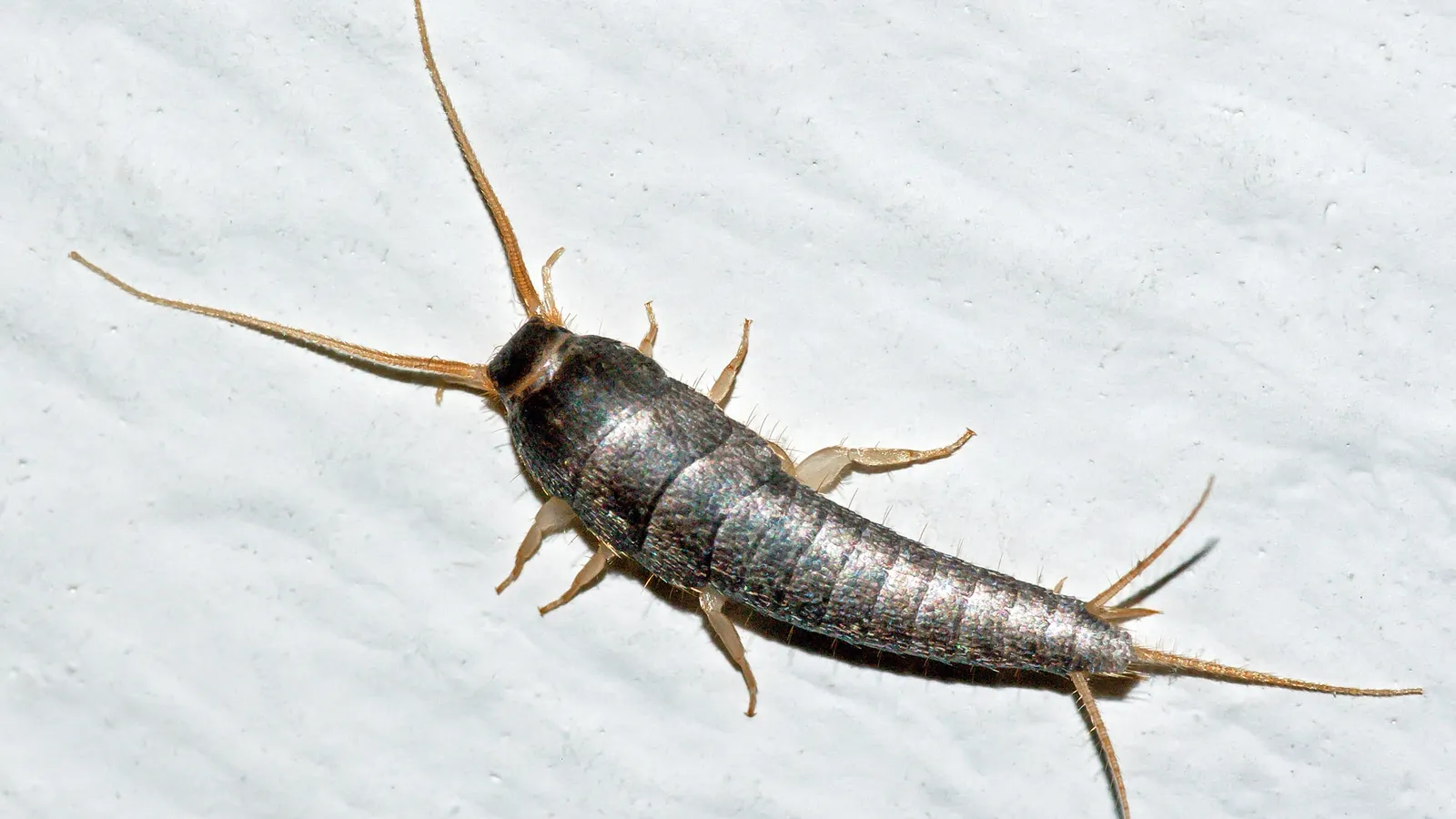
Pull an old textbook out of a cupboard after the monsoon and you may find a fast, shiny insect running for cover, and pages that look grazed rather than torn. That is a silverfish, eating what the book is made of.
Why do silverfish eat books and paper?
Silverfish belong to Lepismatidae, "a family of primitive wingless insects", and several species live alongside people in buildings, where "they can damage books, book bindings, documents, and photographs", according to a 2024 worldwide review in the Journal of Insect Science.
A book is food to them. North Carolina State University Extension says silverfish are attracted to "glazed paper or material used in book bindings, which may include starch, glues (especially on older books)" (NC State Extension). The Northeast Document Conservation Center adds that they "feed on finished paper, sizing, glue, and wallpaper" (NEDCC).
The chemistry links all of these. Paper is mostly cellulose from plant fibres. Starch is used in pastes and in the sizing that gives paper a smooth finish. Starch and cellulose are both long chains of glucose, joined in different ways. To a silverfish, an old book with paste in the spine and starch on the pages is a shelf of stored sugar.
Can silverfish actually digest paper?
In the 1950s the prevailing view was that most plant-eating animals could not break down cellulose at all, and lived on the sugars, starches, fats and proteins in plants instead. In 1956, Reuben Lasker and Arthur Giese at Stanford studied cellulose digestion in the silverfish *Ctenolepisma lineata*, using radioactively labelled cellulose, when the role of gut microbes was hard to separate (Lasker and Giese, Journal of Experimental Biology). Later researchers count it among early reports of "production of endogenous cellulases", meaning enzymes made by the silverfish itself (Pothula et al., PLOS ONE, 2019).
That 2019 study screened insect guts for cellulose-digesting enzymes and found that silverfish and firebrats showed "the highest relative cellulase activity levels" of all insect groups tested, including termites and wood-eating cockroaches. Termites and those cockroaches had significantly lower activity, by more than fourfold (PLOS ONE). The highest activity was in the foregut, and the authors point to enzymes made both by the insect and by its microbial partners.
Compare that with how termites digest wood with the microbes in their gut: two insects, one food, two different toolkits. If polysaccharides and enzymes still feel abstract, the Fermi Concept Library gives every concept in biology and chemistry its own lesson, and the Fermi Simulation Lab has interactive simulations for ideas that are easier to see than to read.
Why do silverfish like damp, dark places?
Silverfish need moist air. Ohio State University Extension says they live and develop in "damp, cool places", preferring 75 to 95 percent relative humidity, and they are nocturnal (Ohioline). The UK Archives and Records Association says the common silverfish "only breeds rapidly and causes serious problems in conditions of above 70% relative humidity", though it notes the grey silverfish, now in the UK, can survive and breed at lower humidity (ARA).
That is why the damage turns up in closed almirahs, store rooms, boxes against an outside wall and shelves near a bathroom, especially through a humid monsoon.
How do silverfish fit into decomposition?
Outdoors, silverfish live "under stones, rocks, bark of different trees, leaf litter", the review in the Journal of Insect Science notes. An insect that can digest cellulose is useful in leaf litter: it helps turn dead plant matter back into simpler substances that other living things can use.
If you are unsure what counts as an insect, try this four-point check for why a spider is not an insect.
How do you protect old books from silverfish?
Here is a one-week plan for a shelf or a box of old books.
Day 1, inspect: look for "notched edges or holes", ragged bindings, and "cast skins, scales, and / or feces" (NC State Extension).
Day 1, trap: place sticky traps near the shelf overnight to confirm what you have; Ohio State notes they work as monitoring devices (Ohioline).
Day 2, dry the air: run a fan or dehumidifier and fix leaking pipes, which Ohio State says helps.
Day 3, clear and seal: throw out old stacks of papers you do not need and store keepers in "air-tight plastic bags or sealable containers" (NC State).
Day 3, move: lift boxes off the floor and away from damp walls.
Day 7, recheck: if traps still fill up, ask an adult to call a licensed pest-control service.
For collections, NEDCC advises keeping relative humidity below a maximum of 70% and temperature at 68°F (20°C) or lower (NEDCC).
Curious about other hardy household insects? Read how a cockroach lives without its head.


