On this page
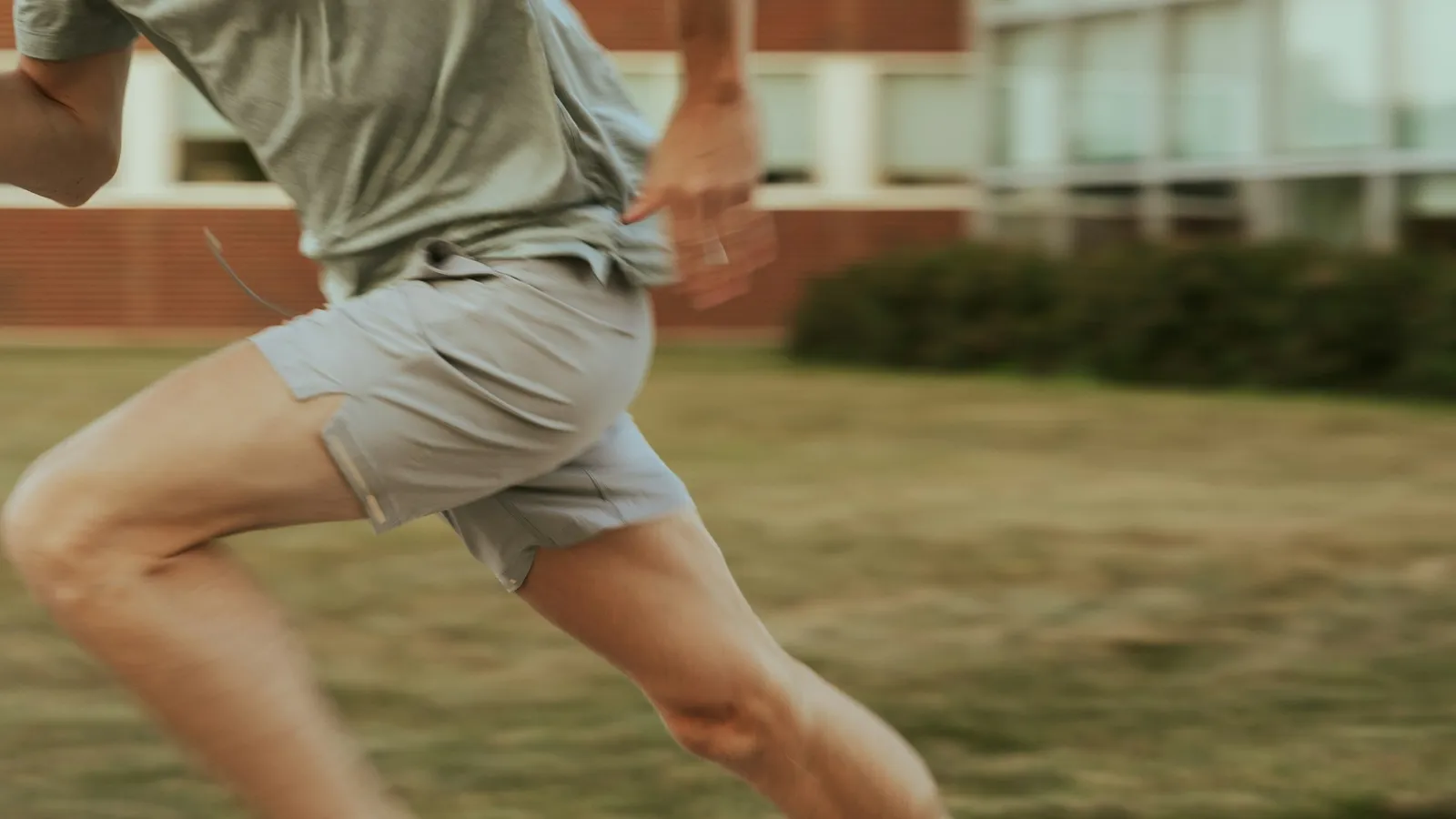
You are sprinting for the ball late in a school football match, and your calf locks into a hard, painful knot. Or you wake at night with your calf locked tight. Both are cramps, and the honest answer to "why?" is that scientists are still arguing about it.
What is a muscle cramp?
A cramp is a sudden, involuntary contraction of a muscle that you cannot relax by choice. The NHS describes leg cramps as happening when a muscle "tightens and causes a sudden pain", lasting from a few seconds to 10 minutes, with soreness that can linger for up to 24 hours.
Normally a muscle contracts only when a motor neuron in your spinal cord fires and calcium lets actin and myosin pull on each other (see our guide to how calcium, actin and myosin make a muscle contract). In a cramp, that nerve signal keeps firing when it should stop.
Why do muscles cramp during sport?
The salt-and-water idea. Sweat carries away water and sodium, so cramps come from dehydration or lost salts. A 2009 review found the evidence for this came mainly from anecdotes, case series totalling 18 cases and one case-control study of 10 people, and that four prospective cohort studies did not support it (Schwellnus, 2009).
The tired-nerve idea. The same review concluded that "altered neuromuscular control" is the likely main cause. Each muscle has two kinds of sensors reporting to the spinal cord: muscle spindles, which excite the motor neuron, and Golgi tendon organs, which calm it down. When a muscle is fatigued by repeated hard work, spindle signals rise and tendon organ signals fall, so the balance tips towards "contract" (Jahic and Begic, 2018).
The clearest field test followed 210 Ironman triathletes: 43 reported cramps during or just after the race, and their blood salt levels and body-weight changes showed no significant differences from the 166 who did not (Schwellnus and colleagues, British Journal of Sports Medicine). The only two independent risk factors were a faster race time and a history of cramping in the last 10 races.
The salt idea is not dead, though. In a small 2021 study, 10 young men ran downhill in 35 to 36 °C heat, losing 1.5 to 2% of their body mass, and replaced it with either spring water or an oral rehydration solution. With spring water, their calves became easier to cramp with electrical stimulation; with the rehydration solution, harder (Lau, Kato and Nosaka, 2021). The 2018 review above argues that fatigue and dehydration may both play a part.
Why can a sip of pickle juice stop a cramp so fast?
Researchers dehydrated male volunteers by about 3% of their body weight and set off cramps in a small foot muscle with electrical nerve stimulation (Miller and colleagues, 2010). After drinking about 74 mL of pickle juice, the cramp lasted 84.6 seconds on average, against 133.7 seconds after water. Neither drink noticeably changed the blood within five minutes, so the authors proposed a reflex starting in the mouth and throat that quiets the motor neurons. It was a small lab study, not a treatment guide.
Why do legs cramp at night?
Up to 60 percent of adults report having had night-time leg cramps, and an episode lasts nine minutes on average, according to a review in American Family Physician. Most have no identifiable cause. Recordings of muscle activity suggest they start in motor neurons firing rapidly and involuntarily. One theory is posture: in bed your foot rests pointed, so the calf is already fully shortened.
Stretching links the two ideas. Pulling a cramping muscle long loads its tendon, the Golgi tendon organs fire, and their inhibitory signal reduces the motor neuron's activity (Jahic and Begic, 2018).
To revise the biology behind this, the Fermi Concept Library gives each biology concept its own lesson, and the Fermi Simulation Lab has interactive simulations for ideas that are easier to see than to read.
What should you do when a cramp hits?
This is everyday guidance based on the NHS leg cramps page, not treatment. During the cramp:
Stop and gently stretch the cramping muscle.
Massage it, or stand and put your weight on the cramping leg.
Wait it out; the NHS says cramps last from a few seconds to 10 minutes.
Afterwards, note in a cramp diary:
Which muscle, and how far into play?
Were you pushing harder than you usually train?
How hot was it, and what did you drink?
Was it your first match after a break?
Worked example: a Class 11 student cramps only in the last overs of inter-house cricket, after three weeks of exam revision with no practice. That pattern fits the fatigue idea better than a salt shortage, so rebuilding match fitness is a sensible first step. Our time plan for keeping a sport during JEE or NEET prep may help. Next-day soreness is a separate story: why muscles ache a day after exercise.
See a GP if cramps disturb your sleep, last longer than 10 minutes, or come with numbness or swelling in the leg, as the NHS advises. Ask a doctor before trying salt tablets or any medicine for cramps.