On this page
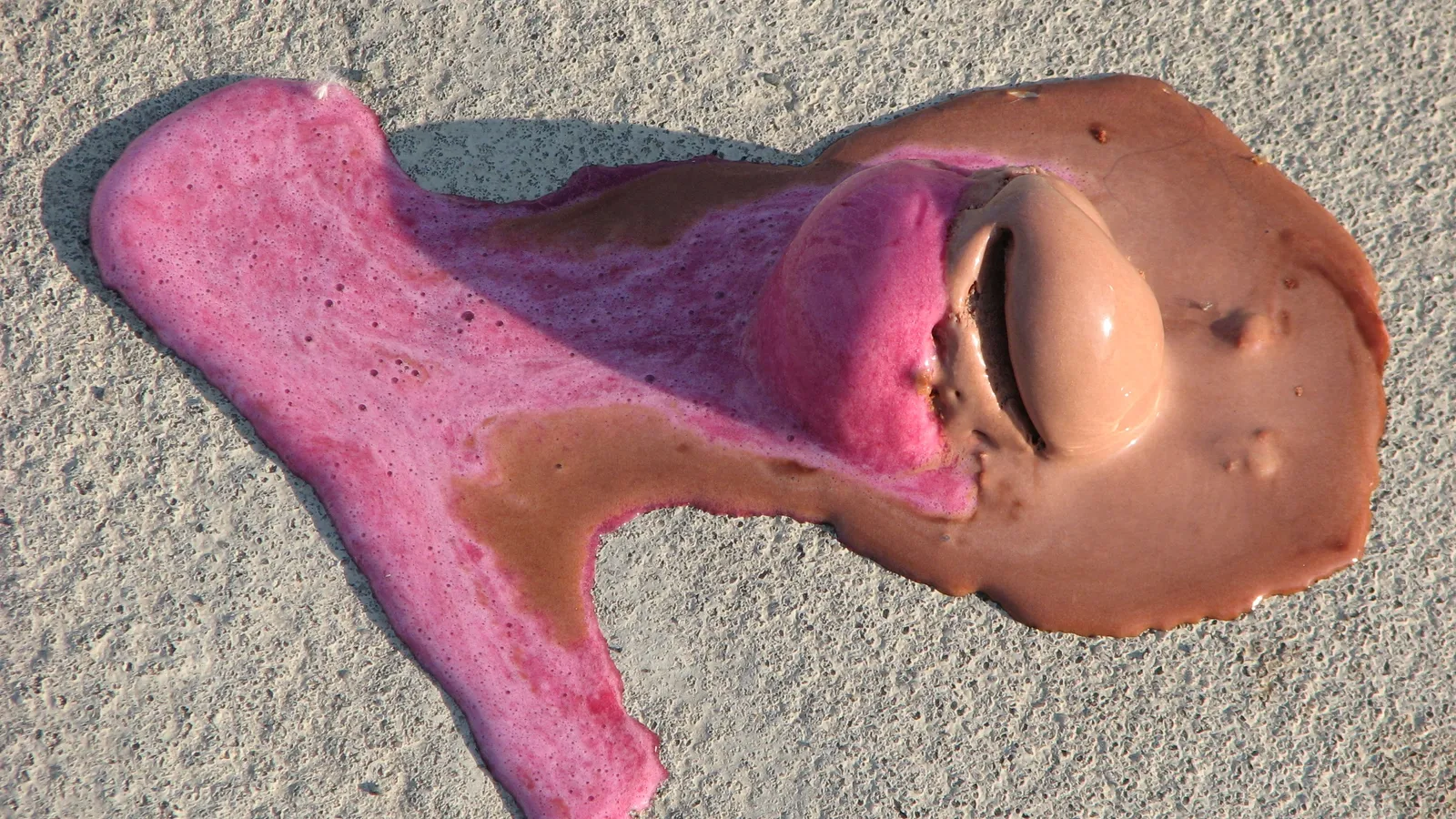
A scoop straight from the freezer tastes pleasantly sweet. Leave the same bowl on the table for twenty minutes and the puddle tastes almost too sweet. Nobody added sugar. What changed is the temperature, and with it how well the sweet-sensing cells on your tongue do their job.
Why does melted ice cream taste so much sweeter?
Sweet taste starts when sugar molecules bind to receptors on taste cells. That binding sets off a chain of events inside the cell, and one later step is a channel called TRPM5 opening to let charged ions in, which is thought to help the cell fire a signal to the nerve. If you want a refresher on how the five tastes are detected, see our explainer on how taste buds sense sweet, sour, salty, bitter and umami.
The key finding comes from a 2005 study in Nature by Karel Talavera and colleagues: TRPM5 is a heat-activated channel whose currents rise steeply between 15 and 35 °C. In the same paper, raising the temperature across that range markedly boosted the taste-nerve response to sweet compounds in normal mice, but not in mice lacking TRPM5. The authors suggest this channel may explain why people find warmer foods sweeter.
So a cold tongue is a quieter tongue. The sugar is there, the receptors bind it, but the step that helps turn binding into a strong nerve signal is much less active when cold.
Is there evidence from people, not just mice?
Yes. In a 1988 experiment, Barry Green and S. P. Frankmann had volunteers rate sweetness with the tongue, the solution or both held at 36 °C or cooled to 20 °C. Cooling significantly reduced the sweetness of glucose and fructose, and cooling the tongue mattered more than cooling the solution90127-8). That second detail fits ice cream well: a frozen scoop chills your tongue, not just itself.
The same study found that saccharin's sweetness did not change with temperature, which the authors took as indirect support for the idea that sweet taste involves more than one type of receptor. Our post on how saccharin, aspartame and sucralose compare covers how different these molecules are.
Temperature can even create taste on its own. Alberto Cruz and Barry Green reported in Nature in 2000 that warming the front edge of the tongue from cold can make people taste sweetness with no sugar present at all, while cooling can produce sourness or saltiness.
Temperature also changes timing. In mice, brain neurons that respond best to sugar responded most strongly to solutions warmed to 30 °C, and cooling delayed their first response by hundreds of milliseconds, according to a 2014 study by Wilson and Lemon in the Journal of Neurophysiology.
What does this mean for food you make at home?
Here is a worked example. Say you make a kulfi or mango sorbet mix and sweeten it until it tastes just right at room temperature. Then you freeze it.
Frozen, it reaches your tongue much colder than the mix was, and chills the tongue itself.
From the studies above, a cold tongue and a cold sample both mean a weaker sweet signal.
Prediction: the frozen dessert will taste less sweet than the mix did.
The flip side: once it melts and warms up in the bowl, it should taste closer to the way the mix did, sweet again.
This also fits the common experience that a sweet drink left out to warm tastes more syrupy than it did straight from the fridge. Cold dulls flavour elsewhere in the kitchen too; our post on why tomatoes lose taste in the fridge looks at a different cause, inside the fruit itself.
How can you test this yourself?
You need two glasses, sugar, water and a fridge. It takes about an hour, mostly waiting.
Dissolve one teaspoon of sugar in a glass of water. Pour half into a second glass.
Put one glass in the fridge for an hour. Leave the other on the counter.
Ask someone to hand you the two glasses without saying which is which. Sip, hold for a few seconds, and spit or swallow.
Rinse with plain room-temperature water between sips.
Write down which tasted sweeter. Repeat three times, switching the order.
Try again with a much sweeter mix (three teaspoons) and see whether the gap feels smaller or larger.
A blind, repeated test like this is the same logic scientists use: change one thing, keep everything else the same, and do not let expectations decide the answer.
Some ideas are easier to see than to read, and the Fermi Simulation Lab has interactive simulations for them. For the cell-signalling background, every biology concept has its own lesson in the Fermi Concept Library.
Next time your ice cream melts, taste the puddle before you wipe it up. That extra sweetness is your taste cells warming up.