On this page
You will meet this activity in NCERT Class 10 Science, Chapter 5 (Life Processes), as Activity 5.1, and its reasoning comes up in board answers and practical vivas. You compare the green and non-green parts of one leaf and see where starch turns up. Most steps rule out a wrong conclusion, so knowing why each is there answers most viva questions.
What is the experiment to show chlorophyll is necessary for photosynthesis?
The NCERT Class 10 Science chapter on Life Processes sets it out as Activity 5.1. You take a potted plant with variegated leaves, such as a money plant or croton, and keep it in a dark room for three days so that all the starch gets used up. The plant then goes into sunlight for about six hours. You pluck a leaf, trace its green areas on paper, dip it in boiling water, heat it in alcohol in a water bath, dip it in dilute iodine solution, rinse it and compare it with your tracing.
Variegation is the appearance of differently coloured zones in a plant's leaves, and in many variegated plants some tissues make chlorophyll while others do not, as the Wikipedia entry on variegation explains. That is what makes this a fair test. Green and pale patches share the same light, air and water; the key difference is chlorophyll (more in why leaves look green and what chlorophyll does with light).
Why test for starch? The same NCERT chapter says carbohydrates not used immediately are stored as starch, the plant's energy reserve. For the chemistry, read why plants store starch instead of glucose.
Why is the plant kept in the dark first?
In the dark the plant cannot photosynthesise, but it keeps using its stored food. Three days in a dark room, as NCERT's Activity 5.1 specifies, uses up the starch already in the leaves. This is called destarching.
Skip it and leftover starch would stain blue-black too, so you could not say it was made during the experiment. The Cognito practical notes on testing a leaf put the logic in one line: after destarching, any starch found afterwards must have been made during the experiment.
What do the boiling water, alcohol and iodine each do?
Each step and its reason, from NCERT and the Cognito notes:
Trace the green areas first. Once the alcohol removes the colour, you will have nothing else to compare against.
Boiling water kills the leaf, stops its reactions and breaks down the cell membranes so iodine can get into the cells.
Hot alcohol dissolves out the green chlorophyll, so the iodine colour can be seen clearly. The leaf goes pale and the alcohol turns green, which answers NCERT's question about colour.
Warm water softens the leaf, which turns brittle in alcohol, so you can spread it flat.
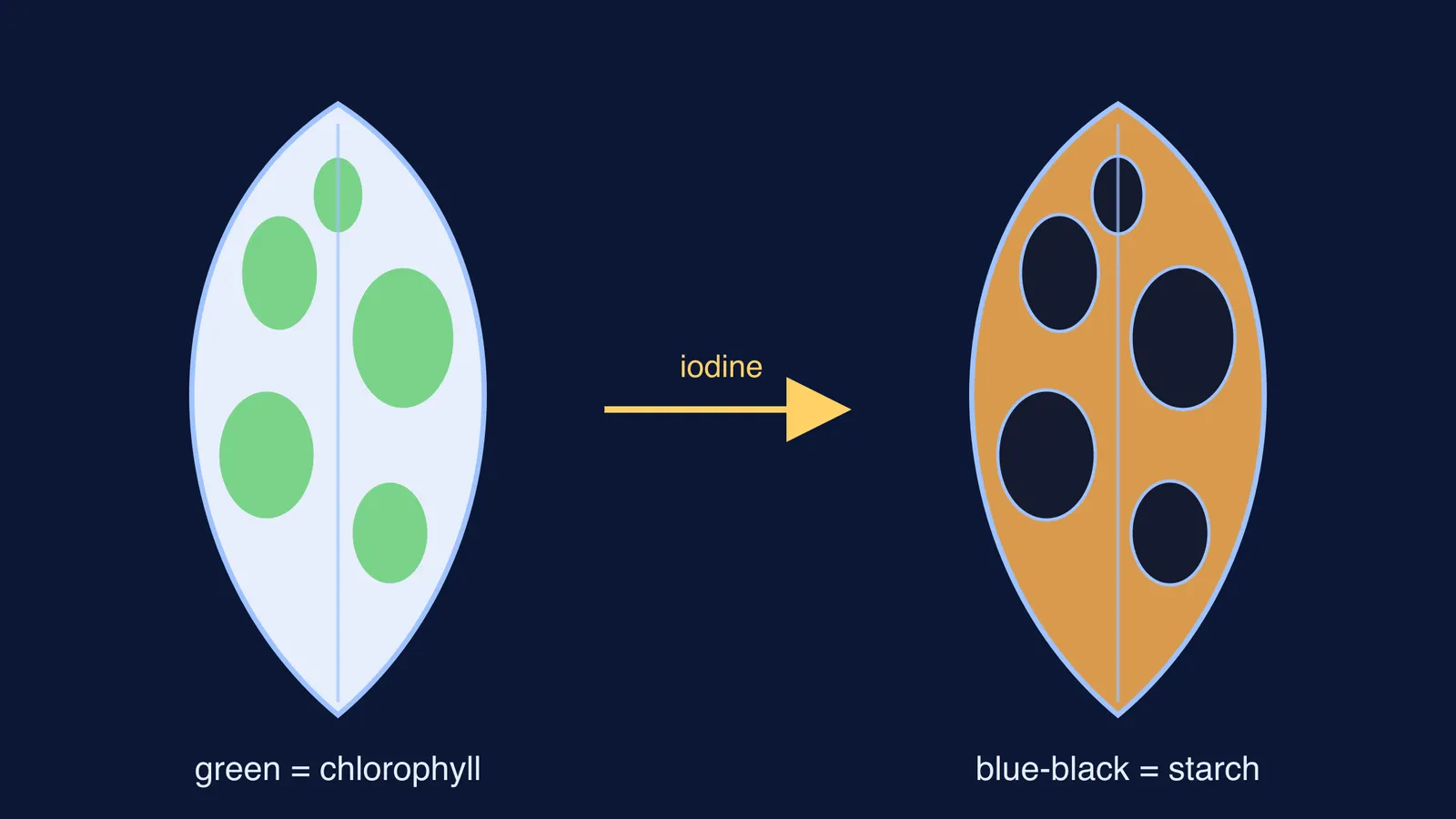
Dilute iodine solution turns blue-black where there is starch and stays orange-brown where there is none.
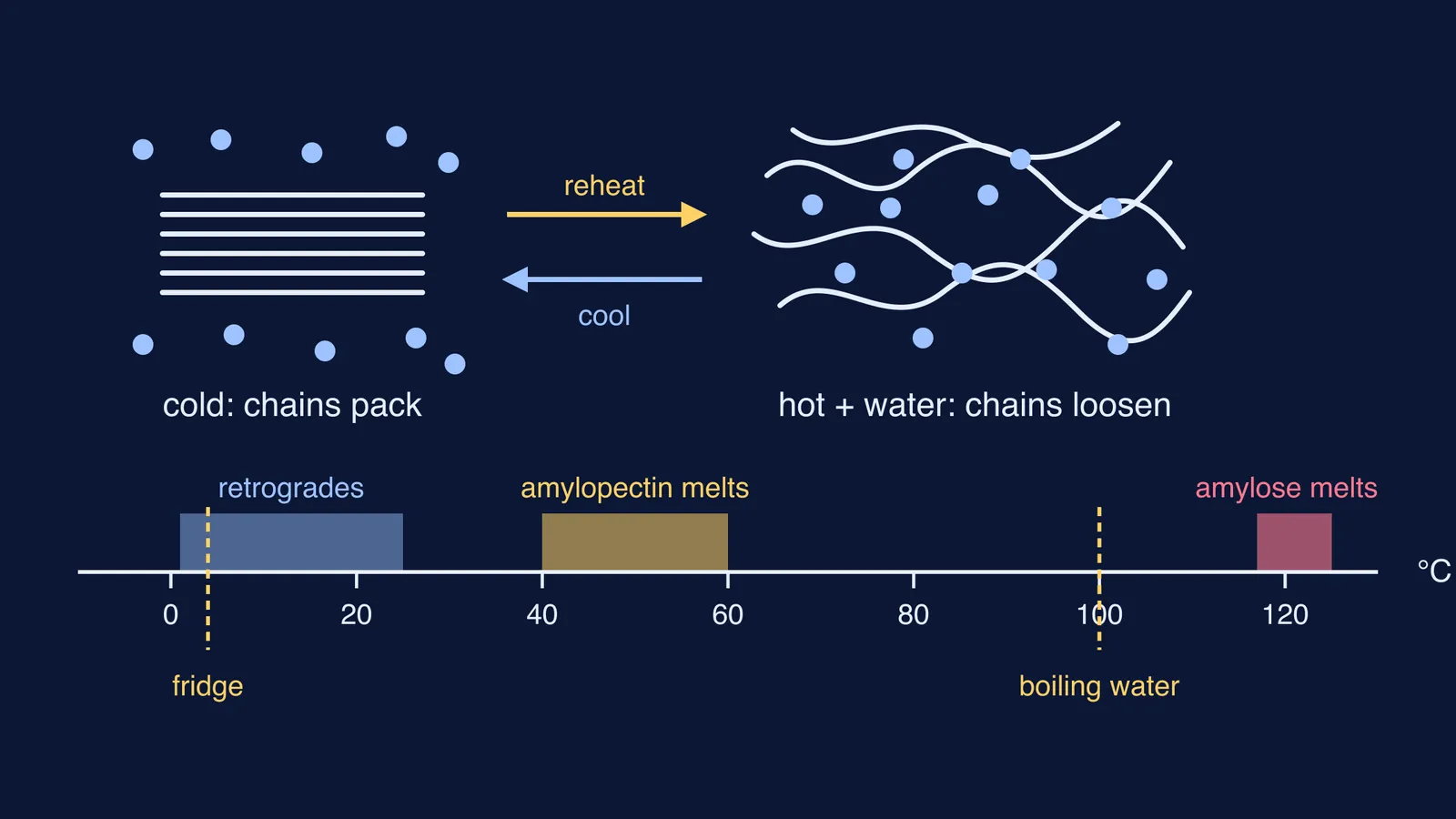
Why blue-black? The iodine–starch test entry explains that the triiodide ion forms an intensely blue-black complex with starch, fitting inside the coiled amylose chain. The same page notes the colour weakens with heat and with solvents such as ethanol, so alcohol left on the leaf can make the stain look fainter.
How do you read the blue-black pattern?
Lay the stained leaf beside your tracing. NCERT's Figure 5.2 shows the leaf before and after the test. The blue-black areas should match the areas that were green, and the pale areas should take only the orange-brown of the iodine.
Write it up in three separate moves:
Observation: blue-black only where the leaf was green; pale areas stay orange-brown.
Inference: starch was made only in the green areas during the hours in sunlight.
Conclusion: chlorophyll is necessary for photosynthesis.
"The leaf turned blue, so photosynthesis happened" skips the comparison with the tracing, which is the whole point.
What should you say in the practical viva?
Practise this out loud, using the timings from NCERT's Activity 5.1:
"I destarched a variegated plant by keeping it in the dark for three days, so any starch I found later was made during the experiment. After six hours of sunlight I traced the green areas, boiled the leaf to kill it and let iodine in, removed the chlorophyll with alcohol in a water bath, softened it in warm water and added iodine. Only the areas that had been green turned blue-black. Light, carbon dioxide and water were the same for the whole leaf, so the key difference was chlorophyll. Chlorophyll is necessary for photosynthesis."
Then quiz yourself on the follow-ups: why not heat alcohol directly, why trace before boiling, and why a variegated leaf instead of a fully green one. Fermi's AI tutor decides whether to explain, ask or show and checks your understanding as it goes, which suits this kind of rehearsal. If one idea behind a step still feels shaky, the Fermi Concept Library gives every concept in biology and chemistry its own lesson.
The same destarch-then-test logic runs through the sister activity, the KOH experiment showing carbon dioxide is needed for photosynthesis, so learn the two together.