On this page
Unit 5 of Kaveri, the new NCERT English textbook for Class 9, pairs a real interview with a short narrative poem. Both ask what it means to win. Here is each text in plain words, the themes, and a way to write the short answers CBSE asks for.
What is The World of Limitless Possibilities about?
The prose piece is an interview with Dr. Deepa Malik, a Paralympic athlete who has received the Khel Ratna, the Arjuna Award and the Padma Shri, according to the NCERT Kaveri Unit 5 chapter. The chapter also notes that India first took part in the Paralympics in 1968 and won its first medal, in swimming, in 1972.
The interview follows her life in four steps:
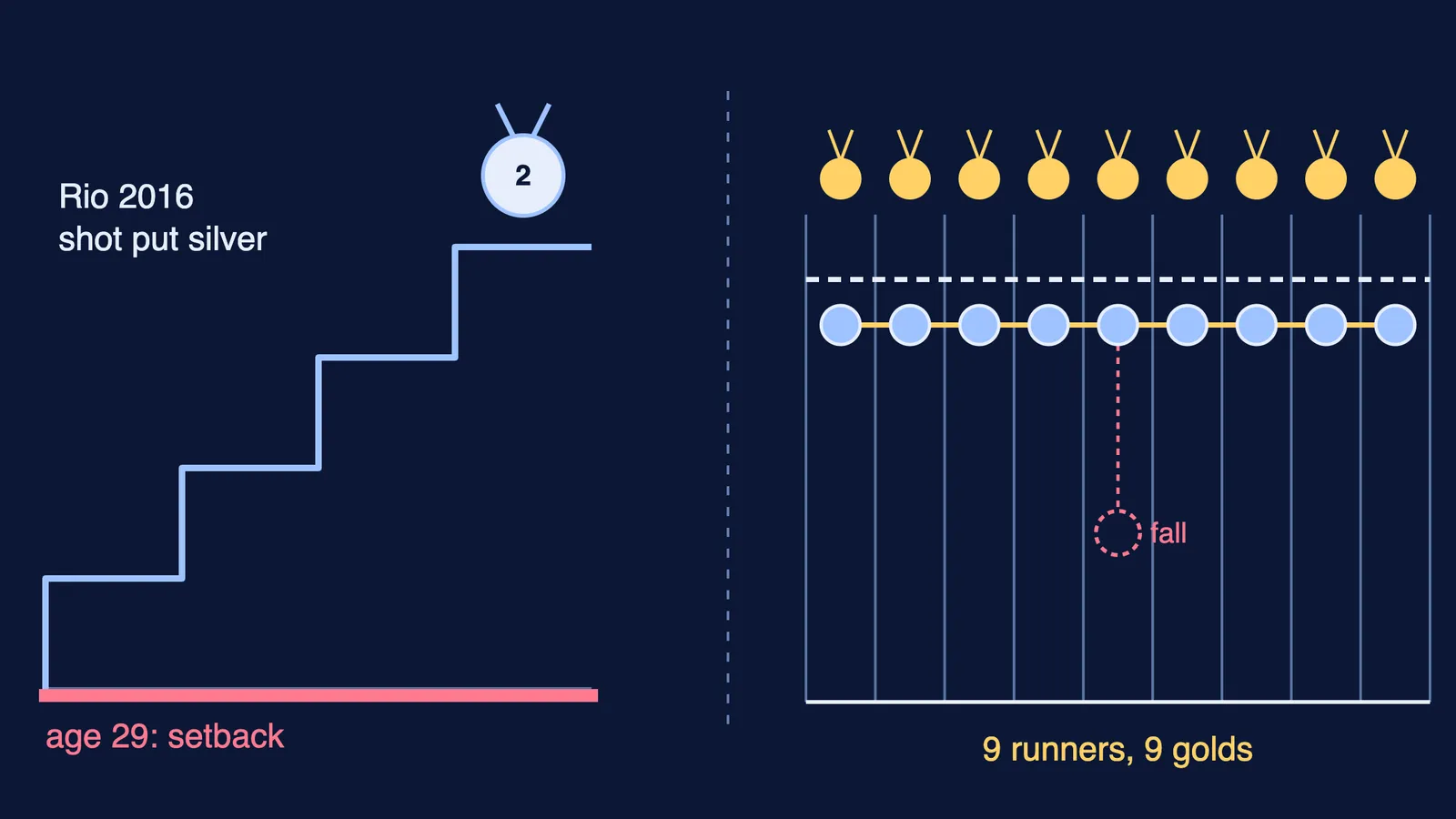
The setback. At 29, a tumour in her spine was found. After surgery she was paralysed below the waist and told she would use a wheelchair for life.
The choice. She saw two paths: live with regret, or rebuild. Because she already loved sport and had been a swimmer, she moved into para-athletics.
The breakthrough. She won silver in shot put at the 2016 Rio Paralympics, becoming India's first woman to win a Paralympic medal in any sport.
The mission. She now works for inclusion: awareness sessions in schools and colleges, support for people from poorer backgrounds, equipment for para sportspersons, and outdoor sport for women.
One big challenge, she says, was society's view of her: people underestimated her abilities. Her belief is summed up in the phrase "ability beyond disability".
What happens in the poem Nine Gold Medals?
The paired poem, by David Roth, tells one race at a Special Olympics meet in eight stanzas. Nine athletes line up for a hundred-yard dash. When the gun fires, the smallest runner trips and falls on the track and cries out in frustration. The other eight go back, lift him up, and all nine walk to the finish holding hands. The crowd stands to applaud, and all nine win gold.
The mood moves from excitement (crowds, starting blocks, the gun) to a tender ending. Notice how sight and sound images build tension before the fall, and how the pace slows from a sprint to a walk once the runners choose each other over the medal.
What are the themes of Unit 5?
Resilience. Dr. Malik treats each setback as a chance to show strength.
Changing perceptions. Both texts break an assumption: that disability means less ability, or that sport is only about beating others.
Empathy and inclusion. The eight runners give up personal glory; Dr. Malik works so that others get a fair chance.
Support. She credits her family; the fallen runner is lifted by his peers. Nobody in this unit succeeds alone.
Redefining victory. A silver medal that changes perceptions, and a race where everyone wins gold.
What questions come in the CBSE exam from this chapter?
The CBSE Class IX English syllabus for 2026-27 gives 30 marks to the literature section in the R1 paper. It has extract questions (one of two prose or drama extracts, one of two poetry extracts) worth 10 marks in all, five out of six short answers of 40-50 words for 10 marks, and two long answers of about 120-150 words for 5 marks each, each chosen from two. One asks you to work across texts, which suits this paired unit.
A worked example, with our own question:
Question: How do the interview and the poem both change the meaning of winning?
Answer (46 words): For Dr. Deepa Malik, her Rio silver mattered because it changed how people saw disability, not just because it was a medal. In Nine Gold Medals, eight runners stop to help a fallen boy. Both texts show that real victory includes lifting others and challenging stereotypes.
The shape: one point from each text, then a line that answers the question.
The unit also teaches reported speech and modal verbs, and both are in the CBSE grammar list for this year. If modals still trip you up, our guide to modals with examples sorts them by use.
How should you revise this unit in five days?
Day 1: Read the interview and write her four-step journey from memory.
Day 2: Read the poem aloud, then write a one-line summary of each stanza.
Day 3: Make a two-column list of themes, with one example from each text.
Day 4: Write three 40-50-word answers of your own and count the words.
Day 5: Plan one 120-150-word answer comparing the two texts, then time yourself.
If the shot put made you curious about the science of a throw, the Fermi Simulation Lab has interactive simulations for the ideas that are easier to see than to read. For the whole book, see our Kaveri Class 9 English guide, or revise the previous unit, Vitamin-M.