On this page
If a predator is good at hunting, why doesn't it eat its prey to extinction? Your Class 12 Biology textbook answers in one word: prudent. The prickly pear story in the same chapter shows what happens when no predator is around at all.
What does NCERT mean by a prudent predator?
The idea sits in Chapter 11, Organisms and Populations, under section 11.1.4 on population interactions (NCERT Class 12 Biology, Chapter 11). The textbook puts it like this: "If a predator is too efficient and overexploits its prey, then the prey might become extinct and following it, the predator will also become extinct for lack of food. This is the reason why predators in nature are 'prudent'."
So "prudent" is not a choice. A predator too efficient for its own food supply would disappear along with it.
The idea is older than the textbook. A 2022 Ecology Letters paper by Orestes Gutiérrez Al-Khudhairy and Axel Rossberg traces it to ecologist Lawrence Slobodkin, who proposed in 1960 that predators evolve to be prudent. The idea was dismissed in the 1970s; the paper argues those objections do not hold up in modern evolution theory, and uses model food webs to show how prudent predation can evolve.
How do predators keep prey numbers in check?
NCERT gives predators three jobs (Chapter 11):
Moving energy up. Predators are "conduits" for energy transfer across trophic levels; in this broad sense even a seed-eating sparrow is a predator.
Holding prey down. Without predators, prey species "could achieve very high population densities and cause ecosystem instability."
Keeping many species alive. By reducing competition among prey species, predators maintain diversity. NCERT's example: when all Pisaster starfish were removed from an enclosed intertidal area on the American Pacific coast, more than 10 species of invertebrates became extinct within a year because of interspecific competition.
Prey fight back too: NCERT lists camouflaged insects and frogs, the bad-tasting monarch butterfly, and Calotropis, whose poisons keep cattle and goats away. Defence on one side and restraint on the other help explain why both populations last. For how predators shape a whole food chain, read our explainer on why predators matter and the trophic cascade.
What happened to prickly pear in Australia without predators?
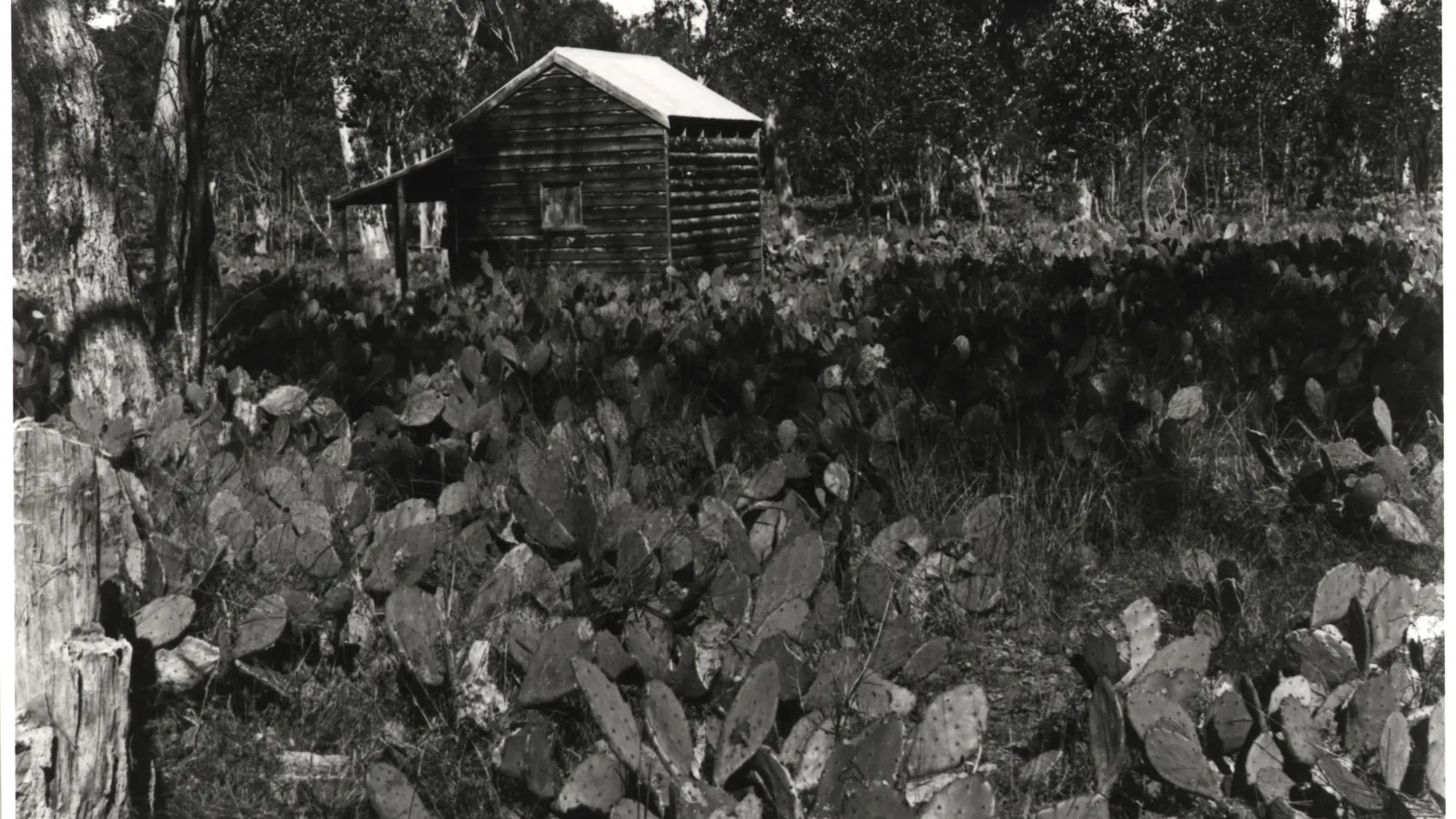
Prickly pear cacti come from the Americas; in Australia they had none of the insects that eat them at home. A Queensland government fact sheet, The prickly pear story, gives the scale:
The first recorded introduction is attributed to Governor Phillip in 1788, to start a cochineal dye industry.
Infestations covered about 4 million hectares by 1900 and 24 million hectares by 1920.
Despite every control effort, the plant was estimated to be advancing by about 1 million hectares a year.
Digging, burning and crushing were of limited use, and arsenic poison was toxic and expensive. So from 1912 a travelling commission searched abroad for the cactus's natural enemies. After mass rearing of the moth Cactoblastis cactorum, 10 million eggs were distributed in 61 localities during 1926 and 1927, and a further 2.2 billion eggs between 1927 and 1931, the fact sheet records. By 1932 the stem-boring larvae had caused the general collapse of most dense stands, and almost 7 million hectares of previously infested land were made available to 1,165 settlers. The Queensland State Archives puts the share of infested land in Queensland cleared by 1933 at about 80 per cent.
NCERT's version: the cactus was controlled "only after a cactus-feeding predator (a moth) from its natural habitat was introduced". NCERT dates the introduction to the early 1920s, but the plant arrived far earlier. Biological control of farm pests rests on this same idea.
Biological control has limits. The fact sheet notes cactoblastis is not effective against all prickly pear species, and after a release in the Caribbean it now threatens native prickly pears in North America. For why introduced species win, see invasive alien species in India: four examples.
How do you write this answer in a board exam?
Use a four-link chain. Each link is one line of your answer:
A predator overexploits its prey.
The prey population crashes, possibly to extinction.
The predator loses its food and dies out too.
So the predators that survive in nature are prudent: they do not wipe out their prey.
Add one example of predators regulating prey (prickly pear) and one of predators protecting diversity (Pisaster).
A quick self-check:
Can you give the sign pair for predation? (+ for the predator, − for the prey.)
Can you say why invasive species spread fast? (The new land has no natural predators for them.)
If an answer feels shaky, the Fermi Concept Library gives every biology concept its own lesson and its place in the map, so you can see how predation connects to population growth and competition. To watch the balance play out, our hare–lynx predator–prey simulation explainer shows the two populations rising and falling together, and the Fermi Simulation Lab has interactive simulations for ideas easier to see than to read.