On this page
Nomadic Empires asks a harder question than "who conquered what". How did people with no cities, who lived in tents and moved with their herds, run an empire across Asia and into Europe? Here is the chapter, a worked answer and a revision plan.
What does the Nomadic Empires chapter cover in Class 11?
It is Theme 3 of NCERT's Themes in World History (2026-27 reprint). Some Mongols were pastoralists who tended horses and sheep; others were hunter-gatherers in the Siberian forests. They lived in tents called gers, moved between winter and summer pastures, and their region had no cities. The chapter follows Genghis Khan's career, the Mongols after him, how they organised army and state, and how to judge him.
Who was Genghis Khan, and why does 1206 matter?
According to NCERT, Temujin was born around 1162 near the Onon river, the son of Yesugei, chieftain of the Kiyat. After defeating the Tatars, the Kereyits, the Naiman and his former blood-brother Jamuqa, he was proclaimed Great Khan at a quriltai (an assembly of Mongol chieftains) in 1206, with the title Genghis Khan, the "Oceanic Khan" or "Universal Ruler". Peking was sacked in 1215, the great cities of Central Asia surrendered between 1219 and 1221, and he died in 1227.
How was the Mongol army organised?
All of these points are in the NCERT chapter, pages 66 and 69.
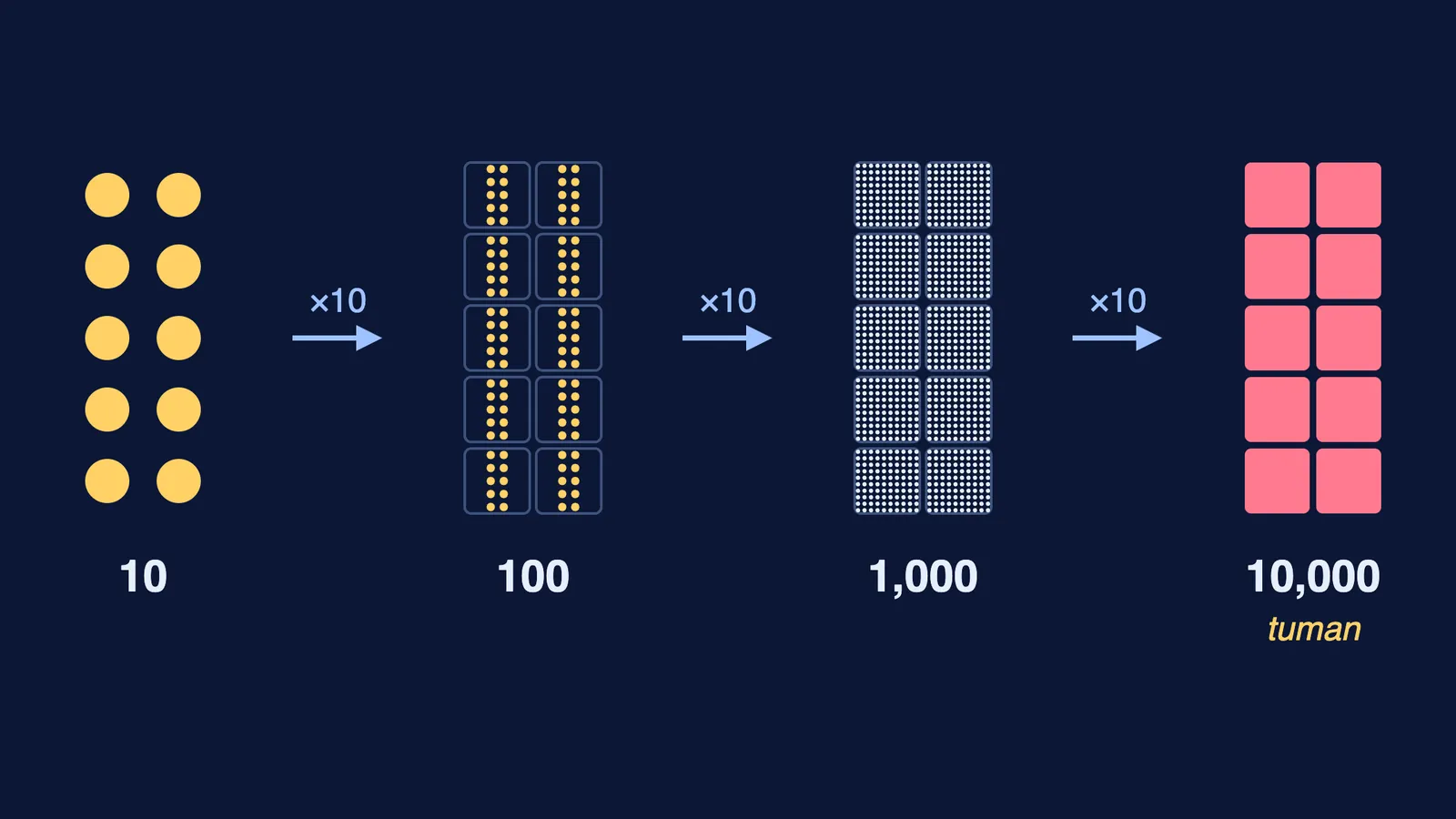
Decimal units: divisions of 10s, 100s, 1,000s and, notionally, 10,000 soldiers. The largest unit, of roughly 10,000, was the tuman.
Tribes broken up: members of the old tribal groupings were spread across new units, and anyone who tried to leave their allotted group without permission was harshly punished.
A new elite: specially chosen captains called noyan led the units, and loyal followers were honoured as anda (blood-brothers) or naukar (bondsmen), so status came from closeness to the Great Khan, not from clan.
Mobility: archery from horseback practised in hunts, winter campaigns along frozen rivers, and siege engines and naphtha bombardment learned quickly.
How did the Mongols run the empire, and what was the yasa?
Each of Genghis Khan's four sons received an ulus, which at first did not mean a fixed territory: Jochi the Russian steppes, Chaghatai the Transoxanian steppe, Toluy Mongolia, and Ogodei the succession as Great Khan, as the NCERT chapter explains. The yam was a courier system with fresh horses and riders at regularly spaced outposts, paid for by the qubcur tax, a tenth of each nomad's herd. Travellers carried a pass called paiza, and traders paid the baj tax. Civil administrators were recruited from conquered peoples, such as the Chinese minister Yeh-lu Ch'u-ts'ai in the 1230s.
The yasa was the code of law Genghis Khan was supposed to have announced at the quriltai of 1206. Following work that builds on David Ayalon's research, NCERT says the term was first written yasaq, meaning "law", "decree" or "order", and the few details we have cover the hunt, the army and the postal system. By the mid-thirteenth century the Mongols used the related term yasa to mean the "legal code of Genghis Khan", a claim to an ancestor's law that helped a ruling minority keep its identity.
How do you write a good answer on Nomadic Empires?
Take NCERT's exercise question: "Why did Genghis Khan feel the need to fragment the Mongol tribes into new social and military groupings?" Use four moves.
Claim: he wanted loyalty to himself, not to the old clans.
Evidence: tribes were split across decimal units, leaving without permission was punished, and the new nobles owed their rank to him.
Effect: the tuman mixed people from many tribes and clans, giving them a new identity derived from Genghis Khan.
Link: NCERT says his political system survived its founder, while ordinary steppe lineage alliances were usually small and short-lived.
For source questions, keep one comparison ready. An eyewitness reported that 400 soldiers defended the citadel of Bukhara, while an Il-Khanid chronicle said 30,000 soldiers were killed there (NCERT, page 73). Use that gap for exercise 4, on why Persian chronicles inflated casualty figures.
How should you revise Nomadic Empires in four days?
Day 1: draw a timeline from around 1162 to 1227, then 1236-42 and 1255-1300, and check each date against the book, as in our guide to checking history dates and events in NCERT.
Day 2: put the terms (tuman, noyan, anda, naukar, ulus, yam, qubcur, paiza, baj, yasa) on cards and test yourself from memory.
Day 3: make a cause-and-effect chart for the chapter: why the tribes were broken up, and what that changed.
Day 4: answer two exercise questions against the clock, using the four moves.
Our Class 7 recap of tribes, nomads and settled communities covers that ground. If physics and maths fill your week, Fermi's AI tutor can work out what you already know and build a plan for the session, so the hour you set aside for history stays free for history.