
On this page
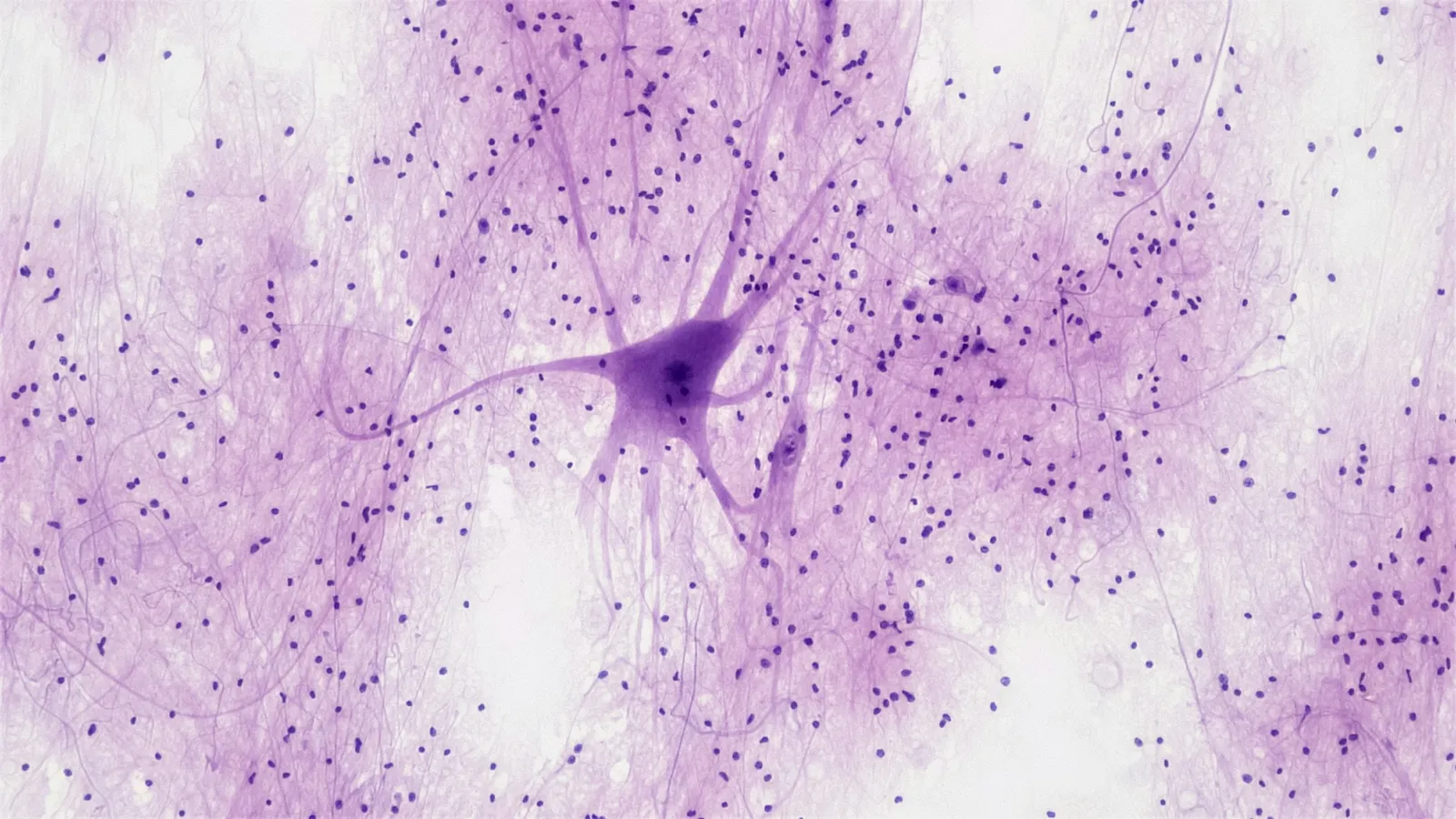
Your nervous system has two kinds of cells. Neurons carry the signals. Neuroglia, or glial cells, keep neurons insulated, fed and protected.
What are neuroglia?
NCERT's current Class 11 biology book describes neurons as "highly specialised cells" that "detect, receive and transmit different kinds of stimuli" (NCERT Class 11 Biology, Chapter 18). The same chapter names one glial cell directly: myelinated nerve fibres "are enveloped with Schwann cells, which form a myelin sheath around the axon", and the gaps between sheaths are the nodes of Ranvier.
The current Chapter 7 still says complex animals have four basic tissue types, and that the heart contains all four: epithelial, connective, muscular and neural (NCERT Class 11 Biology, Chapter 7). But the rationalised chapter no longer has a section describing each tissue. If your reference book has a longer paragraph on neural tissue and neuroglia, check it against the current NCERT reprint and your exam's official syllabus before you memorise every line.
What do neuroglia do?
A 2017 review in Frontiers in Cellular Neuroscience groups the brain's glia into four major types: microglia, astrocytes, oligodendrocytes and their precursors, NG2-glia (Jäkel and Dimou, 2017). Add the Schwann cells from NCERT and you have the five names worth knowing:
Astrocytes: maintain water and ion balance around neurons, take part in synapses, and help maintain the blood-brain barrier.
Oligodendrocytes: the review calls them "the myelin-producing cells that insulate axons to allow a rapid saltatory conduction and give trophic support to axons". In plain words, they wrap brain axons in myelin so impulses jump quickly, and they help feed those axons.
NG2-glia: keep producing new myelinating oligodendrocytes throughout life. They receive signals from neurons but "cannot create action potentials on their own".
Microglia: "the immunocompetent and phagocytic cells of the nervous system", so they defend the tissue and clear away debris.
Schwann cells: form the myelin sheath on nerve fibres such as the spinal and cranial nerves, as NCERT describes. A Schwann cell can also enclose an axon without forming myelin, giving an unmyelinated fibre.
For a long time glia were treated as packing material. A 2018 review in Science says they "were long-considered to be static bystanders", but in fact shape how the nervous system develops and later "fulfill key roles in synaptic communication, plasticity, homeostasis" (Allen and Lyons, 2018). The same review says glia make up roughly half of the cells of the central nervous system.
Do glial cells really outnumber neurons?
Not in the human brain, on current evidence. Books long repeated a figure of about 100 billion neurons and ten times as many glia, as a 2009 counting study points out (Azevedo et al., 2009).
In that study, Frederico Azevedo and colleagues counted the cells in adult male human brains with a method called the isotropic fractionator and found on average 86.1 billion neurons and 84.6 billion non-neuronal cells (Azevedo et al., 2009). Non-neuronal cells include glia, so glia cannot be more than that second number.
A 2016 review of 150 years of cell counting concluded that the glia-to-neuron ratio in the human brain is below 1:1, with fewer than 100 billion glial cells in total. It also traced how the one-trillion figure arose and kept being repeated (von Bartheld, Bahney and Herculano-Houzel, 2016).
How do you write a good answer on neuroglia?
Here is a worked example for a typical 3-mark question: "What are neuroglia? State two functions."
Define: Neuroglia are the non-neuronal cells of nervous tissue that support, insulate and protect neurons.
Function one, with the cell: Schwann cells form the myelin sheath around axons of nerve fibres, which speeds conduction of impulses.
Function two, with the cell: microglia are the nervous system's immune cells; they engulf debris and defend the tissue.
Naming the cell next to each function is what turns a vague answer ("they support neurons") into a scoring one.
Then run this 10-minute recall drill once a day for three days:
Minutes 0-2: write the five cell names from memory.
Minutes 2-5: beside each, write one verb: astrocytes balance, oligodendrocytes insulate, NG2-glia renew, microglia defend, Schwann cells wrap.
Minutes 5-8: draw a neuron and label the axon, a Schwann cell, the myelin sheath and a node of Ranvier.
Minutes 8-10: check against the NCERT neuron figure and fix every miss in a different colour.
If the gap is bigger than one cell type, for example you are not sure why myelin speeds up a signal, the Fermi Concept Library covers every concept in biology, each with its own lesson and its place in the map, so you can see where an idea like myelin sits before you revise it.
To go further, read how myelinated and unmyelinated nerves differ in conduction speed, follow the nerve impulse, synapse and reflex arc step by step, and see how the skull, meninges and CSF protect the brain.