On this page
One short paragraph in Class 12 NCERT Biology covers a whole field of ecology. Section 11.1.3, Life History Variation, says populations evolve to maximise their reproductive fitness, also called Darwinian fitness (high r value), and then gives four contrasts (NCERT Class 12 Biology, Chapter 11):
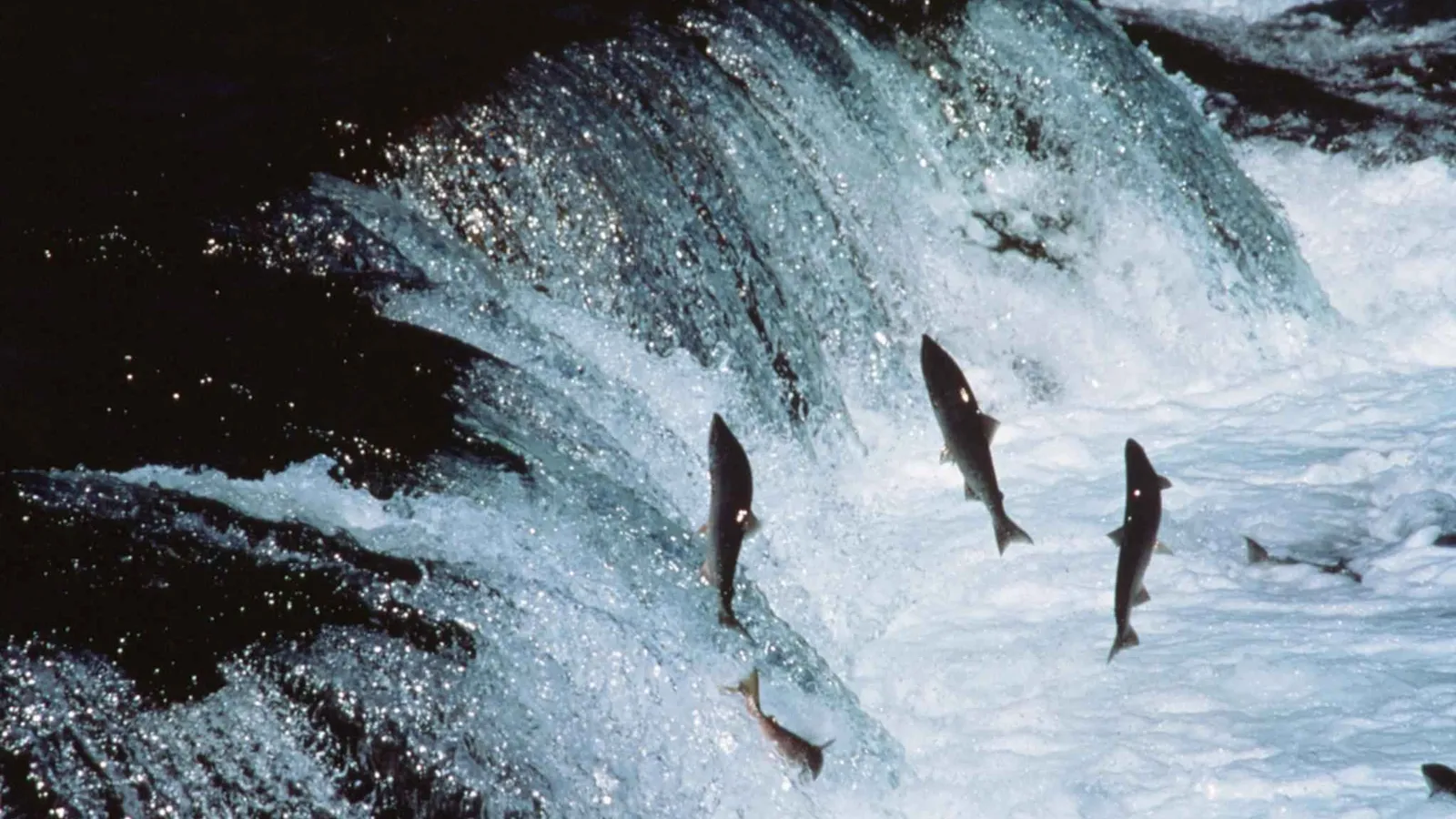
Breed only once in a lifetime: Pacific salmon fish, bamboo.
Breed many times in a lifetime: most birds and mammals.
Produce a large number of small-sized offspring: oysters, pelagic fishes.
Produce a small number of large-sized offspring: birds, mammals.
NCERT then asks which strategy is desirable for maximising fitness. Its answer is that, according to ecologists, life history traits evolved under the constraints set by the abiotic and biotic parts of each habitat.
Why do Pacific salmon breed only once in their life?
Ecologists call breeding once and dying semelparity, and breeding several times iteroparity (Kindsvater et al., Ecology Letters, 2016). The same paper notes that for Pacific salmon, long migrations and the hard move from the ocean into fresh water before breeding cost a lot of energy and lower adult survival. Its analysis of 363 populations from 13 salmonid species found that semelparous species produce larger eggs.
Earlier, Bernard Crespi and Roy Teo compared 12 salmonid species and found that egg weight and body length apparently rose where semelparity first appeared (Crespi and Teo, Evolution, 2002). They suggested that long migrations, which raise adult deaths between breeding seasons, may have been necessary for semelparity to start, but that heavier eggs, which raise juvenile survival, were crucial in driving it. Their analyses support the idea that semelparity evolves when juvenile survival is relatively high and adult survival is relatively low.
Put simply, if a salmon has little chance of making the trip twice, energy saved for "next year" would mostly go unused. Spending it all on one batch of well-stocked eggs can leave more surviving young.
Is bamboo the same story?
Bamboo is NCERT's plant example. Melocanna baccifera, a bamboo of north-east India and neighbouring countries, flowers together across whole forests on a cycle of 40 to 50 years (one study sets it at 48), and most clumps die within months after fruiting ends (Koshy et al., PLoS One, 2022). Its 2004 to 2009 flowering in north-east India, spread over 1.76 million hectares, ended in the death of about 26 million tonnes of bamboo culms, and mature fruits in the study averaged about 49 g each (same study). For the rat outbreaks that follow, read mautam, the ecology of bamboo flowering and rat floods.
Why do some species have many small offspring and others a few large ones?
A parent's budget is limited, so more offspring means less for each. An influential theory by Smith and Fretwell (1974) predicts that offspring size and number evolve to maximise the number of offspring that survive (Kindsvater et al., 2016). The NCERT examples sit at the two ends:
An eastern oyster female can produce about 100 million eggs each year, and fertilised eggs become free-swimming larvae in less than 24 hours (Chesapeake Bay Program).
An Asian elephant usually has one calf after a gestation of 21.5 to 22 months, the calf weighs 68 to 158 kg, and births are on average three to eight years apart (Smithsonian's National Zoo).
"How often?" and "how many, how big?" are separate axes. In salmonids, egg number rises with body size, from under 100 in brook trout to over 15,000 in Atlantic salmon, and differs much less between once-breeders and repeat-breeders than egg size does (Kindsvater et al., 2016).
How do you answer a life history question in the exam?
Run any example through three questions:
How many times does it breed? Once (semelparous) or many times (iteroparous).
Per breeding event, many small offspring or a few large ones?
What in its habitat explains this? Think adult survival versus juvenile survival.
Worked example. Which pair breeds only once in a lifetime? (a) Pacific salmon and bamboo (b) oysters and pelagic fishes (c) birds and mammals (d) bamboo and oysters. The answer is (a). Option (b) is the trap: NCERT uses oysters and pelagic fishes for many small offspring, a different axis.
For a three-mark answer, write: define life history variation and Darwinian fitness; give one example from each of the four NCERT groups; end with NCERT's point that these traits evolved under the constraints of the habitat.
If the "high r value" part feels shaky, revise r and K in our explainer on the logistic growth curve and carrying capacity. For reproduction basics, see sexual vs asexual reproduction, side by side.
Fitness, r and population growth are linked ideas. The Fermi Concept Library gives each biology concept its own lesson and its place in the map, so you can see how they connect.