On this page
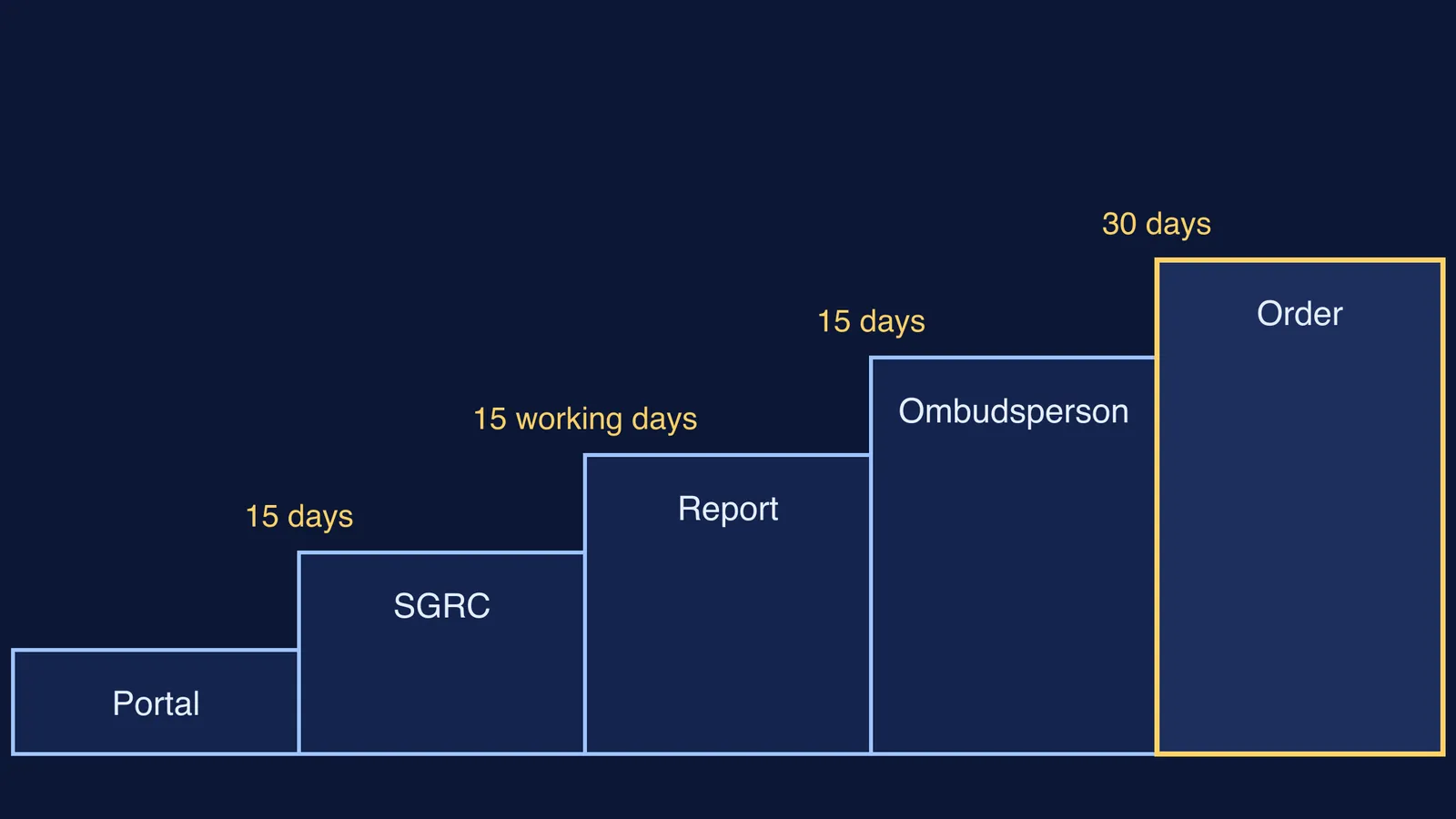
If your college is holding your Class 12 originals, a refund or your results, you do not start with a letter to Delhi. The UGC (Redressal of Grievances of Students) Regulations, 2023, notified in the Gazette on 11 April 2023, set out a ladder: your institution's online portal, then its Students' Grievance Redressal Committee (SGRC), then the university's ombudsperson. They cover universities, deemed universities and affiliated colleges.
What counts as a grievance under the UGC rules?
The regulations list 18 kinds of complaint (Regulation 3(1)(f) in the Gazette notification). The ones students most often face:
Withholding certificates or other documents you deposited at admission to push you into paying fees for a course you do not want to pursue.
Delay or denial of a fee refund when you withdraw within the time the prospectus states.
Admission contrary to merit, irregular admission process, or refusal to admit under the declared admission policy.
Charging more than the declared admission policy says, or false or misleading information in the prospectus.
Breaking reservation rules, or discrimination against SC, ST, OBC, women, minority or disabled students.
Delayed scholarships, delayed exams or results, missing amenities promised in the prospectus, or unfair evaluation.
Leaving a seat? First read how to withdraw your admission seat and get a refund, so your request is on record.
Who hears your complaint first?
Every institution must run an online portal where you can submit a grievance, under Regulation 8 of the 2023 regulations. Within 15 days the institution must send your complaint, with its comments, to the SGRC.
The SGRC is chaired by a professor and has four professors or senior faculty members, plus a student special invitee chosen for academic, sports or co-curricular merit. The chair or at least one member must be a woman, and likewise from the SC, ST or OBC categories. It fixes a hearing date, and you may attend in person or authorise a representative to present your case. It should send its report to you, preferably within 15 working days of receiving the complaint.
Sexual harassment complaints go to a different body; see how to file a harassment complaint in college through the ICC. Ragging has its own helpline, 1800-180-5522, listed on UGC e-Samadhaan.
How do you complain against a college to the UGC?
After the SGRC, you have two routes:
Ombudsperson. If you are unhappy with the SGRC decision, you can appeal to the university's ombudsperson within 15 days of receiving it, under Regulation 5 of the regulations. The ombudsperson must be a retired vice-chancellor, a retired professor with dean or head-of-department experience, or a former district judge (Regulation 6). They hear appeals only after other remedies are used, and should make all efforts to resolve them within 30 days. The institution must comply with their recommendations.
UGC e-Samadhaan. UGC's own grievance portal, e-Samadhaan, lets students log in and register a grievance; its general-queries number is 1800-111-656.
The rules have teeth. Under Regulation 10, the UGC can act against an institution that wilfully breaks the regulations or repeatedly fails to follow the ombudsperson's or SGRC's recommendations: it can withhold grants, publicly name it as lacking minimum grievance standards, or, for a college, recommend that the university withdraw its affiliation.
What should your complaint say?
Keep it to one page. An outline for a common case: you withdrew from a B.Sc. seat within the refund window, and the college is keeping your Class 12 marksheet until you pay the full year's fee.
To: Chairperson, Students' Grievance Redressal Committee, (college name).
Subject: Grievance under UGC (Redressal of Grievances of Students) Regulations, 2023, Regulation 3(1)(f)(vi) and (xiii): original documents withheld and refund denied.
Who you are: name, course, admission number, phone and email.
What happened, with dates: admission date, documents deposited, withdrawal date, the college's reply.
What the rule says: quote the refund clause from the prospectus.
What you want: return of all originals and the refund due, by a stated date.
Attachments: fee receipt, withdrawal application, prospectus page, emails.
Submit it on the portal, note the complaint number, and keep screenshots. Write facts, not anger: the ombudsperson can recommend action against a complainant if a complaint is found false or frivolous.
What if your college has no committee or portal?
Institutions must publish SGRC and ombudsperson details on their website and in their prospectus. UGC has published lists of universities that had not appointed an ombudsperson, and its January 2024 notice invites students and the public to email UGC if a university or college has no ombudsperson or SGRC, or does not make their details public.
If the wait is wearing you down, talk to someone you trust or call the government's Tele MANAS mental health helpline on 14416.
If a delayed result has put your studies behind, Fermi's AI tutor can work out what you already know and build a plan for the session, so you keep learning while the complaint runs.
Start with the portal today, and keep every receipt.