On this page
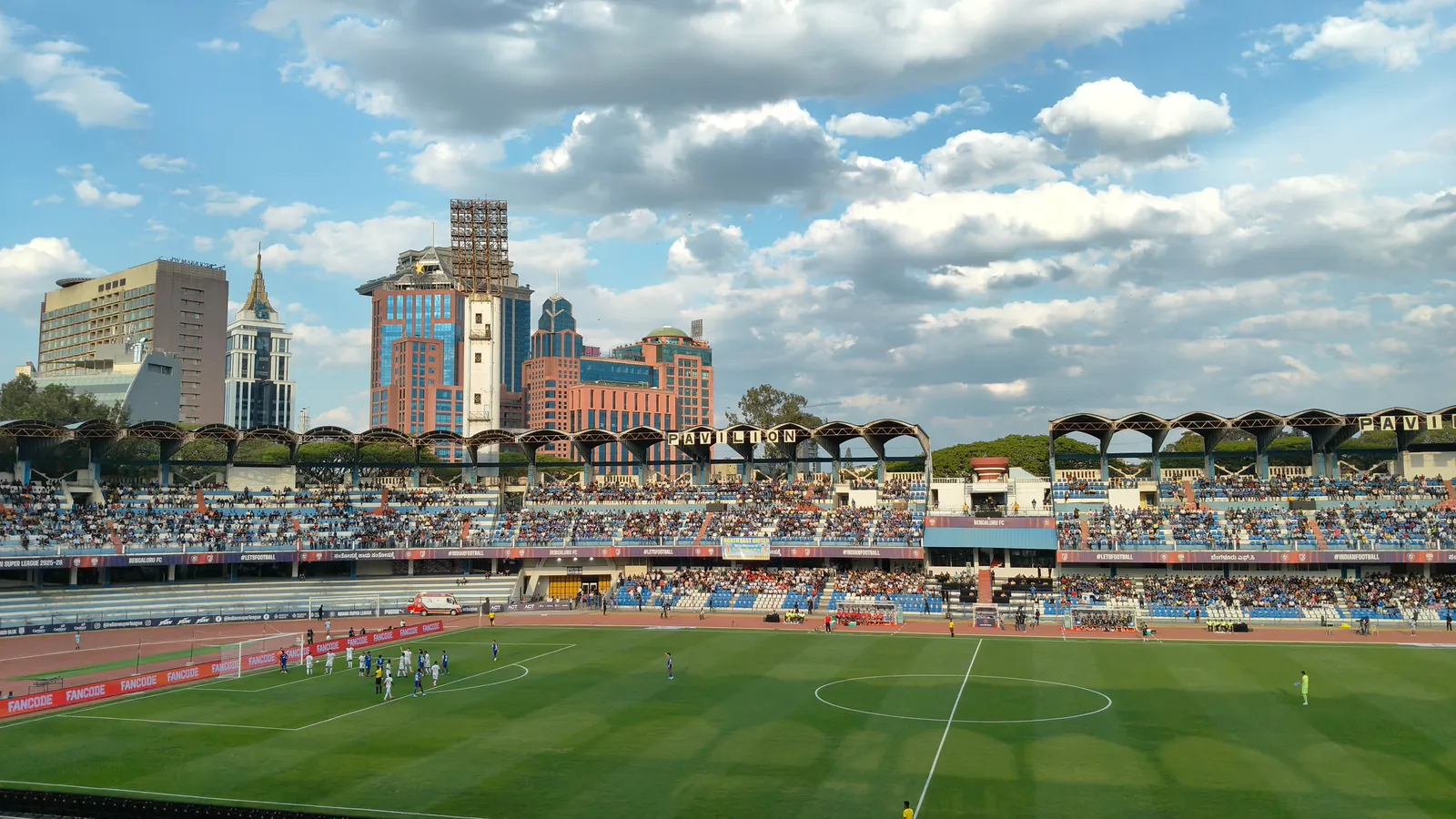
If you love sport but do not plan to play it professionally, sports management is the business side of it: running leagues, teams, events, venues, sponsorships and athlete careers. In India, government policy now points the same way. The National Sports Policy 2025, approved by the Union Cabinet on 1 July 2025, aims to "promote the establishment of competitive leagues and competitions" and to position sports "as a viable career option".
What does a sports management course teach?
These courses combine business subjects with how sport actually runs. At Pillai University in Navi Mumbai, for example, the Bachelor in Sports Management is open to students from any stream after 10+2. Its first-year subjects include Principles of Management, Management of Sports Leagues & Teams, Sports Risk Management and Leadership Principles in Sports.
At postgraduate level the content gets more specialised. The MBA in Sports Management at Symbiosis School of Sports Sciences lists Sports Economics, Sports Analytics, Media Management in Sports, Brand Management and Sponsorship in Sports, and Athlete Management, with a 16-credit internship in the final semester.
Three skills sit under almost every module:
Money: budgets, ticketing, sponsorship and finance.
People and operations: scheduling fixtures, running venues, managing volunteers and athletes.
Data: reading match, fan and sales numbers.
The data part surprises many students. If you want a head start, our guide to learning statistics with cricket scores walks through mean, strike rate and spread. The Fermi Concept Library also has its own lesson for each concept in mathematics, so you can fill a gap in averages or probability before an analytics course covers it at speed.
Which sports management course can you take after 12th in India?
There are two main routes, and the right one depends on how sure you are.
A bachelor's in sports management straight after 12th. Private universities such as Pillai offer these. The Pillai programme runs three years for the degree or four for honours, and lists a fee of ₹1,00,000 a year, so compare costs carefully.
A broader first degree, then a specialist master's. Take a BBA, BCom, BA or a sports science degree, then an MBA in sports management. Some public universities offer this second step: the Tamil Nadu Physical Education and Sports University 2026-27 admission notice lists a two-year, AICTE-approved MBA in Sports Management for graduates with 50% marks, with a first-year fee of ₹32,424 for general candidates. Symbiosis asks MBA applicants for a graduate degree with at least 50% marks (45% for SC/ST) plus the SNAP test, according to its programme page.
The second route keeps more doors open if you change your mind at 19. If you lean towards the body and performance side, compare it with a sports science degree.
Where do sports management graduates work?
Leagues and clubs: match operations, ticketing, fan engagement, partnerships and team logistics.
Federations and government bodies: administration, event delivery and athlete welfare.
Academies and schools: running programmes and admissions, scheduling coaches and facilities.
Brands, agencies and media: sponsorship, athlete management, content and marketing.
Events: multi-sport games, marathons and tournaments. Our guide to event management after 12th covers the overlap.
Administration is where the government sees a gap. A December 2025 government release says a task force on sports administrators recommended a national council to "regulate, accredit, and certify sports administration training"; the sports department is still considering the report. The same release says that since May 2025, National Sports Federations can spend up to 10% of their total funding on administrative staff.
How do you get sports management experience before college?
Big events often set age limits. Volunteers at the Khelo India Youth Games 2023 in Tamil Nadu had to be 18 to 30 years old and students at a registered university in Tamil Nadu, and worked in areas such as accreditation, venue operations, athlete movement and media. So start small and local.
A 12-month plan for Class 11 or 12:
Months 1-2: Volunteer for your school sports day or inter-house tournament. Ask to own one job end to end, such as the fixture list.
Months 3-4: Help a local academy or club with registrations, attendance or its social media for one season.
Months 5-6: Run a small tournament yourself: budget, ground booking, referees and a results sheet.
Months 7-9: Keep a one-page log of what you did and the numbers: teams, players, money collected and spent.
Months 10-12: Use that log in college applications and, once you turn 18, in volunteer forms for state and national games.
A short message you can send to a local academy:
"Namaste, I am a Class 11 student who wants to study sports management. I can help with registrations, schedules or match-day setup on weekends for the next three months, unpaid. Could I meet you for 10 minutes to see where I would be useful?"
Ask a parent to come along to the first meeting, and agree on hours that still leave room for your board exams.
Pick one school event this term, take charge of one part of it, and write down what you did.