
On this page
If you have a benchmark disability and are finishing Class 12, two central scholarships are built for you: post-matric and top class. Both are run by the Department of Empowerment of Persons with Disabilities (DEPwD), applied for on the National Scholarship Portal (NSP), and have a fixed number of slots.
Who can get a scholarship for disabled students after 12th?
The DEPwD scheme guidelines, revised in September 2024, set the common rules:
You must be an Indian national with a benchmark disability, meaning 40% or more disability under the Rights of Persons with Disabilities Act, 2016.
You need a disability certificate from the competent authority, Aadhaar authentication and a UDID or UDID enrolment.
At most two children with disabilities of the same parents can benefit.
Each class is paid once; a repeated year is not covered.
You cannot hold another scholarship or stipend alongside it (see what the rules say about holding two scholarships).
The post-matric scholarship covers Class 11 up to a master's degree or diploma, including distance courses, for families earning up to ₹2.5 lakh a year.
The top class scholarship covers graduate and postgraduate courses only at institutes notified by DEPwD, for families earning up to ₹8 lakh a year. It excludes distance and part-time courses and can be received only once.
What do the two scholarships pay?
Ceilings from the DEPwD guidelines; fees are paid at the actual amount, up to the limit.
Post-matric:
Fees: up to ₹1.40 lakh a year for tuition, plus up to ₹10,000 for other compulsory fees.
Maintenance: ₹1,200 a month in a hostel, ₹650 for day scholars.
Disability allowance: ₹4,000 a year for visual impairment or intellectual disability, ₹2,000 for others.
Books: ₹1,500 a year.
Top class:
Fees: up to ₹1.90 lakh a year for tuition, plus up to ₹10,000 for other fees.
First-year one-time grants, against bills: ₹45,000 for a computer or laptop, ₹30,000 for aids and assistive devices.
Maintenance: ₹3,000 a month in a hostel, ₹1,500 for day scholars.
Reader, escort or helper allowance: ₹2,000 a month; books ₹5,000 a year.
A worked example
Meera (an example) has a visual impairment, joins a BSc in early August and lives in the hostel. Tuition is ₹30,000 and other fees ₹5,000. Maintenance runs from the admission month (the next month if admitted after the 20th) to the month exams end, under section 9 of the guidelines: 9 months if exams end in April.
Fees: ₹30,000 + ₹5,000 = ₹35,000
Maintenance: ₹1,200 × 9 = ₹10,800
Disability allowance: ₹4,000
Books: ₹1,500
Total: ₹51,300 for the year
As that is above ₹50,000, the DEPwD FAQ for NSP says she must upload scanned documents on the portal before final submission.
How many slots are there, and who is selected?
The guidelines allow 17,000 post-matric and 300 top class slots a year, including renewals, with 50% reserved for female candidates. Renewals are filled first. Slots are shared out state-wise, and merit is the disability percentage on your certificate (specific learning disability counts as 40%); ties go to the older candidate.
Studying engineering or a diploma? Also see the AICTE Saksham scholarship for specially abled students.
How do you get the disability certificate and UDID?
The Unique Disability ID is a single document for identification and verification of disability, says the DEPwD UDID page. You register on swavlambancard.gov.in with your photo, signature, ID and medical records, then ask your chosen hospital for a date and attend the medical assessment. There is no fee. The NSP FAQ asks for a certificate from the authority designated by the District Medical Officer or civil surgeon of a government hospital. Start early.
How do you apply on the National Scholarship Portal?
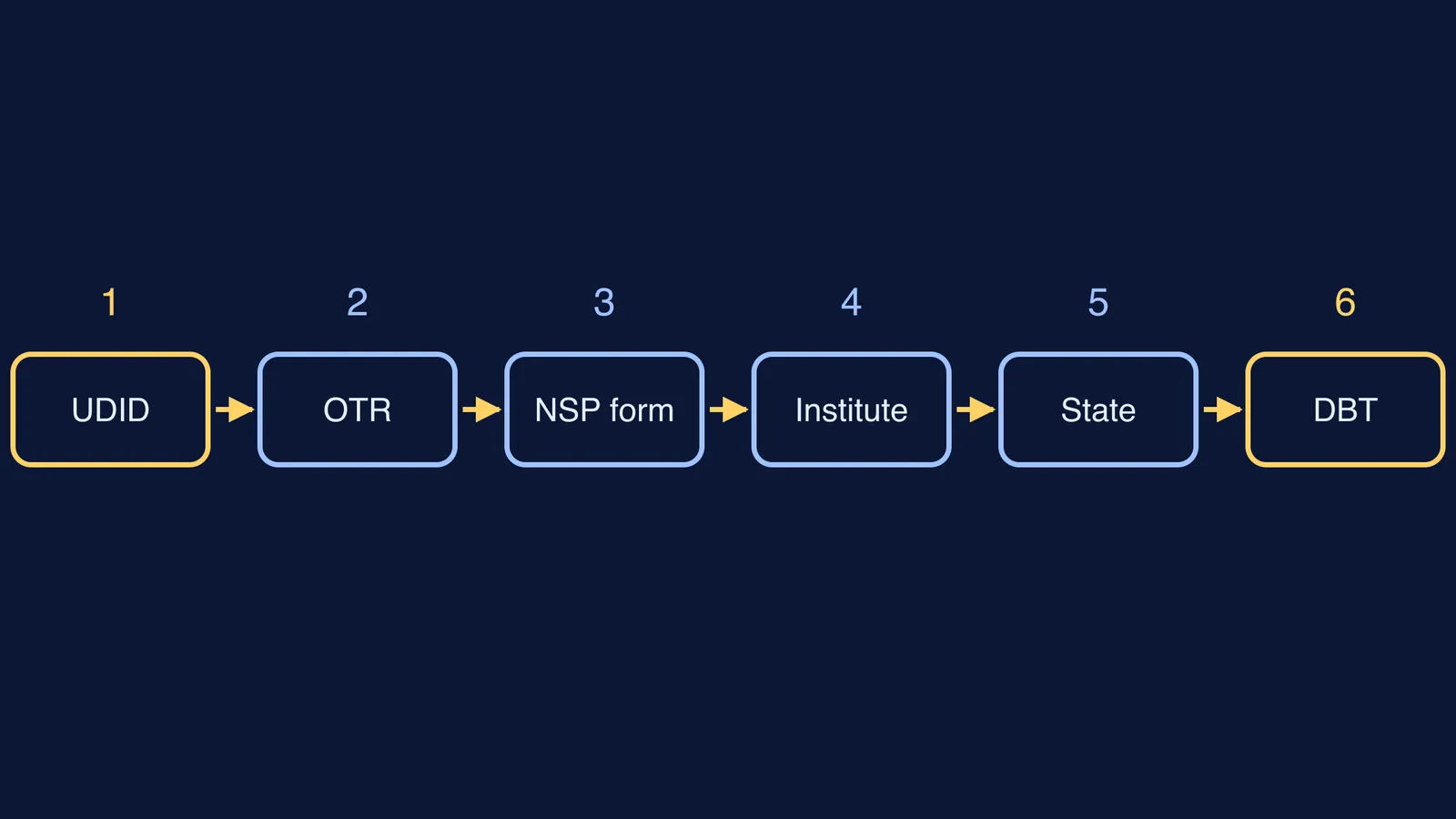
Finish your UDID, then log in to the UDID portal and consent to share your UDID details; the NSP home page says you cannot submit otherwise.
Generate your One Time Registration (OTR), a 14-digit number based on Aadhaar that lasts your whole academic career.
Fill the fresh application. You can save and return, but after final submission you cannot edit it, says the FAQ.
Keep ready: photo, income certificate signed by a revenue officer or tehsildar (Form 16 is not accepted), Aadhaar, disability certificate, last mark sheet, fee receipt and bank passbook. Uploads must be PDF or JPEG under 200 KB each.
Your institute verifies, then the state nodal officer; after bank validation, the money goes by DBT to your Aadhaar-linked account.
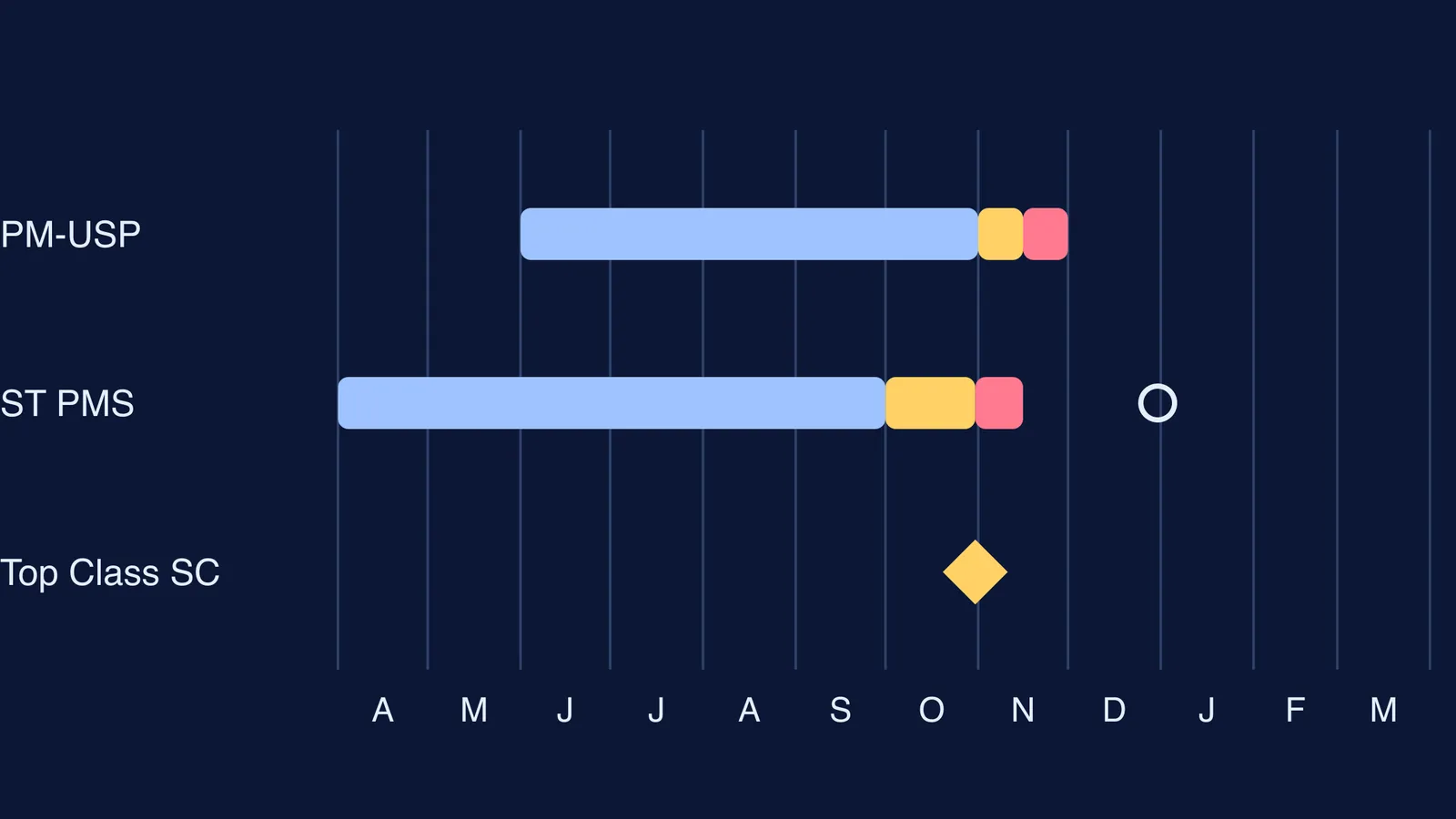
Dates change yearly, so check NSP. For screen-by-screen help, see our step-by-step guide to the National Scholarship Portal.
How do you keep the scholarship next year?
You renew on NSP with last year's application ID. Under section 8 of the guidelines, the award continues while you are promoted; a first post-matric failure may still be renewed, later ones are not. If a subject starts slipping, Fermi's AI tutor can work out what you already know and build a plan for the session, so you sit down to a clear next step.
This week, check your UDID status and ask your college who its NSP nodal officer is.