On this page
A visit from home can be the best two days of your month, or the weekend that wrecks a test. The difference is mostly planning: when your parents come, what you show them and what you talk about. This guide is for students in Kota or any coaching city, and for the parents reading over their shoulder.
When is the best time for parents to visit you in Kota?
Start with your test calendar, not train tickets. A visit the night before a test costs you sleep and your last revision.
The Ministry of Education's Guidelines for Regulation of Coaching Center (January 2024) say coaching centres should ensure a weekly off for students and that there should be no assessment test on the day after the weekly off. The same guidelines say coaching should not be more than 5 hours in a day, and that centres should adjust leave around major regional festivals so students can connect with their families. These are model guidelines sent to states to adopt through their own laws, so check your own institute's timetable before you plan.
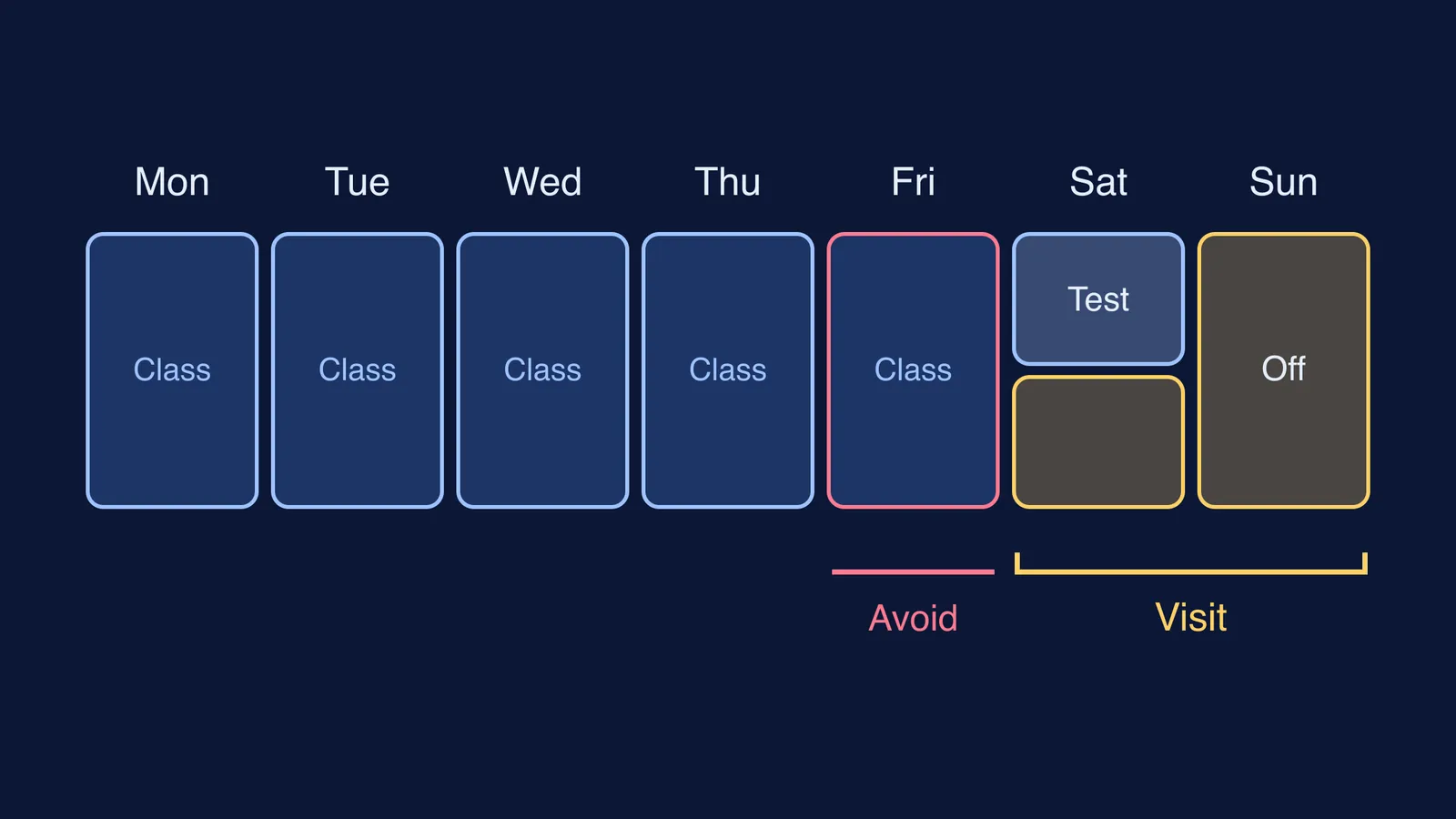
That gives you a simple rule: the best window is the evening after a test plus your weekly off. The test is done, and nothing is due the next morning.
A sample week might look like this:
Monday to Friday: classes and self-study. Do not ask them to arrive on Friday, the night before the test.
Saturday: weekly test in the morning. Your parents arrive in the evening and you go out for dinner.
Sunday: weekly off. A full day together.
Monday: classes resume, with no test that morning. They leave on Sunday night or early Monday.
What should I show my parents when they visit my hostel room?
Parents worry most about what they cannot see. A short walk-through answers more questions than a month of calls.
Your desk and where you actually study, including the light and the chair. Our guide to setting up a study desk in a hostel room has fixes you can make while they are there.
Your timetable on the wall and your test register or mistake notebook.
Where you eat, where you wash clothes and how you get to class.
The warden's office and your institute's counselling contact. The same 2024 guidelines say the names of psychologists and counsellors, and the times they are available, may be given to students and parents, so ask for them at the front desk together.
For the parent's side of the tour, covering safety, food and hygiene, share our checklist on what to check on a first visit to your child's hostel.
How do I show them my study routine without it feeling like an inspection?
Walk them through one ordinary weekday: wake-up, classes, lunch, self-study, revision, sleep. Be honest about the gaps. If you lose an hour to your phone after dinner, say so, and say what you are trying instead.
Then open your notebook to your last test. Point to two questions you got wrong and explain why: a missing concept, or a careless step. This tells your parents more than a rank does.
If you are not sure where to start with a weak chapter, Fermi's AI tutor can work out what you already know and build a plan for the session, so you have something concrete to show them.
What should students and parents talk about during the visit?
Pick three topics before they arrive and write them down. Use this as a script and fill in the blanks:
Money: "This is what I spent this month and where it went. Next month I need ___ for ___."
Marks: "My last three tests were ___. The chapter pulling me down is ___. My plan for it is ___." Parents, ask "What will you change?" rather than "Why so low?"
How you are feeling: "Most weeks are fine. The hard part is ___." Parents, listen first and offer solutions only if asked.
The guidelines also say coaching centres should keep their assessment results confidential, and that parents may be counselled about the harm of unnecessary pressure and expectation. Follow the same spirit: talk about marks in your room, not in front of hostel friends or relatives on speakerphone.
Leave off the agenda: comparing ranks with a cousin, and deciding in two days whether to leave Kota. If that question is real, agree a date to discuss it properly.
How do you handle the day after they leave?
The evening after parents leave is often the hardest part. Plan it: make sure the next day is a normal class day, and fix a dinner with a friend. If the low feeling lasts for weeks, our guide to everyday steps that help when you are homesick in a coaching hostel is a good next read.
If you or a friend feel overwhelmed, talk to your institute's counsellor or call Tele MANAS on 14416 or 1800-891-4416, a free, 24x7 national mental-health helpline from the Ministry of Health and Family Welfare (details).
Tonight, send your parents this month's test calendar and pick the weekend together.