On this page
Practising olympiad papers with friends works best when the session has two halves: a silent, timed sit where everyone works alone, and a longer discussion where you swap scripts and compare methods. The first half trains you for the exam hall. The second is where much of the learning happens, because many olympiad problems have more than one route to the answer.
Why practise olympiad papers with friends at all?
Sitting a paper is itself a way to learn, not just a way to measure. In a study by Henry Roediger and Jeffrey Karpicke, students who took recall tests on a passage remembered more of it two days and one week later than students who restudied it the same number of times, even though restudying made them feel more confident (Psychological Science, 2006).
Talking it through afterwards adds something different. In an undergraduate genetics course, Michelle Smith and colleagues had students answer a question alone, discuss it with neighbours, and then answer a new question on the same idea by themselves. They concluded that peer discussion enhances understanding, even when none of the students in a discussion group originally knows the correct answer (Science, 2009).
What does a good group mock session look like?
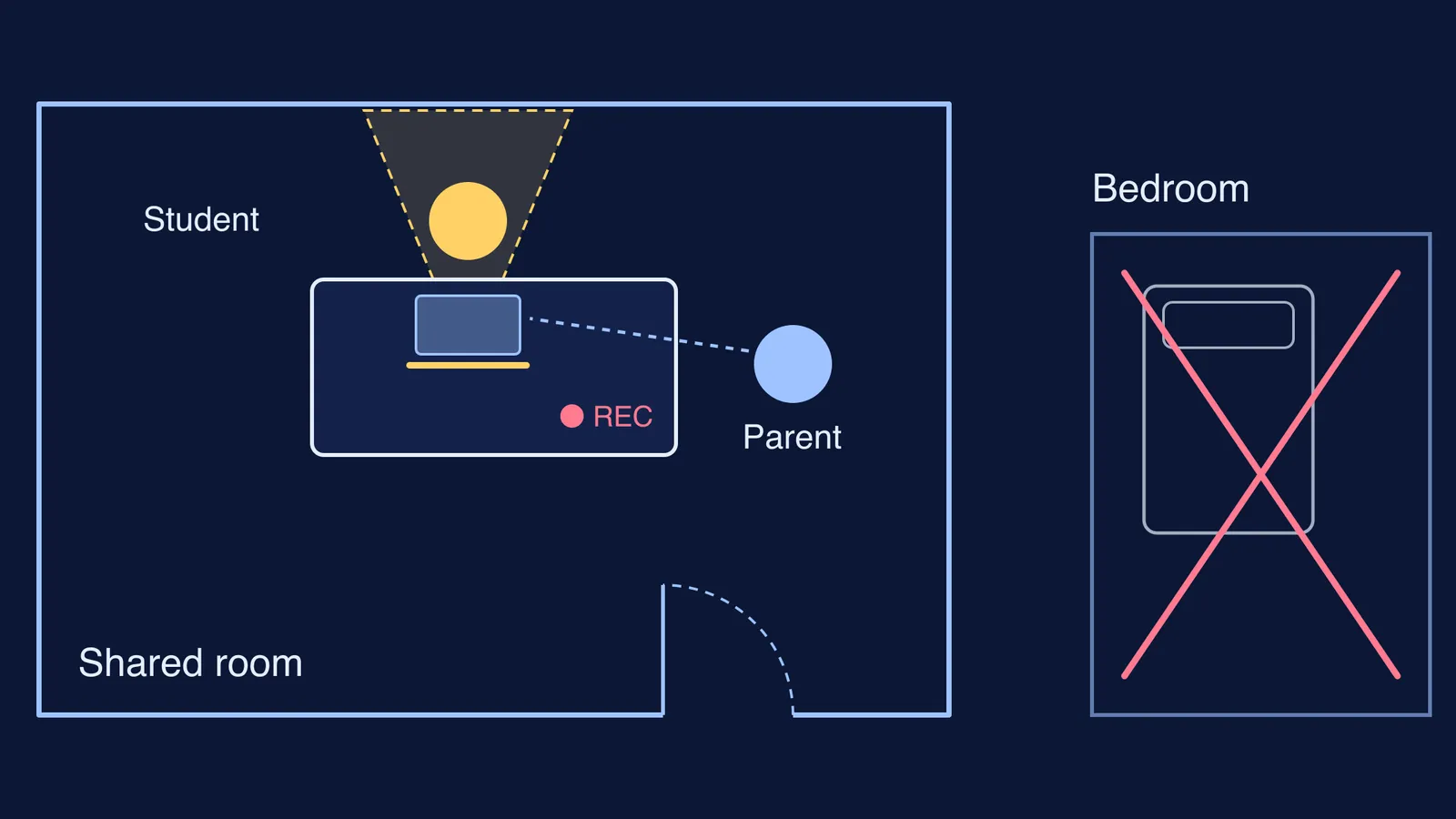
Three or four people is a comfortable size. Pick a real past paper: HBCSE posts past papers, most with solutions, for the Indian olympiads in mathematics, physics, chemistry, biology, astronomy and junior science. Agree on the paper in advance; nobody looks early.
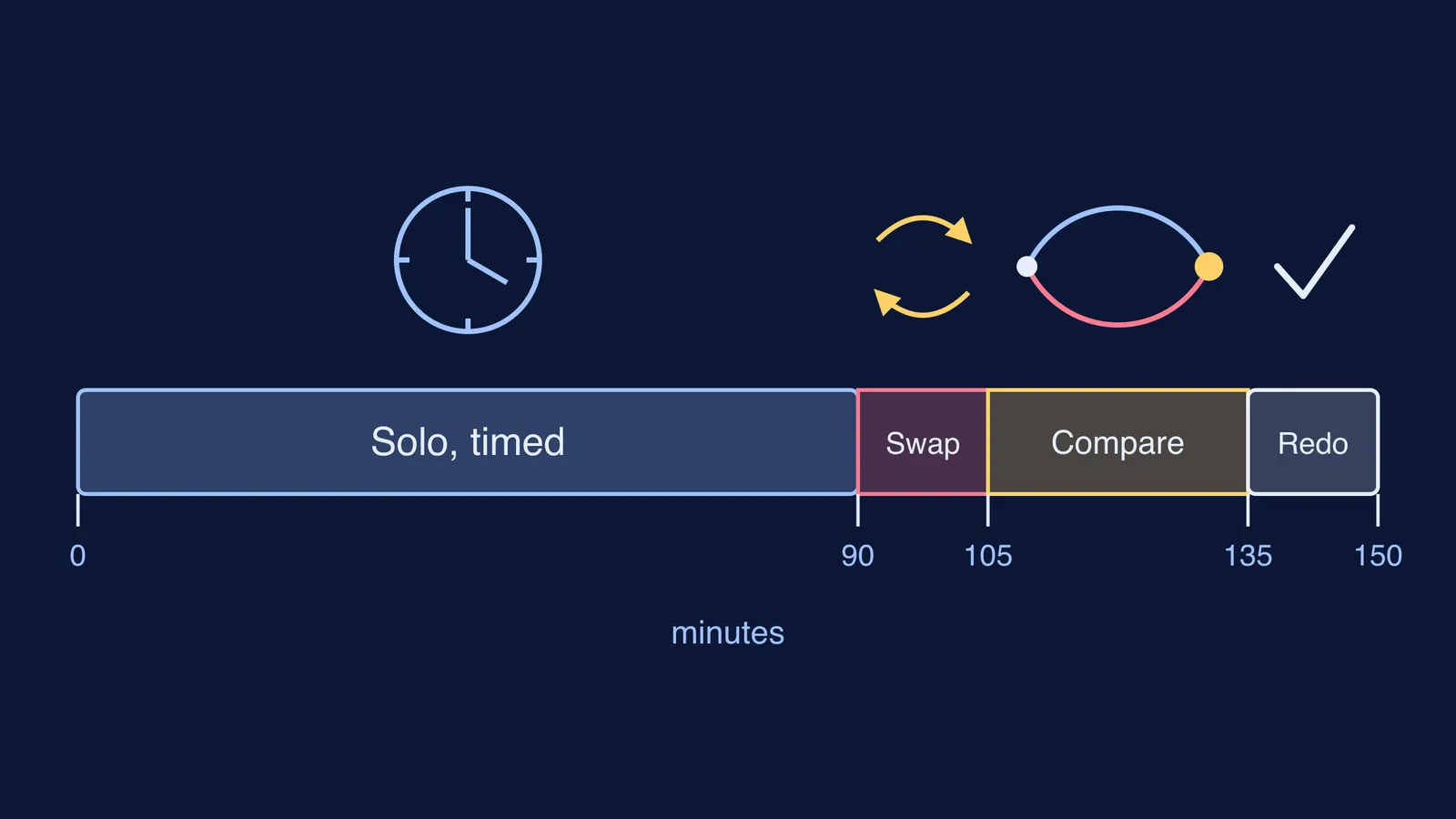
Here is a 150-minute plan. Scale the timings to the paper you choose.
Solo, timed (90 minutes). Phones in another room, one clock everyone can see, no talking. Write full solutions, not just answers.
Swap and mark (15 minutes). Mark against the official solution, and write one line on each problem: where the argument holds and where it breaks.
Compare approaches (30 minutes). Take the problems one at a time. Everyone who got somewhere shows their route, briefly. Then ask which route was shorter, which would work on a harder version, and which step someone missed.
Redo one problem (15 minutes). Each person picks the problem they got most wrong and writes a clean solution using a method they learned in step 3.
See also swapping practice papers with a friend to mark and how to run a study group that actually helps you learn.
How do you compare different approaches without it turning into a contest?
Comparing methods side by side is worth doing deliberately. Bethany Rittle-Johnson and Jon Star had 70 seventh-graders work with a partner on linear equations; pairs who studied two solutions to each equation side by side made greater gains in procedural knowledge and flexibility than pairs who saw the same solutions on separate pages (Journal of Educational Psychology, 2007; summary from Harvard Graduate School of Education).
Even the official answers say there is no single route. HBCSE notes that its RMO 2025 solutions "are NOT the ONLY possible solutions" and that "Other solutions may or do exist" (HBCSE).
What to say, especially if one friend is much faster:
"Walk me through your first line. Why did you start there?"
"Where did you get stuck, and what did you try next?"
"Would your method still work if the numbers were bigger?"
"What would you have to know already to see this trick?"
Worked example: one problem, two methods
Problem: find the remainder when 2^100 is divided by 7.
Method A (look for a cycle). 2^3 = 8, which leaves remainder 1 on division by 7. Since 100 = 3 × 33 + 1, 2^100 = (2^3)^33 × 2, so the remainder is 2.
Method B (Fermat's little theorem). 7 is prime and does not divide 2, so 2^6 leaves remainder 1. Since 100 = 6 × 16 + 4, the remainder is the same as for 2^4 = 16, which is 2.
Both give 2. Method A is shorter here because powers of 2 repeat every 3 steps; Method B works whenever the divisor is prime and does not divide the base, so reach for it when you cannot spot the cycle.
What if nobody in the group can solve a problem?
Give it ten minutes together first. Pool what each of you noticed, try small cases, and draw the figure. If you are still stuck, read the official solution one line at a time and stop as soon as someone sees the next step.
If the official solution skips steps nobody can follow, the Fermi Problem Library has a step-by-step solver that explains the reasoning rather than printing an answer. If the real gap is an idea you have never met, look it up in the Fermi Concept Library before the next session, so you return with the missing piece.
Keep a shared list of these stuck problems and put one into each future mock. For working through books between sessions, see how to use an olympiad problem book effectively.
Pick a paper, a date and three friends, and run the first session this week.